
 Wine Advisor



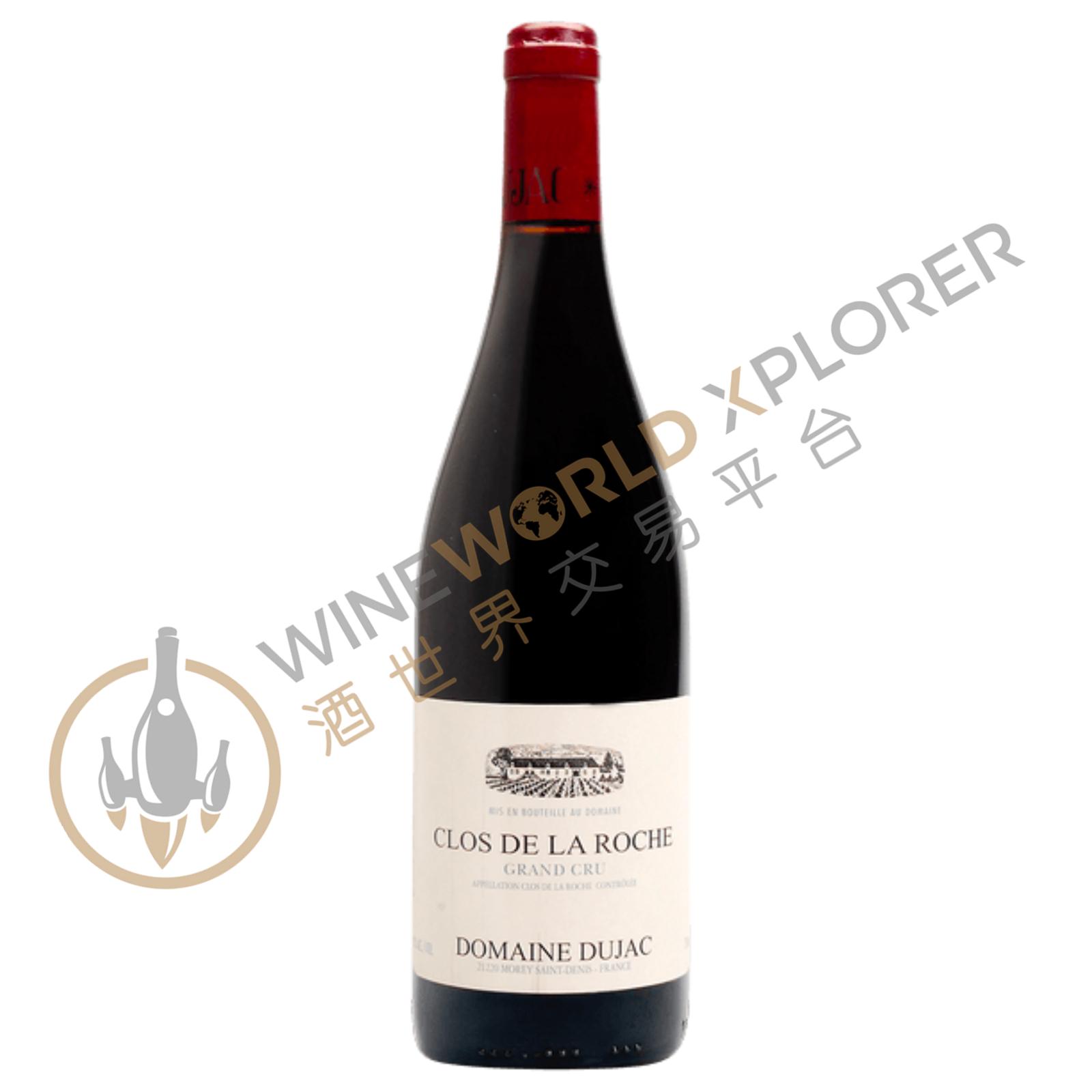
Domaine Dujac, Clos de la Roche Grand Cru 2019
 View analysis


Description
Tasting notes

Reviewed by: Neal Martin
The 2019 Clos de la Roche Grand Cru has a tightly wound bouquet with beautifully defined red fruit laced with Earl Grey, autumn leaves and a touch of white pepper. The palate is medium-bodied with supple tannins, demonstrating a little more girth and depth than the Clos Saint-Denis. It gently builds to a spicy and tensile finish, lingering peppery notes ensuring that you will not forget it in a hurry. Every vine that contributed fruit to this wine deserves a big shiny medal.
Reviewed by: William Kelley
The 2019 Clos de la Roche Grand Cru is also a very charming wine, though it will demand a bit more patience than the Clos Saint-Denis for all that. Unwinding in the glass with aromas of dark berries, warm spices, orange rind, woodsmoke and loamy soil, it's full-bodied, layered and muscular, with lively acids, serious concentration and rich, powdery structuring tannins.
Reviewed by: William Kelley
The 2019 Clos de la Roche Grand Cru was another of the portfolio's high points when I visited Domaine Dujac. Mingling aromas of cassis, raspberries and blood orange with hints of smoke, rose petals and pencil shavings, it's full-bodied, elegantly muscular and multidimensional, with terrific concentration, rich and powdery structuring tannins and lively acids. Long and resonant, this will merit and reward patience.
Reviewed by: Neal Martin
The 2019 Clos de la Roche Grand Cru is understated on the nose, with predominately red berry fruit, wild hedgerow, orange zest and crushed stone. I appreciate the succinct manner in which this unfurls, with hints of Earl Grey emerging with time. The palate is quite peppery on the entry, with just a little chewiness—perhaps not as nuanced as the aromatics. Very concentrated, especially toward the slightly viscous finish, this flirts with exoticism rather than grabbing it with both hands. I wonder if there is a tiny bit of TCA here—it’s minuscule if there is. Tasted blind at the Burgfest tasting.
About the Producer
Domaine Dujac is managed by the Seysses family. It was founded in 1967 by Jacque Seyesses. At the beginning, Château Dujac had only 4.5 hectares of vineyards in Morey-Saint-Denis. The vineyards were expanded with the purchase of Echezeaux, Bonnes MaresChambertin, Romanee St Vivant and Vosene-Romanee. The estate also owns 1.95 hectares of vineyards in the Clos de la Roche, where the vines are on average 45 to 50 years old. The estate also has 1.45 hectares of vineyards in Clos Saint-Denis, with vines of an average age of 45 to 50 years. In 2005, Château Dujac, together with Chateau de Puligny-Montrachet, acquired Domaine Charles Thomas, acquiring Charles Thomas' shares in the vineyards of Chambertin, Vosne- Romanee and other vineyards. However, the estate sold some of its vineyards after the purchase in order to finance the purchase. However, this acquisition allowed the estate to expand to around 15.5 hectares. Under Jacques' leadership, Château Dujac has developed very well. The grapes were pressed whole and the must was fermented in new oak barrels, and in 1999, when Jacques handed over the running of the estate to his son, the way the estate was made changed dramatically: the grapes were sometimes destemmed and the barrels used for fermentation were probably only 25% new oak. However, the estate's Grand Cru wines are still matured in new oak barrels, while the Grand Cru wines are matured in 60% to 80% new oak barrels. Bottling usually takes place in February or March of the following year. The estate produces around 4,650 bottles/hectare of wine.
1989(1)1995(1)1999(2)2001(1)2003(1)2004(1)2005(2)2006(4)2007(1)2008(3)2009(1)2010(2)2011(5)2012(3)2013(4)2014(4)2015(1)2016(7)2017(4)2018(9)
Package Size
