
 Wine Advisor



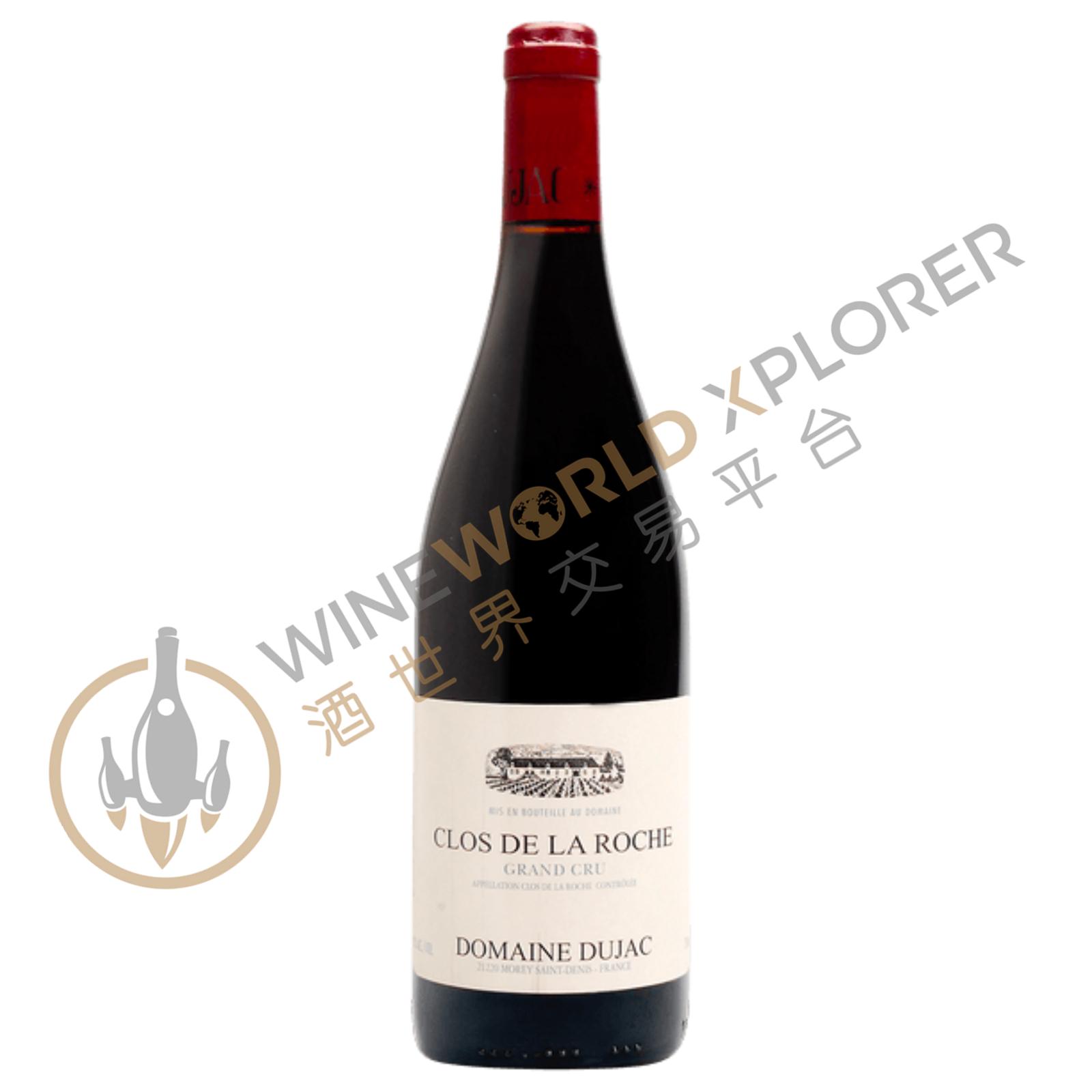
Domaine Dujac, Clos de la Roche Grand Cru 2005
 View analysis


Description
Tasting notes

Reviewed by: Neal Martin
A deep, intense animally nose with scents of hedgerow, cherry, blackberry and a touch of animal fur. The palate is full-bodied with a spicy, almost Oriental feel. Very cohesive and harmonious with beautiful balance and dense, assertive, tannic finish infused with a touch of cedar. Great length and persistency again, this is a wonderful, vivacious Clos-de-la-Roche that will demand some cellaring before it reaches its peak. Drinking 2015-2030. Tasted January 2007.
Reviewed by: David Schildknecht
The Seysses’ 2005 Clos de la Roche charts new territory in this collection for sheer intensity. Black cherry, kirsch distillate, cedar, incense, iron filings, wet stone, and roasted meats and coffee represent a few of the immediate aromatic suggestions forced on this taster. In the mouth, it is similarly compelling, with an eruption of clear black cherry, cassis, and meat juices, faintly bitter notes of fruit skin and pungent herbal and mineral notes adding complexity. The texture is incipiently velvety, imposingly glossy, and a perfect cover for fine, abundant tannins. Spectacularly rich and reverberative in its multifaceted finish, this sensational wine deserves at least a decade of rest before re-opening. The already rich array of crus at Domaine Dujac has recently been augmented on two fronts. The purchase (along with de Montille) of the Societe Civile du Clos de Thorey (Thomas-Moillard) has brought them a raft of choice parcels including three new grand cru holdings (for a staggering total of eight). Meanwhile, they have expanded their negociant arm (with control over harvest and green harvest a prerequisite) to supplement in particular their volumes of village-level wine. (Those wines – labeled “Dujac Fils & Pere” – are signified in the above listing with “FP”. In fact, due to a legal technicality, the 2005 vintage wines from the properties newly acquired by the domaine – but not subsequent vintages – will also read “Fils & Pere” rather than “Domaine”.) Even with California-trained oenologist Diana Seysses (nee Snowden) joining her husband Jeremy and in-laws Jacques and Alec, and with a new winery (though at the old address) I wonder at how they are able to keep up with the magnitude of their responsibilities. Yet despite so many parcels and vines new to them this year, the results are consistently outstanding and at times astounding. Much of the vinification – increasingly as one goes up the hierarchy of crus – was of whole clusters. Malos finished (finally) by November and the wines were bottle in December and January. Importer: The Sorting Table, Napa, CA; tel.(415) 491 4724
Reviewed by: Stephen Tanzer
Deep red-ruby. Pure but tight aromas of dark raspberry, brown spices and graphite. Dense, fat and rich but quite youthfully reduced, showing notes of smoke and toast. This amazingly chewy and tactile wine needs a lot of patience. Sullen today but very long and strong on the back end, with a powerful impression of dry extract and a finishing note of chocolate. If you invest in a wine like this, don't even think of opening it any time soon (Jeremy Seysses suggests waiting 12 years).
Reviewed by: Stephen Tanzer
Full ruby-red. Musky, reduced nose offers blackberry, molasses, brown spices, chocolate, mocha and earth. Very suave on entry, then fine-grained and sweet in the middle; silky and thick but not heavy. Finishes with very fine, even, firm tannins and superb persistence. Jeremy says there was a bit of drought stress here in 2005, but this wine has the stuffing to support its tannins.
About the Producer
Domaine Dujac is managed by the Seysses family. It was founded in 1967 by Jacque Seyesses. At the beginning, Château Dujac had only 4.5 hectares of vineyards in Morey-Saint-Denis. The vineyards were expanded with the purchase of Echezeaux, Bonnes MaresChambertin, Romanee St Vivant and Vosene-Romanee. The estate also owns 1.95 hectares of vineyards in the Clos de la Roche, where the vines are on average 45 to 50 years old. The estate also has 1.45 hectares of vineyards in Clos Saint-Denis, with vines of an average age of 45 to 50 years. In 2005, Château Dujac, together with Chateau de Puligny-Montrachet, acquired Domaine Charles Thomas, acquiring Charles Thomas' shares in the vineyards of Chambertin, Vosne- Romanee and other vineyards. However, the estate sold some of its vineyards after the purchase in order to finance the purchase. However, this acquisition allowed the estate to expand to around 15.5 hectares. Under Jacques' leadership, Château Dujac has developed very well. The grapes were pressed whole and the must was fermented in new oak barrels, and in 1999, when Jacques handed over the running of the estate to his son, the way the estate was made changed dramatically: the grapes were sometimes destemmed and the barrels used for fermentation were probably only 25% new oak. However, the estate's Grand Cru wines are still matured in new oak barrels, while the Grand Cru wines are matured in 60% to 80% new oak barrels. Bottling usually takes place in February or March of the following year. The estate produces around 4,650 bottles/hectare of wine.
1989(1)1995(1)1999(2)2001(1)2003(1)2004(1)
Package Size
