
 Wine Advisor



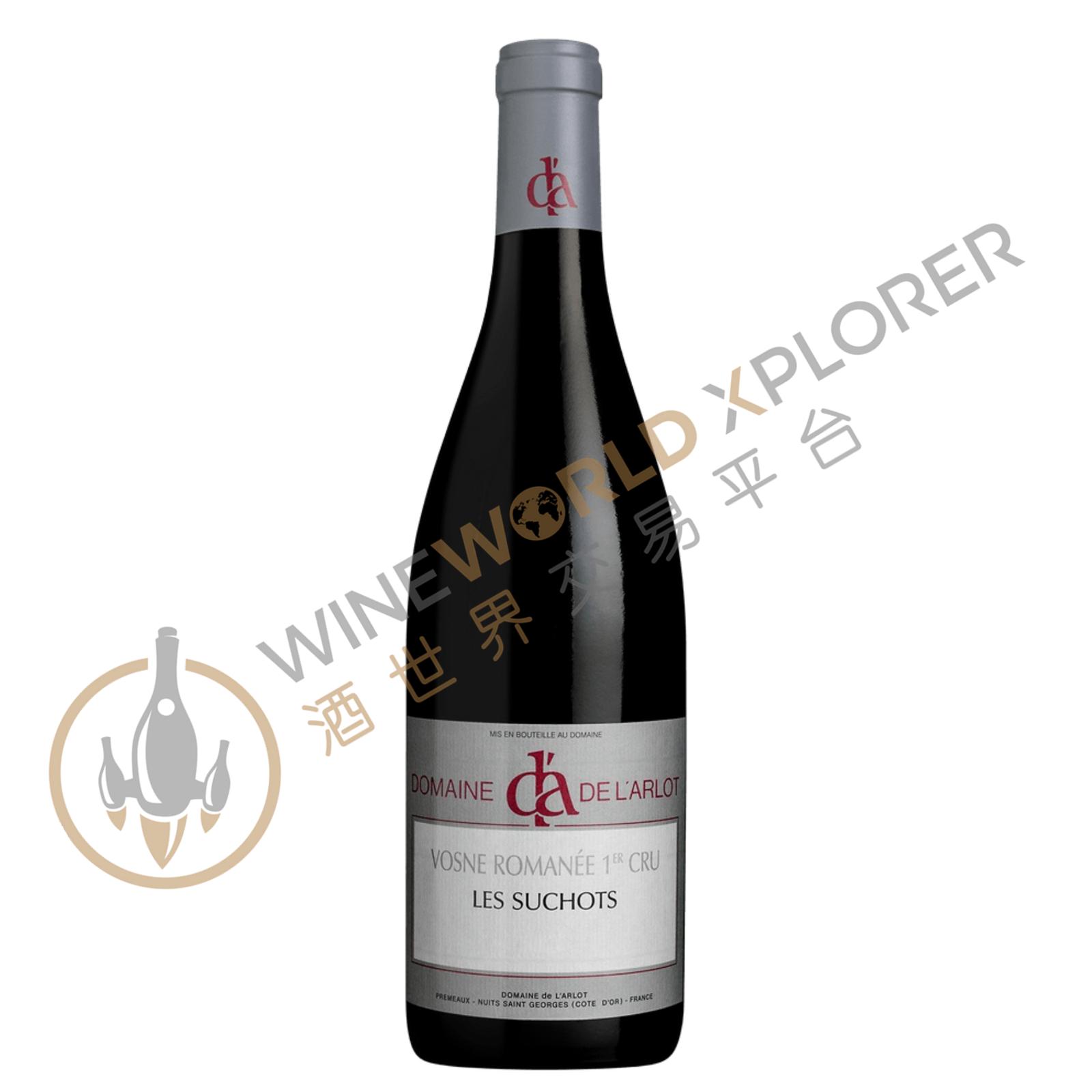
Domaine de L'Arlot, Vosne Romanee 1er Cru Les Suchots 2008
 View analysis


Description
Tasting notes

Reviewed by: Antonio Galloni
The 2008 Vosne-Romanee Les Suchots is subtle, perfumed and delicate. It is a pretty, understated wine, but here I prefer the 2009 for its greater density and richness, which should provide a wider and longer drinking window of enjoyment. Sweet spices, flowers and licorice linger on the fleeting finish. Anticipated maturity: 2018-2026. Domaine de L’Arlot has been an organic estate for ten years. In 2009 Olivier Leriche began harvesting on September 7 and ended around the 15th. The wines were vinified with a higher than normal percentage of whole clusters and spent 20-25 days on the skins. I tasted most of the 2009s from barrel. Leriche planned to bottle the wines with no fining or filtration. I also tasted a handful of 2008s. The 2008s were bottled between April and July 2010 (a bit on the late side because of the lengthy malos) with no fining or filtration. Various American importers, including: A Daniel Johnnes Selection imported by Michael Skurnik Wines, Syosset, NY, tel. (516) 677 9300; Classic Wine Imports, Norwood, MA; tel. (781) 278-2000; Triage Wines Inc., Seattle, WA; tel. (503) 236-6262; Chambers & Chambers, San Francisco, CA; tel. (415) 642-5500; Ansonia Wines, Washington D.C.; tel. (202) 506-4215; USA Wine Imports, New York, NY; tel. (212) 941-7133
Reviewed by: Neal Martin
Very primal on the nose...bubblegum aromas. Kirsch. The palate is medium-bodied, bold rather raw tannins with a tannic, rather cumbersome finish. Like the comaine’s Nuits, these are wines that should be showing much, much better. Tasted January 2010.
Reviewed by: David Schildknecht
Blackberry, beet root, black pepper, peat, leather, and star anise scent the l’Arlot 2008 Vosne Arlot Romanee Les Suchots and are in turn suffused on the palate by saline, soy-like savor that stimulates the salivary glands and synergizes with bright primary fruit juiciness and an almost sizzling impingement of pepper. Finely-tannic and oily-textured, this intriguing exemplar of its great site reveals alkaline, chalky, and forest floor undertones. While apt to always exercise greater fascination than it will sheer sensual allure, it ought to be worth following for at least the next 15 years and quite possibly longer. Olivier Leriche reports having harvested more robust material in 2008 than in 2007, but notes that a rigorous triage for rot was needed in each instance, and that he took the precaution of significantly reducing in both vintages his usual percentage of stems and whole clusters. Harvest in 2008 was relatively rapid, and concluded October 9, but Leriche notes that its progression was determined by the extent of botrytis incursions rather than by the parcels’ ripeness. The botrytis in 2008 was more insidious, he maintained – echoing comments of several other growers – and the sorting unusually arduous, in that it frequently affected individual berries within the clusters, while triage in 2007 more often consisted of either accepting or rejecting an entire, relatively uniformly healthy or botrytis-afflicted bunch. Surprisingly, several l’Arlot 2008s – Clos du Chapeau, Clos de l’Arlot, les Suchots – finished malo already their first winter; whereas others were protracted and erratic. I tasted the final assemblages just before they were sulfured and bottled, which Leriche – in common with quite a few Burgundy vintners – argues is the best time to taste red Burgundies until after they have had several years in bottle. Numerous agents and U.S. importers including: Chambers & Chambers, San Francisco, CA; tel. (415) 642-5500, Classic Wine Imports, Norwood, MA, tel. (781) 352-1100, and a Daniel Johnnes Selection, imported by Michael Skurnik Wines, Syosset, NY; tel. (516) 677-9300
About the Producer
Domaine d'Arlot is a new winery founded in 1987, but it has a long history of vineyards and owns three exclusive plots (a monopole, which means that a vineyard is the exclusive property of a single winery or winemaker): Clos du Chapeau, Clos de l'Arlot, Clos des Forets St Georges. 'Arlot, and Clos des Forets St Georges. In 1991, a small plot of Romanee St. Vivant was bought, and the following year a plot of Vosne Romanee Les Suchots was bought, bringing the vineyard to 14 hectares. The Domaine d'Arlot is one of the few exceptions to the rule of grandeur in Bourgogne. Around the end of the eighteenth century, Jean Charles Vienot, the owner of the place, built a stone wall around the vineyard, and the vineyard was named Domaine de l'Arlot. The Domaine de l'Arlot began to use organic farming methods in 2000 and was certified in 2014. The vineyards have been rebalanced and rejuvenated to produce healthier and riper grapes. The philosophy of the winery is: the less intervention the better. The grapes are hand-harvested, selected twice, only the best grapes are used, natural yeasts are used for fermentation, and the lees are pressed by hand, without using pumps as much as possible, to reflect the "terroir" of each field and lot, and to give the wine its personality.
