Wine Advisor



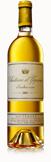
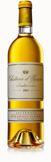
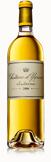
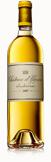
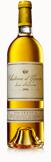
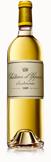
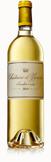
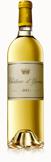
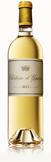
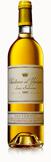
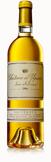
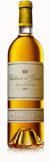
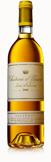
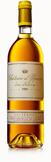
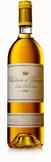
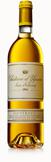
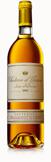
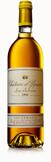
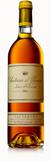
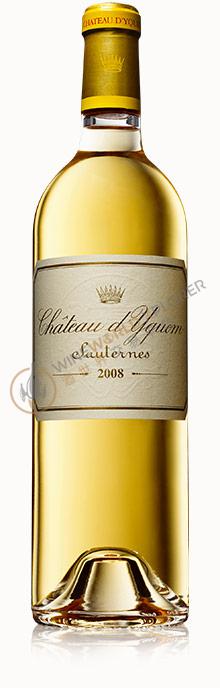
d'Yquem 2008
 View analysis


Description
Tasting notes

Reviewed by: Neal Martin
Tasted single blind against its peers. The Yquem 2008 is easy to spot in a blind line-up: it is (to quote Tina Turner) simply the best. It has a subtle, delicate but very pretty bouquet with fine definition and astounding minerality. The palate is beautifully poised, tense and tightly coiled on the entry and then it just explodes in the mouth with pure, unbridled, joyous botrytized fruit struck through with a silver thread of acidity. It displays exemplary tension and freshness, along with great persistency in the mouth. This is an outstanding Sauternes 2008 and another impressive Yquem. Tasted January 2012.
Reviewed by: Neal Martin
The 2008 Yquem, now in bottle, has a nuanced bouquet, with scents of clear honey, lime flower, vanilla and orange blossom that is beautifully defined. The palate is very harmonious on the entry, with a fine thread of acidity, tense and full of energy like the 2010 tasted alongside, with notes of white peach, citrus lemon, clear honey and a hint of quince. Long and persistent on the finish, this is a very fine Yquem that might be over-looked between the 2007 and 2009, but is a superb Sauternes in its own right. Drink 2014-2050.
Reviewed by: Lisa Perrotti-Brown
Sporting a medium lemon-gold color, the 2008 d'Yquem is forward, displaying an already complex, compellingly savory/earthy nose of toasted almonds, cloves, damp soil, crushed stones and yeast extract with a core of peach preserves, lemon tart, dried pineapple and allspice. Rich, spicy and decadent in the mouth, with a racy backbone lifting the fruit, it finishes long and multilayered.
Reviewed by: Neal Martin
Coming in with 139 degrees residual sugar and a pH of 4.75, this is an Yquem that is unequivocally top of the pile in 2008. A light straw color with green tints in the glass. The bouquet is just wonderful, very perfumed with aromas of apricot, acacia honey and white flowers. A degree less clarity than the 2007, but perhaps more nuanced, more honeyed. The palate is a little more viscous than the 2007, lacquers the mouth with honey, apricot and orange zest. Very harmonious, the finish vibrant and edgy, real tension and energy in this Yquem. Very focused on the finish – not the “peacocks” tail of flavors that one finds on truly great vintages. But there is a surreal level of elegance and poise – an understated Yquem that should age effortlessly and returning to the glass it graces you with hints of almond and a dash of spice. In 2008, the king is king. P.S. RMP rated this blend of 80% Semillon and 20% Sauvignon (94-96)
Reviewed by: Stephen Tanzer
Bright light gold. Ripe cling peach, fresh apricot, spices, coconut, minerals and white flowers on the nose, with a note of vanillin oak emerging with air; subdued but wonderfully pure and precise. At once thick and light on its feet, showing an utterly seamless texture and compelling sweetness but also lovely inner-mouth tension thanks to its suave acidity and underlying minerality. The new oak element is in harmony with the wine's fruit already. Really dusts the palate on the back end and builds inexorably. The explosive finish leaves behind a perfumed spice character. The clear star in my 2008 tasting.
Reviewed by: Yohan Castaing
The 2008 d'Yquem reveals a complex, elegant bouquet with aromas of pineapple, exotic fruits, quince and orchard fruits, followed by both a balanced and medium to full-bodied palate, seamless and layered texture and a penetrating, fresh and delicate finish. With 139 grams of residual sugar, this is a classic d'Yquem that has real potential to improve in the cellar over the next 10 years.
About the Producer
Chateau d'Yquem is located in the north-eastern part of the Sauternes wine producing village in the Bordeaux region of France and is one of the most prestigious chateaux in the Graves Sauternes appellation. It was named a Premier Cru Superieur in the 1855 Sauternes and Barsac Classification, the only Bordeaux chateau to be awarded this distinction. At the end of the 19th century, a barrel of wine was bought by the Grand Duke Constantine for 20,000 gold francs, a news story that grabbed the headlines and made Château Djinn famous at home and abroad. At the end of the 20th century, the French luxury goods giant Moet Hennessy-Louis Vuitton (LVMH) bought a majority stake in Château Djinn for a large sum of money and became the majority shareholder, thus opening a new chapter in the development of Château Djinn. Château Djinn has 113 hectares of vineyards, of which only 100 are in constant production. Every year, 2-3 hectares of old vines are pulled out of the vineyard and the land is left fallow for a year, while the newly planted vines do not produce any grapes for the first 5 years of the vintage. The vineyard has a top soil of pebbles and coarse gravel, which absorbs heat very well, and a subsoil of clay, which has good water storage capacity. The vineyard is planted with 75% Semillon and 25% Sauvignon Blanc. The vineyard is pruned to reduce yields by pruning and controlling the size of the canopy to increase the flavour concentration of the fruit. During the harvest season, the winery employs a large number of people to hand-pick the ripest grapes and those that have been properly infested with noble rot. The harvest is usually carried out in 5 or 6 rounds and is very rigorous. The picked grapes are sent to the winery within an hour, after which the grapes are pressed for 3-4 rounds, increasing the sugar content and quality of the juice with each pressing. The fermentation takes place in oak barrels, only new barrels made of good quality oak, during which the wine is closely monitored and its condition is regularly analysed. The finished wine is aged separately for 6-8 months, after which the winemaker blends the wine in the following spring and discards those wines that do not meet the requirements. The blended wine is then matured in the cellars for 20 months, during which time the barrels are refilled twice a week and the wine is decanted 15 times to remove the coarse sludge, while the fine sludge is removed by a clarification process. At the end of the maturation, the winemaker conducts a blind tasting to re-qualify the wine and determine the final percentage of the blend for the Grand Cru. Château d'Yquem, Sauternes, France, the main wine of Château d'Yquem, is known for its complex, concentrated and rather sweet taste, with crisp acidity and a well-balanced sweetness, and its excellent ageing potential. The wine has excellent potential to age for a century or more in some vintages, and with time the aromas and flavours become more complex and attractive, with the wine gradually changing colour from bright straw yellow to golden brown, amber and caramel. The wine has received full 100 points from Robert Parker and his team for the 1811, 1847, 1945, 2001, 2009 and 2015. The estate also produces a secondary wine, Chateau d'Yquem "Y", Bordeaux, France, which is a powerful dry It is a powerful dry white wine, usually made from Sauvignon Blanc and a small amount of Semillon, with an average annual production of around 10,000 bottles, usually with an alcohol content of 14% and a very rich and balanced nose and flavour, with a subtle sweetness.
1908(2)1923(1)1934(1)1936(1)1940(2)1941(2)1942(1)1944(1)1947(1)1949(1)1953(1)1955(2)1959(3)1962(1)1966(2)1967(1)1969(1)1975(1)1977(1)1978(1)1979(1)1980(2)1981(1)1982(2)1983(4)1984(1)1985(2)1986(6)1987(3)1988(9)1989(6)1990(14)1991(1)1993(1)1995(4)1996(6)1997(9)1998(8)1999(7)2000(5)2001(22)2002(7)2003(16)2004(7)2005(12)2006(10)2007(5)
Package Size
12 x 37.5cl