Wine Advisor



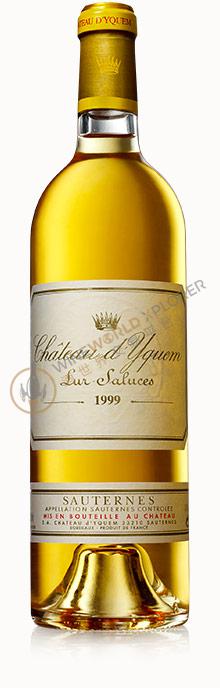
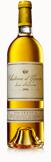
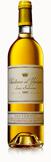
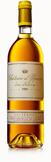
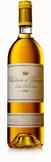
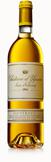
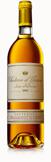
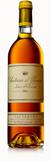
d'Yquem 1999
 View analysis


Description
Tasting notes

Reviewed by: Lisa Perrotti-Brown
Medium gold in color, the 1999 d'Yquem has shed its puppy fat and transformed into compelling cinnamon toast, creme caramel and cashew notions with emerging notes of beurre blanc, honeycomb, ginger snaps and praline over a core of peach preserves and apple pie. The palate is softly spoken with a refreshing backbone carrying loads of delicate savory and stone fruit preserves nuances to a long, beautifully restrained finish. At the 20-year mark, this wine is in the midst of its ideal drinking window, and while I hasten to add that there is no rush to drink up, there’s also no need to delay your gratification either. The alcohol this vintage is 13.8%, while the residual sugar is 128 grams per liter, and the total acidity is 4.5 grams per liter of H2SO4.
Reviewed by: Neal Martin
I have tasted the Yquem ’99 a number of times recently and I feel that I was too harsh in my reading of it back in 2006, when it amidst a sulky adolescence. Here, the nose is still a little conservative but more expressive with scents of butterscotch, tangerine, pear skin and white flowers that becomes increasingly ‘heady’ with aeration, as if it belatedly became aware of its importance. The palate is viscous on the entry with touches of spice, dried honey, subtle notes of shaved ginger and an open-knit, generous finish that suggests bottles can be broached now. This is a fine Yquem, though not as cerebral as other vintages. Drink now-2025. Tasted October 2012.
Reviewed by: Neal Martin
A golden, straw hue. The nose is just a little predictable and linear compared to the other Yquem's that I have tasted. White flowers, acacia, rather like a sweet Auslese! The palate is lively, rich, moderate acidity and just rather linear. For me, an Yquem treading water. Drink now-2020. Tasted November 2006.
Reviewed by: Neal Martin
The 1999 Yquem is a wine I’ve tasted several times in recent months since it is available by the glass in a local restaurant. It’s a middle-of-the-road Yquem, a fine Sauternes but nothing special. The aromatics always feel a little advanced for the wine’s age, offering tangerine, mandarin and light butterscotch scents but perhaps just missing the clarity and complexity of top vintages. The palate has pleasing viscosity and is spicier than expected, with touches of ginger complementing the orange peel and dried apricot notes toward the conservative finish. Tasted at The Jetty restaurant.
Reviewed by: Robert M. Parker, Jr.
Space limitations preclude including tasting notes.
About the Producer
Chateau d'Yquem is located in the north-eastern part of the Sauternes wine producing village in the Bordeaux region of France and is one of the most prestigious chateaux in the Graves Sauternes appellation. It was named a Premier Cru Superieur in the 1855 Sauternes and Barsac Classification, the only Bordeaux chateau to be awarded this distinction. At the end of the 19th century, a barrel of wine was bought by the Grand Duke Constantine for 20,000 gold francs, a news story that grabbed the headlines and made Château Djinn famous at home and abroad. At the end of the 20th century, the French luxury goods giant Moet Hennessy-Louis Vuitton (LVMH) bought a majority stake in Château Djinn for a large sum of money and became the majority shareholder, thus opening a new chapter in the development of Château Djinn. Château Djinn has 113 hectares of vineyards, of which only 100 are in constant production. Every year, 2-3 hectares of old vines are pulled out of the vineyard and the land is left fallow for a year, while the newly planted vines do not produce any grapes for the first 5 years of the vintage. The vineyard has a top soil of pebbles and coarse gravel, which absorbs heat very well, and a subsoil of clay, which has good water storage capacity. The vineyard is planted with 75% Semillon and 25% Sauvignon Blanc. The vineyard is pruned to reduce yields by pruning and controlling the size of the canopy to increase the flavour concentration of the fruit. During the harvest season, the winery employs a large number of people to hand-pick the ripest grapes and those that have been properly infested with noble rot. The harvest is usually carried out in 5 or 6 rounds and is very rigorous. The picked grapes are sent to the winery within an hour, after which the grapes are pressed for 3-4 rounds, increasing the sugar content and quality of the juice with each pressing. The fermentation takes place in oak barrels, only new barrels made of good quality oak, during which the wine is closely monitored and its condition is regularly analysed. The finished wine is aged separately for 6-8 months, after which the winemaker blends the wine in the following spring and discards those wines that do not meet the requirements. The blended wine is then matured in the cellars for 20 months, during which time the barrels are refilled twice a week and the wine is decanted 15 times to remove the coarse sludge, while the fine sludge is removed by a clarification process. At the end of the maturation, the winemaker conducts a blind tasting to re-qualify the wine and determine the final percentage of the blend for the Grand Cru. Château d'Yquem, Sauternes, France, the main wine of Château d'Yquem, is known for its complex, concentrated and rather sweet taste, with crisp acidity and a well-balanced sweetness, and its excellent ageing potential. The wine has excellent potential to age for a century or more in some vintages, and with time the aromas and flavours become more complex and attractive, with the wine gradually changing colour from bright straw yellow to golden brown, amber and caramel. The wine has received full 100 points from Robert Parker and his team for the 1811, 1847, 1945, 2001, 2009 and 2015. The estate also produces a secondary wine, Chateau d'Yquem "Y", Bordeaux, France, which is a powerful dry It is a powerful dry white wine, usually made from Sauvignon Blanc and a small amount of Semillon, with an average annual production of around 10,000 bottles, usually with an alcohol content of 14% and a very rich and balanced nose and flavour, with a subtle sweetness.
1908(2)1923(1)1934(1)1936(1)1940(2)1941(2)1942(1)1944(1)1947(1)1949(1)1953(1)1955(2)1959(3)1962(1)1966(2)1967(1)1969(1)1975(1)1977(1)1978(1)1979(1)1980(2)1981(1)1982(2)1983(4)1984(1)1985(2)1986(6)1987(3)1988(9)1989(6)1990(14)1991(1)1993(1)1995(4)1996(6)1997(9)1998(8)
Package Size