Wine Advisor



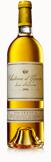
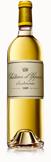
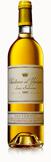
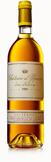
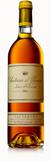
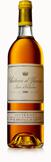
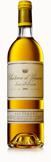
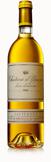
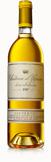
d'Yquem 1975
 View analysis


Description
Tasting notes

Reviewed by: Neal Martin
One of my favourite vintages from this decade, this bottle of 1975 Château Yquem is just sublime. Burnished amber in hue, the bouquet blossoms with quince, beeswax and peach skin touches, with a slight chlorophyll element in the background. The palate is exquisitely balanced, with incredible depth and viscous mandarin and Clementine notes. A subtle crème brûlée hint appears toward the lingering finish. Glorious! Tasted at La Trompette in London.
Reviewed by: Neal Martin
The 1975 Yquem vies with the 1976 for supremacy. It was picked over three tries and finished not until 17 November, a small crop of rich berries. At 45-years of age it has lost none of its potency. It bursts from the glass with quince, Tokaji Azsú, Clementines and a hint of stem ginger, all beautifully defined. The palate is nicely-balanced with a fine bead of acidity cutting a swathe through the layers of botrytised fruit. Light saffron and white mushroom notes intermingle with chamomile towards the finish that fans out beautifully. This remains a magnificent Yquem. Tasted at La Trompette in London.
Reviewed by: Neal Martin
The 1975 Château d'Yquem stands as one of the towering successes of that decade and at 40 years of age, it shows no signs of losing any of its prowess. This bottle represented one of the best that I have encountered. Iridescent in color, the bouquet soars from the glass, a pyrotechnic display of quince, Clementine, honey and a touch of aszu, lending it a slight Tokaji-like personality. It is beautifully defined and intense. The palate is pure and detailed with a killer line of acidity, vibrant honeyed fruit and a mellifluous finish that is now fully expressive. It vies with the imperious 1971 as the greatest Yquem of that era. This is simply magnificent.
Reviewed by: Neal Martin
A limpid, amber colour. Luscious aromas of quince, marmalade, figs and orange blossom on the nose whilst the palate is rich with honeyed fruits and racy acidity and a touch of bitter lemon towards the finish. It seems to be cruising along its plateau of maturity that has no end in sight, not yet. Drink now-2040+ Tasted March 2008.
Reviewed by: Neal Martin
Tasted at Robertson's vertical tasting, this remains one of the great Yquem's of that decade. A lucid golden/amber colour. The nose is very intense with orange blossom, minerals, figs and reminding me a little of a top Tokaji 6 Puttonyos. A scent of quince develops in the glass after ten minutes. The palate is powerful with great acidity, great tension and poise, almost racy in personality. Rich honeyed fruits, clamming in a little towards the finish. Just a sublime Yquem that looks as if it will remain on its heavenly plateau for many years. Drink now-2030+. Tasted November 2006.
Reviewed by: Neal Martin
Tasted at the Christies pre-tasting scrum where there was just a morsel for one person. Two of us raced for the last gulp and as much as I would like to expound my chivalrous nature and bid my fellow oenophile to partake in the last gulp, he was obviously wealthier than I and since he could probably afford to purchase a bottle anyway, the last drops were emptied into my glass and downed in one gulp. It's a dog eat dog world! It was simply wonderful. Then at the Yquem vertical in November 2004. A deeper colour than the Yquem 1978. A voluptuous, sensuous nose of minerals, orange blossom, honey, fig and creme-brulee. The palate is also very sensuous with a floral, honeyed character. Still quite reserved, this bottle would indicate that it has not reached its peak. Wonderful poise. Fuller and more flamboyant than the Yquem 1971, but does not quite have its ethereal balance. Drink now and over the next few decades.
Reviewed by: Lisa Perrotti-Brown
Deep gold in color, the 1975 d'Yquem gives up initial notes of cashew butter, manuka honey, dried apricots, musk perfume and fallen leaves over a core of spice cake, applesauce, fungi and lemongrass. The palate is laden with bright, vibrant stone fruit and preserved citrus fruit flavors, laced with honey-nut accents and finishing provocatively earthy. While intense and hedonically satisfying, this beguiling vintage has so many nuances emerging as it unfurls, it stops you in your tracks. Make sure it is the very last wine of the evening, because once you taste this, everything else will pale into insignificance. Although this wine is currently well within its ideal drinking window, there's certainly no rush to drink well-preserved bottles.
Reviewed by: Robert M. Parker, Jr.
The 1975 may turn out to be the greatest of the modern-day Yquems. When fully mature in another 25-30 years, it may rival the extraordinary 1937 and 1921. This wine continues to evolve at a stubbornly slow pace. It is far more backward than recent vintages such as 1983 and 1986. Nevertheless, it is awesomely concentrated, has perfect balance, and displays the telltale Yquem aromas of vanillin oak, tropical fruit, pineapples, honeyed peaches, and grilled almonds. There is exceptionally crisp acidity that pulls all of the massive extract into precise focus. This is a wine of astonishing power and finesse, with a finish that must be tasted to be believed. It is a monumental effort that may well justify a perfect score in another decade. Anticipated maturity: 2005-2060. Last tasted, 1/91.
Reviewed by: Lisa Perrotti-Brown
A wine that has reached its peak, the 1975 d'Yquem offers up a candied bouquet with aromas of quince, apricot, saffron, orange peel, curry and incense, complemented by a medium-bodied, balanced and tense palate with a concentrated core of fruit but slightly phenolic currently, concluding with a long, beeswax-inflected finish.
About the Producer
Chateau d'Yquem is located in the north-eastern part of the Sauternes wine producing village in the Bordeaux region of France and is one of the most prestigious chateaux in the Graves Sauternes appellation. It was named a Premier Cru Superieur in the 1855 Sauternes and Barsac Classification, the only Bordeaux chateau to be awarded this distinction. At the end of the 19th century, a barrel of wine was bought by the Grand Duke Constantine for 20,000 gold francs, a news story that grabbed the headlines and made Château Djinn famous at home and abroad. At the end of the 20th century, the French luxury goods giant Moet Hennessy-Louis Vuitton (LVMH) bought a majority stake in Château Djinn for a large sum of money and became the majority shareholder, thus opening a new chapter in the development of Château Djinn. Château Djinn has 113 hectares of vineyards, of which only 100 are in constant production. Every year, 2-3 hectares of old vines are pulled out of the vineyard and the land is left fallow for a year, while the newly planted vines do not produce any grapes for the first 5 years of the vintage. The vineyard has a top soil of pebbles and coarse gravel, which absorbs heat very well, and a subsoil of clay, which has good water storage capacity. The vineyard is planted with 75% Semillon and 25% Sauvignon Blanc. The vineyard is pruned to reduce yields by pruning and controlling the size of the canopy to increase the flavour concentration of the fruit. During the harvest season, the winery employs a large number of people to hand-pick the ripest grapes and those that have been properly infested with noble rot. The harvest is usually carried out in 5 or 6 rounds and is very rigorous. The picked grapes are sent to the winery within an hour, after which the grapes are pressed for 3-4 rounds, increasing the sugar content and quality of the juice with each pressing. The fermentation takes place in oak barrels, only new barrels made of good quality oak, during which the wine is closely monitored and its condition is regularly analysed. The finished wine is aged separately for 6-8 months, after which the winemaker blends the wine in the following spring and discards those wines that do not meet the requirements. The blended wine is then matured in the cellars for 20 months, during which time the barrels are refilled twice a week and the wine is decanted 15 times to remove the coarse sludge, while the fine sludge is removed by a clarification process. At the end of the maturation, the winemaker conducts a blind tasting to re-qualify the wine and determine the final percentage of the blend for the Grand Cru. Château d'Yquem, Sauternes, France, the main wine of Château d'Yquem, is known for its complex, concentrated and rather sweet taste, with crisp acidity and a well-balanced sweetness, and its excellent ageing potential. The wine has excellent potential to age for a century or more in some vintages, and with time the aromas and flavours become more complex and attractive, with the wine gradually changing colour from bright straw yellow to golden brown, amber and caramel. The wine has received full 100 points from Robert Parker and his team for the 1811, 1847, 1945, 2001, 2009 and 2015. The estate also produces a secondary wine, Chateau d'Yquem "Y", Bordeaux, France, which is a powerful dry It is a powerful dry white wine, usually made from Sauvignon Blanc and a small amount of Semillon, with an average annual production of around 10,000 bottles, usually with an alcohol content of 14% and a very rich and balanced nose and flavour, with a subtle sweetness.
1908(2)1923(1)1934(1)1936(1)1940(2)1941(2)1942(1)1944(1)1947(1)1949(1)1953(1)1955(2)1959(3)1962(1)1966(2)1967(1)1969(1)
Package Size