Wine Advisor



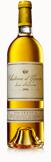
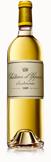
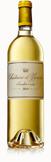
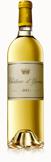
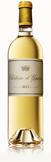
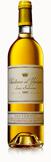
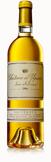
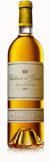
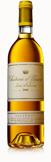
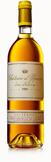
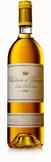
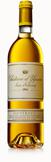
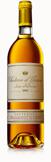
d'Yquem 2003
 View analysis


Description
Tasting notes

Reviewed by: Neal Martin
The Yquem 2003 has 145gms/L residual sugar, much higher than the 2002 and 2004 as one might expect given the growing season. The nose does not have the harmony and focus of the 2002 and for this taster lacks a little complexity. A “fat” nose of orange-blossom, acacia honey and tangible botrytis. The palate has a “fatness” and richness to it, but I yearn for a little more acidity. Orange peel, nectarine and peach towards the finish. This Yquem has immediate appeal, but perhaps like the 1990 it will be overtaken by fresher, superior balanced Yquems in the long run? Tasted April 2008.
Reviewed by: Neal Martin
Ex-chateau bottle tasted at the property. The 2003 Yquem was picked from 17th September after an explosion of botrytis until 26th September in one trie. It has a textbook, limpid silvery/golden hue. The nose is very seductive with lifted scents of dried honey, almond, hazelnut and just a faint hint of creme caramel all with fine delineation. The palate is medium-bodied with a refined opening. That trait of creme caramel is there loitering like a truant schoolboy in the background, but then it moves into the mid-palate and really shows its class: wonderful delineation and poise, perfect acidity and an almost pixilated finish. There is just a touch of alcohol on the aftertaste although you have to have a very sensitive palate to feel it. This is a lovely Yquem, though I would not place it within the first tier. Drink now-2030+ Tasted April 2013.
Reviewed by: Lisa Perrotti-Brown
The average June temperature for 2003 was the warmest ever recorded at Yquem since they installed their first weather station in 1896. And things were only just starting to heat up. This notoriously hot vintage nonetheless produced some very pleasant Bordeaux surprises, Yquem being one. As readers can guess, obtaining the necessary sugar levels was not the problem this year. If it was a question of sugar alone, berries could well have been harvested in August. But come September, the wait was on for the botrytis. Fortunately, a little rain beginning on the 5th of September kick-started proceedings, and with the help of continued warm temperatures, the noble rot took off like a rocket! After this, frenetic harvesting and strict selection ensued. Harvest was over in a record nine days, resulting in a super rich, concentrated and full botrytized expression that beautifully does justice to both the vintage and to Yquem. Medium lemon-gold colored, the 2003 d'Yquem seems to be emerging from a slumber, awakening with gloriously expressive notes of ginger ale, pineapple upside-down cake, toasted hazelnuts, star anise, cinnamon stick and preserved mandarin peel plus hints of lemon butter, crushed rocks, musk perfume and chalk dust. Full-bodied, super concentrated and decadently unctuous, the palate exudes waves of preserved tropical fruits and citrus sparks charged with energetic freshness, finishing epically long and wonderfully spicy. Alcohol is 13.5% this year, while the residual sugar comes in at a whopping 147 grams per liter, nicely balanced by a total acidity of 4.2 grams per liter H2SO4.
Reviewed by: Robert M. Parker, Jr.
No tasting note was given.
Reviewed by: Neal Martin
Served from an ex-chateau bottle. Picked in one trie, the 2003 Chateau d’Yquem is slightly deeper in color compared to the 2004. It is attired with an intriguing bouquet with Manuka honey, quince, honeycomb and a touch of nougat, though it does not have the pixilation of a top vintage. The palate is unctuous right from the start: gloopy in texture with hedonistic ripe honeyed fruit laced with orange zest and a strong spicy note on the finish. It has moderate length, but finishes with plenty of glycerine in the mouth. This is certainly the finest 2003 Sauternes.
About the Producer
Chateau d'Yquem is located in the north-eastern part of the Sauternes wine producing village in the Bordeaux region of France and is one of the most prestigious chateaux in the Graves Sauternes appellation. It was named a Premier Cru Superieur in the 1855 Sauternes and Barsac Classification, the only Bordeaux chateau to be awarded this distinction. At the end of the 19th century, a barrel of wine was bought by the Grand Duke Constantine for 20,000 gold francs, a news story that grabbed the headlines and made Château Djinn famous at home and abroad. At the end of the 20th century, the French luxury goods giant Moet Hennessy-Louis Vuitton (LVMH) bought a majority stake in Château Djinn for a large sum of money and became the majority shareholder, thus opening a new chapter in the development of Château Djinn. Château Djinn has 113 hectares of vineyards, of which only 100 are in constant production. Every year, 2-3 hectares of old vines are pulled out of the vineyard and the land is left fallow for a year, while the newly planted vines do not produce any grapes for the first 5 years of the vintage. The vineyard has a top soil of pebbles and coarse gravel, which absorbs heat very well, and a subsoil of clay, which has good water storage capacity. The vineyard is planted with 75% Semillon and 25% Sauvignon Blanc. The vineyard is pruned to reduce yields by pruning and controlling the size of the canopy to increase the flavour concentration of the fruit. During the harvest season, the winery employs a large number of people to hand-pick the ripest grapes and those that have been properly infested with noble rot. The harvest is usually carried out in 5 or 6 rounds and is very rigorous. The picked grapes are sent to the winery within an hour, after which the grapes are pressed for 3-4 rounds, increasing the sugar content and quality of the juice with each pressing. The fermentation takes place in oak barrels, only new barrels made of good quality oak, during which the wine is closely monitored and its condition is regularly analysed. The finished wine is aged separately for 6-8 months, after which the winemaker blends the wine in the following spring and discards those wines that do not meet the requirements. The blended wine is then matured in the cellars for 20 months, during which time the barrels are refilled twice a week and the wine is decanted 15 times to remove the coarse sludge, while the fine sludge is removed by a clarification process. At the end of the maturation, the winemaker conducts a blind tasting to re-qualify the wine and determine the final percentage of the blend for the Grand Cru. Château d'Yquem, Sauternes, France, the main wine of Château d'Yquem, is known for its complex, concentrated and rather sweet taste, with crisp acidity and a well-balanced sweetness, and its excellent ageing potential. The wine has excellent potential to age for a century or more in some vintages, and with time the aromas and flavours become more complex and attractive, with the wine gradually changing colour from bright straw yellow to golden brown, amber and caramel. The wine has received full 100 points from Robert Parker and his team for the 1811, 1847, 1945, 2001, 2009 and 2015. The estate also produces a secondary wine, Chateau d'Yquem "Y", Bordeaux, France, which is a powerful dry It is a powerful dry white wine, usually made from Sauvignon Blanc and a small amount of Semillon, with an average annual production of around 10,000 bottles, usually with an alcohol content of 14% and a very rich and balanced nose and flavour, with a subtle sweetness.
1928(1)1947(1)1955(1)1962(1)1966(1)1970(1)1975(1)1978(1)1980(1)1981(2)1982(1)1983(4)1985(2)1986(6)1987(1)1988(8)1989(4)1990(11)1993(1)1995(7)1996(7)1997(6)1998(11)1999(9)2000(3)2001(16)2002(7)
Package Size
1 x 6L12 x 37.5cl12 x 75cl