
 Wine Advisor



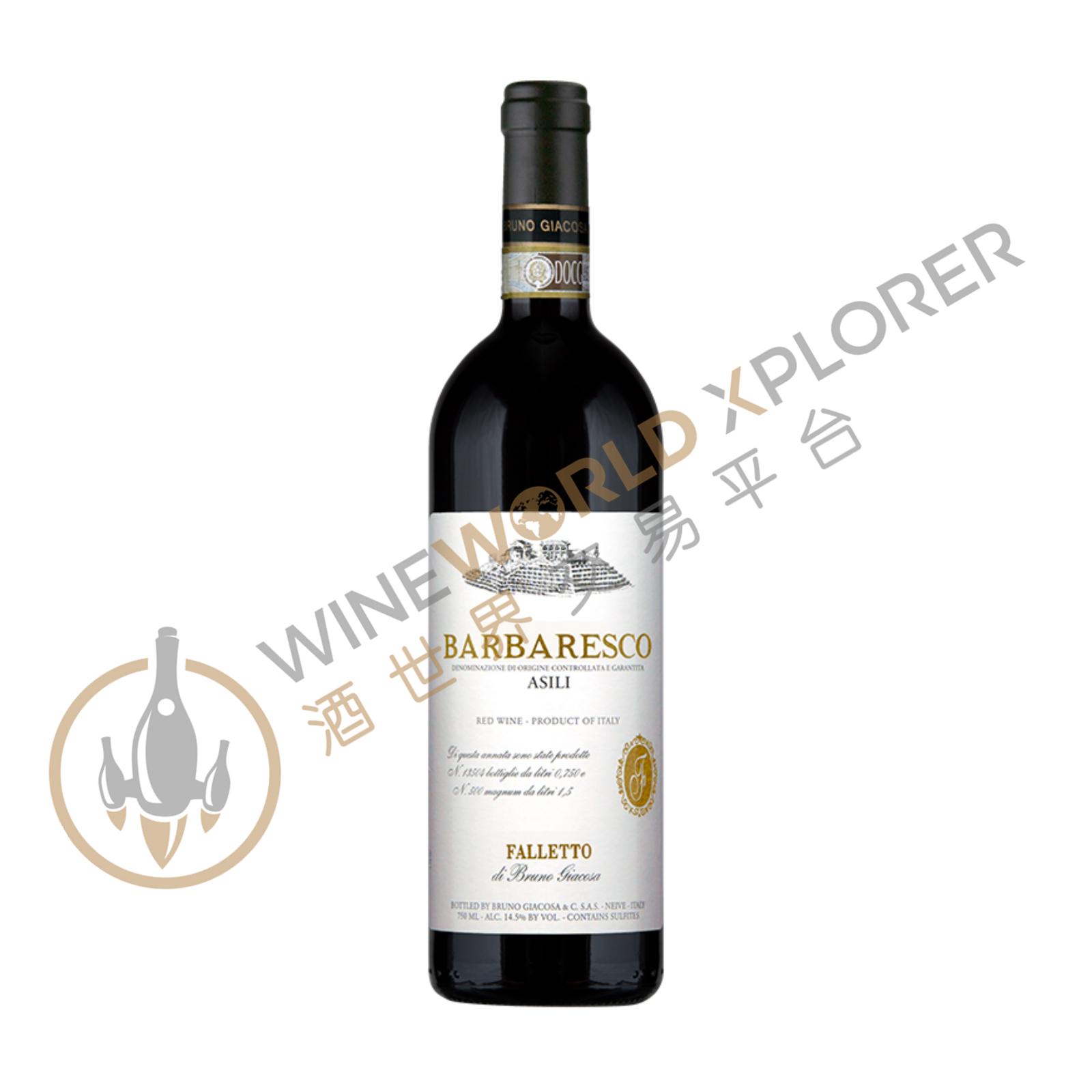
Bruno Giacosa, Barbaresco Asili 2001
 View analysis


Description
Tasting notes

Reviewed by: Antonio Galloni
2001 Barbaresco Asili—Dark translucent ruby. If Santo Stefano typically tends towards the ethereal, Asili is more overtly fruit dominated. The 2001 Asili shows a complex nose of sweet red fruit, minerals, underbrush, spices and herbs. It is richer and rounder than the Santo Stefano, and displays much finesse and elegance in its expressive ripe fruit flavors. “The soils at Asili are sandier than at Santo Stefano, and this gives a wine that is in fact richer and rounder,” confirms Scaglione. Unfortunately the Asili was showing some effects of its recent bottling, and I imagine after the summer it will be easier to get a better idea of what the wine offers. Nevertheless, this is clearly a special wine that approaches greatness. An Azienda Agricola Falletto di Bruno Giacosa bottling. 94+? points/drink after 2009, tasted 05/05 To be released in 2006. It is extremely rare for Giacosa to show his Barolos and Barbarescos at this young stage and the insight gained by tasting these wines is illuminating. These 2004s are already outrageous, and offer the well-delineated aromatics and expressive, layered flavors typical of a great year, although the vintage was not without its challenges. “2004 was a year where the vines tended to overproduce,” explains Scaglione. “We could have easily produced 120 quintali a term used to indicate the weight of harvested fruit per hectare, 1 quintale equals 100 kilos, and 80 quintali (8,000 kilos/8.8 tons) is the maximum allowed by law of fruit per hectare so we ended up dropping a lot of fruit to get to our desired level of about 65 quintali (7.15 tons). It was a perfect year in terms of the weather. Daytimes temperatures reached 30°C (86°F) during the day but fell to about 15°C (59°F) in the evening allowing the grapes to mature gradually.”
Reviewed by: Daniel Thomases
Asili is the house’s home vineyard in Barbaresco, and the 2001 Barbaresco Asili is notably darker than the Santo Stefano in color, more complex in aroma with notes of resin, smoke, and anisette to accompany the fruit, and a long, forceful, structured palate, rather muscular for a wine from this cru. Drink: 2005-2018. Importer: Winebow, Hohokus, NJ; tel. (201) 445-0620
Reviewed by: Antonio Galloni
The 2001 Barbaresco Asili impresses for its gorgeous inner sweetness and inviting, round fruit. The 2001 is pure Asili, but it has begun to shut down mightily over the last 1-2 years. Still, it is impossible to miss the pedigree of what is in the glass. Anticipated maturity: 2015-2031. This is a fabulous set of wines from one of the great Giacosa vintages. Admittedly, opening ten year-old Giacosa Barbareschi and Baroli must be viewed as a purely academic excercise, as the wines are nowhere near ready. Readers will have to be especially patient, as most of these wines have entered a closed phase after having been surprisingly accessible early on. Importer: Folio Fine Wine Partners, Napa, CA; tel. (707) 256-2700
Reviewed by: Antonio Galloni
What a pleasure it was to taste the 2001 Barbaresco Asili. The nose is expressive, with well-delineated notes of spices, flowers and tar that meld seamlessly onto an irresistible palate packed with vibrant layers of sweet ripe fruit with an open, generous personality. This wine is showing a wonderful sense of inner purity right now and will be even better in a few years, although its qualities are abundantly apparent even at this early stage. A great effort. An Azienda Agricola Falletto di Bruno Giacosa bottling. Anticipated maturity: 2009-2021. Importer: Winebow, Hohokus, NJ; tel. (201) 445-0620
Reviewed by: Antonio Galloni
Thankfully, we had better luck with the 2001 Barbaresco Asili. It just needs a few hours to open. When it does, classic Asili notes of crushed flowers, spice and red berries soar out of the decanter. As good as the 2001 is, it is not an eternal wine. I plan on drinking my remaining bottles over the next decade. I wanted a little more magic here.
Reviewed by: Antonio Galloni
Giacosa’s 2001 Barbaresco Asili graces the palate with dried rose petals, sweet tobacco, incense, smoke and orange peel. Just entering the early part of its drinking window, the 2001 is utterly mesmerizing in the glass. It is a bit more tannic than the 2007. At this stage, I would let the 2001 develop more complexity in the cellar. The Giacosa Asili is a wine best tasted young or with a decade plus of bottle age because the years between those stages can be a bit awkward. Still, the 2001 is magnificent.
Reviewed by: Antonio Galloni
The 2001 Barbaresco Asili impresses for its gorgeous inner sweetness and inviting, round fruit. The 2001 is pure Asili, but it has begun to shut down mightily over the last 1-2 years. Still, it is impossible to miss the pedigree of what is in the glass.
Reviewed by: Antonio Galloni
Things kicked up several notches with a flight of Barbareschis from the famed Asili vineyard. Asili is in the village of Barbaresco, where the wines are generally more feminine than in Neive. The best wines from this site have great aromatics and fine, silky tannins. The 2001 Barbaresco Asili is one of the most Riserva-like white labels Giacosa has ever produced. It was magical on this night, with endless layers of fruit supported by firm yet elegant tannins.
Reviewed by: Antonio Galloni
What a pleasure it is to taste the 2001 Barbaresco Asili on this day. The nose is expressive, with well-delineated notes of spices, flowers and tar that meld seamlessly onto an irresistible palate packed with vibrant layers of sweet ripe fruit with an open, generous personality. This is showing a wonderful sense of inner purity right now and will be even better in a few years, although its qualities are abundantly apparent even at this early stage. A great effort. An Azienda Agricola Falletto di Bruno Giacosa bottling.
Reviewed by: Antonio Galloni
Medium red. What a pleasure it is to taste the 2001 Asili on this day. The nose is expressive, with well-delineated notes of spices, flowers and tar that meld seamlessly onto an irresistible palate packed with vibrant layers of sweet ripe fruit and an open, generous personality. This is showing a wonderful sense of inner purity right now and will be even better in a few years, although its qualities are abundantly apparent even at this early stage. A great effort. An Azienda Agricola Falletto di Bruno Giacosa bottling.
Reviewed by: Stephen Tanzer
(white label) Fascinating aromas of game, tobacco, flowers, eucalyptus and wild mint. Sweet, superconcentrated and fine-grained. Combines an almost extreme sweetness for Giacosa Barbaresco with terrific acidity and compelling inner-palate perfume. This really reverberates in the mouth! A wonderfully sweet, silky wine that finishes with a firm tannic spine. As with the 2004, this is more classic than the 2000, but the Burgundian subtlety and complexity of that earlier vintage still make me crazy.
About the Producer
Bruno Giacosa, located in the south and south-west of Piemonte, has been performing well for three generations, thanks to the careful selection of high quality grapes and the emphasis on traditional winemaking techniques. The vineyard covers 44.7 acres (18 hectares) and is planted with Nebbiolo d'Alba, Barbera and Dolcetto varieties. The average age of the vines is 15 years and the planting density is between 4,500 and 5,000 vines per hectare, with an average yield of 4,800 litres per hectare. In terms of winemaking, the owner has a classic quote: "For us, the philosophy of traditionalism means making wines that are not only strongly local to the vine and the grape variety, but also maintain the various local terroirs. We have always made single-variety wines. Our winemaking techniques have been improved and we also make use of gentle pressing, crushing operations, advanced rotary systems and optimised cold and hot treatment techniques." For Garcosa, technology and tradition are not necessarily at odds with each other. In the winemaking process, the grapes are first fermented in steel containers and then transferred to wooden containers for ageing, which varies slightly depending on the type of wine. Finally, the wine is bottled without filtering. The main wines produced by the winery are the Barbaresco Garina, the Barbaresco Santo Stefano, the Barbaresco Asili, the Barbaresco Wabasha and the Barbaresco Asili. Barbaresco Rabaja, Barolo Falletto and Barolo Le Rocche del Falletto. Some of the more recent vintages are 2001, 2000, 1998, 1997, 1996, 1990, 1989, 1982 and 1978. These vintages are often relatively closed and uninteresting when first bottled, but after 10 years in the cellar, they all show an irresistible magic.
