
 Wine Advisor



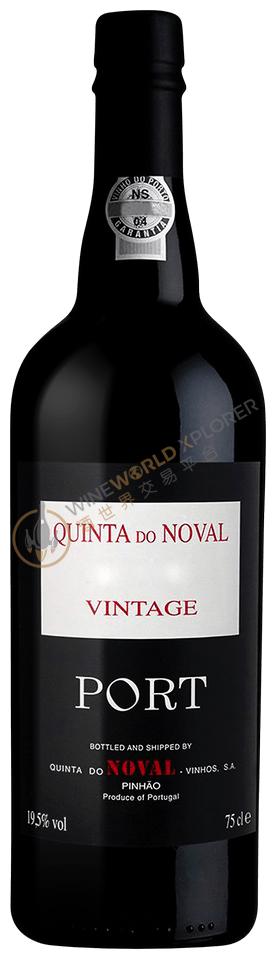
Quinta do Noval, Vintage Port 2012
 View analysis


Description
Tasting notes

Reviewed by: Neal Martin
Lucid purple/ruby in color, the first thing to strike you is the purity on the nose. There is a surfeit of fresh fig, prune and raisin that actually brings to mind a more tempered Fonseca. It is beautifully defined, not the most complex Noval, but seemingly approachable just like the 2011. The palate is well endowed with plenty of tangy, very spicy dark plums and blackcurrant fruit, a healthy dash of cracked black pepper and a very animated, attacking finish that is determined to make an impression, if not to be overshadowed by the 2011. This is a superb addition to recent Noval releases, one that I perhaps would broach earlier than others. Just 1,000 cases for this limited release. Importer: Vintus; contact Alexander Michas; tel. (914) 769-3000
Reviewed by: Mark Squires
The 2012 Vintage Port is revisited for a checkup. This is a blend of Touriga Nacional 70%, Touriga Franca 25 % and Tinto Cão 5%, which was aged for 18 months in wood and comes in with just 89 grams per liter of residual sugar. This has become more intense and more impressive, closing down a bit since I first saw it. It may not have quite the underlying concentration and focus of the 2011 (also reviewed), but it is a much fresher and more lifted Port, with fine fruit front-and-center. It simply seems more invigorating, more gloriously alive. I wouldn't be surprised if many like it better right now than the 2011--although that won't likely be the answer 25 years from now. It otherwise retains the style of all of Noval's wines here--elegant in the mid-palate, more focused on aging than lushness and sweetness. It certainly seems quite brilliant for the year. Originally, I was afraid I might have overrated it as it was so exuberant and showed so well nearer to release. Now, I'd be more likely to question whether I'm underrating it. It's never as obvious as some Big Boys and it probably is the third of the 2011-2012-2013 trilogy from Noval this issue (only by a hair), but it has its own virtues and plenty of them.
Reviewed by: Mark Squires
The 2012 Vintage Port was bottled in July of 2014. A blend of 70% Touriga Nacional, 25% Touriga Franca; 5% Tinto Cão, it was aged for 18 months in wood and comes in at 102.5 grams per liter of residual sugar. This is going to be a sentimental favorite for a lot of consumers, although few will call it truly great. A big mouthful on first taste compared to most 2012s, it assaults the palate with delectable fruit. It's not only tasty, though – it is astonishingly fresh and lifted, a creature of this vintage. Beautifully balanced and never seeming heavy, it manages to project power and grip on the finish while not searing the palate with tannins – relatively speaking, of course. (This IS young Port.) Tasted next to a group of other 2012 Ports, this wasn't particularly more concentrated, but it was more expressive, better balanced and more vibrant. Coming back to it the next day showed what it does best: being rather invigorating and sometimes downright exciting in its freshness. The fruit finishes with crispness and vibrancy. It is exactly the profile I would expect from a good performance in a vintage like 2012 – a year that favored fresh, elegant wines with good acidity rather than deep and rich powerhouses. By Day 4, it was sensationally delicious, but certainly not the most powerful or concentrated Noval ever – and it had fleshed out a bit even so. By Day 5, it seemed like ready-to-roll, drink-me-now Port. You'd still be well-advised to cellar it a bit. There were 1,000 cases produced.
Reviewed by: Mark Squires
The 2012 Vintage Port is part of our mini-vertical this issue. Since this was last seen, it has come along beautifully. It is actually richer, lusher and more seductive than the 2011, which focuses on power, while still showing admirable mid-palate finesse. That said, it really isn't as concentrated, and it certainly is not as well structured. It is still an unusually sexy Noval with a hedonistic overlay. It is pretty approachable. You may not conclude it is the best of the group, but everyone's going to adore it.
Reviewed by: Neal Martin
The 2012 Vintage Port is quite backward and slightly smoky on the nose, opening with allspice, undergrowth and sage, though the 2013 has greater amplitude and complexity. The palate is medium-bodied with a lightly spiced entry, building towards quite a peppery, tangy marmalade-tinged mid-palate that drives home the finish. Not as assured as the 2013, but it is beginning to drink well now and should do so for the next two decades. Tasted at the Quinta do Noval tasting at Spring restaurant in London.
About the Producer
Quinta do Noval is one of the oldest and leading wineries producing Port wine. Among the top port producers, Bird Park is even more distinguished by the fact that its grapes are picked from a single vineyard. Notably, the winery is known for producing Portugal’s best port wine, “Nacional”, a blend from a single vineyard of old vines in the domestic Touriga Nacional. Likewise, the winery also produces high-quality dry red wines from Portugal, the most anticipated wines from the Douro region, showing unparalleled depth and concentration, as well as rich fruit and spice. trait. "Douro" means gold and gold in Portuguese, so the Douro River is also called the Golden River Valley. The Bird Park is located in Pinhao Village, the most central part of the Douro River region. The winery now has about 247 acres of vineyards. The Bird Park was created in 1715, originally owned and operated by the Rebello Valente family for over a century, and passed on to Viscount Vilar D'Allen by marriage in the early 19th century , a man with a passion for wild dances. In the 1880s, due to phylloxera damage, like other local wineries, Bird Garden was also for sale. In 1894, it was sold to Antonio Jose da Silva, a famous local businessman, who replanted the grape The estate was reborn, and his son-in-law, Luiz Vasconcelos Porto, took over the management and has been managing the winery for nearly 30 years. Louis vigorously carried out reforms, widening the width of the terraces, increasing the light and the convenience of field operations, which is a great reform even by today's technical standards, and promoted the winery with the help of Cambridge, Oxford and other clubs to enhance the reputation of the winery. Bird Garden's reputation continued to improve, and the 1931 vintage was an iconic one. Due to the world economic downturn at the time, orders for Port wine fell sharply. During the year, only three wine merchants continued to operate. Bird Garden was the The only Portuguese producer at the time with continuous exports to the Anglo-American market.
