
 Wine Advisor



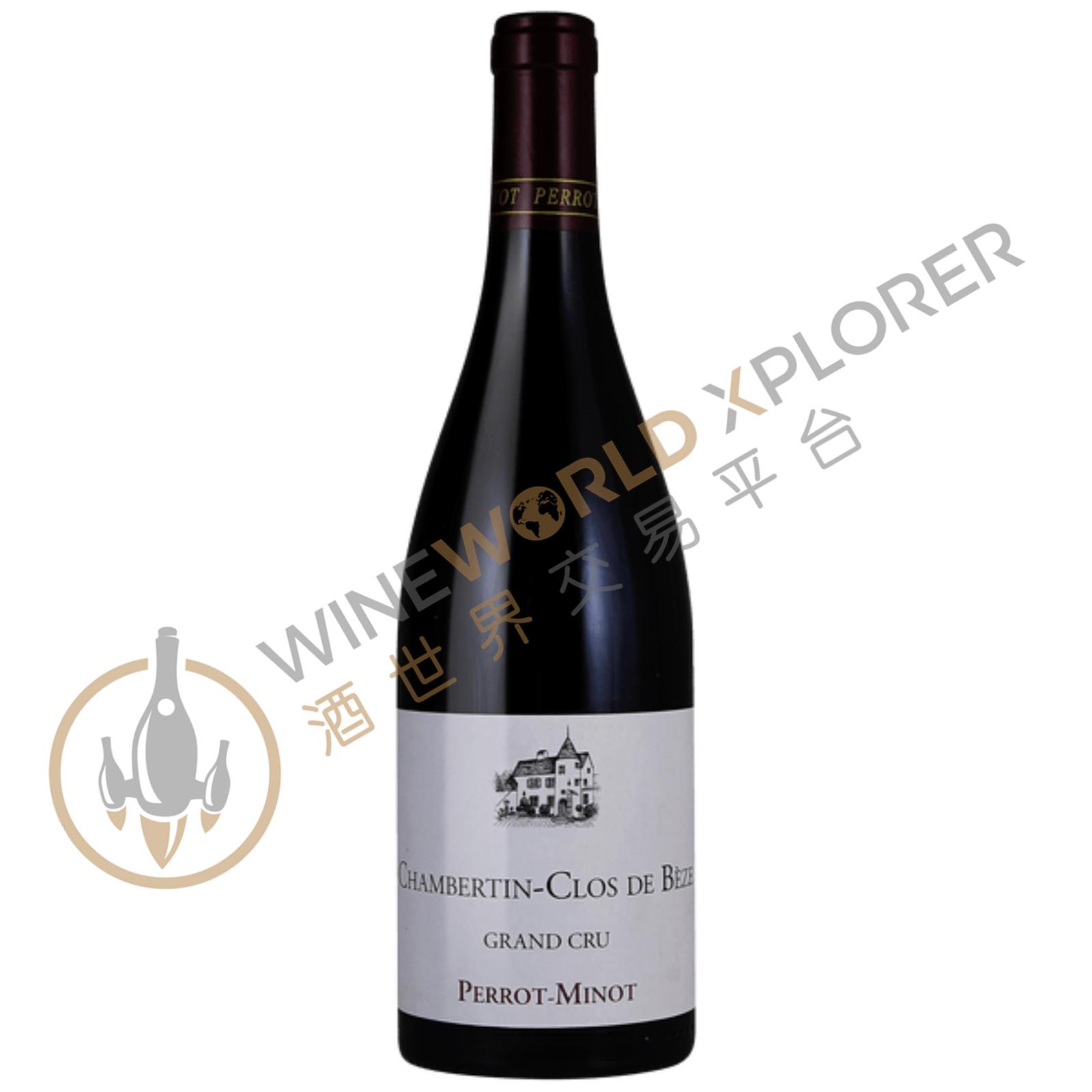
Perrot Minot, Chambertin Clos de Beze Grand Cru Vieilles Vignes 2008
 View analysis


Description
Perrot Minot, Chambertin Clos De Beze, Grand Cru, VV, Burgundy, France, Still, Red, 2013
Tasting notes

Reviewed by: David Schildknecht
Rose petal, licorice, cassis, and game scent the Perrot-Minot 2008 Chambertin Clos De Beze Vieilles Vignes, then expansively rush to saturate every corner of the mouth, to the accompaniment of peat, chalk, and crushed stone. A tartness of berry skin and pronounced salinity lend invigoration to a resonant, nearly indelible finish. This demands patience. Perhaps revisit it in 6 years and in any case expect it to remain formidable for 20 or more. Whether it will acquire any sense of elegance I am not sure, but it will almost certainly reveal further complexity. Cellar this for 6-8 years and plan on a subsequent decade of high performance. Christophe Perrot-Minot pursued to extremes in 2008 the fanatic selectivity on which he prides himself, though he would have been happy had that not been necessary. He claims this triage was almost entirely for the removal of under-ripe, not of botrytis-infected, berries. (And yields from these – as the labels remind us – universally old vines are always extremely low even before fruit hits the estate’s two sorting tables.) The concentrated, lavishly ripe but densely-structured style associated with this domaine is tempered by the relatively low alcohol (wines finished – after light chaptalization – in the upper 12s or low 13s) and efficacious acidity of the 2008 vintage, as well as by a relatively gentle extraction that he reports was forced on him by fruit whose virtues could easily have been spoiled by pigeage. Given the way these wines turned out, I, for one, am very glad no attempt was made to punch the musts into further extractive submission! Perrot-Minot opines that many 2008s were permanently stunted by excess sulfuring – which exacerbated the lateness of malo-lactic transformation – and by too little time between the end of malo and bottling, ending up “square” (he used the English word) and “lacking in fat. There was also a danger,” he acknowledged, “that one could end up with wines too concentrated, or that lack purity of aroma and don’t express their terroir.” And in another response to the inherent intensity but also limitations of the fruit, new wood this year was held to a maximum of 40%. Most of the 2008s had been bottled recently when I tasted them in April, but some as early as January. (For details on many of the Perrot-Minot vineyard sites and old vines, consult my reports in issues 170 and 186. I did not have time, unfortunately, to taste any of the 2007s from this estate except a very early stage.) Importer: Martine’s Wines, Novato, CA; tel. (415) 883-0400
About the Producer
Perrot Minot's attitude toward Perrot Minot Biodiversity encouraged For several years, Christophe Perrot-Minot has favored the use of products approved for organic farming and reduced the doses of conventional products prescribed, thanks to the observation of the weather, wind, humidity and heat. It also strives to recreate a microbial life in its soils and to improve its structure by practicing systematic plowing and winter ridging of the feet. Limited returns Guyot pruning is relatively short to limit the release of grapes and allow good ripening of the berries. The practice of leaf stripping and green harvesting can be useful depending on the vintage to guarantee optimum ripeness of the fruit. Very supervised harvests The harvest is exclusively manual and sorted a first time in the vineyard, then transported in small crates for a second passage on a sorting table. All the grapes are cut in half to check their sanitary condition and to eliminate any that are not perfectly ripe. Depending on the vintage, a proportion of the whole harvest is put into vats. It is transported in small bins, which allows the logs to be kept intact and the most natural and accurate expression of the terroir possible. The logs are calibrated in order to keep only the source millerandage of the oldest and most authentic vines. The estate is looking for a production of around 25 to 30 hl/ha for the whole production.
