
 Wine Advisor



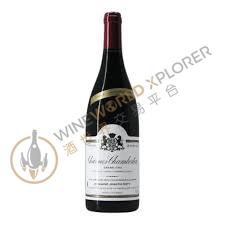
Joseph Roty, Charmes Chambertin Grand Cru Tres Vieilles Vignes 2008
 View analysis


Description
Tasting notes

Reviewed by: David Schildknecht
Scents of kirsch and almond extract mingle with fresh dark cherry and purple plum in the high-toned, intense nose of Roty’s 2008 Charmes-Chambertin Tres Vieilles Vignes, to which charred meat, marrow, licorice, and peat add complexity that follows on an expansive, almost plush palate. Sizzling pungency of black pepper; hints of caramel from barrel, and persistent black tea and peat-like smokiness serve for both enhanced richness and a degree of enervation. But what one gains in opulence vis-a-vis the Griotte one sacrifices in brightness and a degree of energy. Still, these are early days for this wine sure to be worth following for 15-20 years. Philippe Roty insists that because of his rigorous canopy-management and green harvesting, plus a further late summer crop-drop, rot was not the problem for him in 2008 (or for that matter in 2007). But ripeness, he readily acknowledged, was. “In 2008, we simply lacked 8 or 10 days of sunshine,” he concludes, admitting that he harvested his lesser terroirs first (beginning September 23) and his grand crus last. “Which would you want to make sure ripens, Bourgogne or Charmes Chambertin?” he asked with a rhetorical laugh. This reversal of normal procedure – when taken together with the cautious extraction Roty felt committed to buy unripe pips – resulted in a 2008 collection that is mildly disappointing in its lowest echelons and among village Gevreys, though the Marsannays continued to offer considerable interest for their modest prices, whereas they were decidedly weaker partners in 2007. (Since the 2008 hail in Marsannay hit largely in the Chenove direction, it had little effect on Roty’s locations.) Tasting at the press and halting pressing as soon as bitterness or under-ripeness were detected was, says Roty, another critical factor in rendering satisfying 2008s. Malos – other than two stubborn whites on which Roty simply gave up! – finished here on a normal schedule at the end of their first winter, and thus in no way compromised his plan to as usual bottle the wines in April. I tasted in late February a pre-assemblage set aside for me two weeks in advance of my visit because in the meantime all of the lots had been sulfured in barrel. Importer: Alain Junguenet, Wines of France, Mountainside, NJ; tel. (908) 654-6173
Reviewed by: Stephen Tanzer
Medium red with a hint of amber at the rim. Complex, mellow scents of raspberry, dried flowers, mocha and iron-like minerality. A precise, lightly saline wine with lovely sappy thrust and energy to its sharply delineated flavors of crushed strawberry, raspberry, red cherry, flowers and salty minerals. Superb fruit retention here for a ten-year-old Burgundy. Finishes classically dry and salty, with a subtle, resounding whiplash of red fruits and minerals. This wine has tightened up considerably since I first tasted it shortly after the bottling. I love this style! (13.8% alcohol; 3.2 pH';38 h/h; this was the first vintage made entirely by Philippe Roty, following Joseph's death at age 60 in '08; my original notes say that it was aged in 80% new oak)
About the Producer
The Roty family has been brewing in Burgundy for over 300 years, and the earliest time they could trace the lake was in 1710. Joseph Roty began his studies at the winery in 1968, full of talent and his own style. In the world of wine, Joseph Roty indulged in his talents, elevating the winery's reputation to its highest point. He himself became one of the greatest winemakers in Burgundy. The winery's biggest asset was the well managed vineyard, from Gevrey Chambertin to Marsannay, which he later acquired, a nearly 12 meter vineyard, Under the careful care of generations, they criticize the highest quality of local wine. Among them, three super levels of Charmes Chambertin, Mazy Chambertin, and Griottes Chambertin were purchased by Joseph Antoine, the grandfather of Joseph. The winery's precious honey is located, among which Charmes Chambertin, over 60% of the grapes were planted in 1881. After the death of the old villa owner Joseph Roty, his wife took care of his two sons, Philippe and Pierre Jean, to jointly inherit the family Industry. Joseph Roty follows a natural way of brewing, with over 70% of the vines in his berry circles being over a hundred years old, and the yield is also very low. The combination of low yield and prolonged soaking gives Roty's wine a rich oak flavor and unusual fruit depth, with occasional bitter to sweet flavors. It is also one of the best representatives of traditional Legendary red wines in this region.
1996(1)2000(1)2001(2)2002(2)2003(1)2005(1)2006(1)
Package Size
