
 Wine Advisor



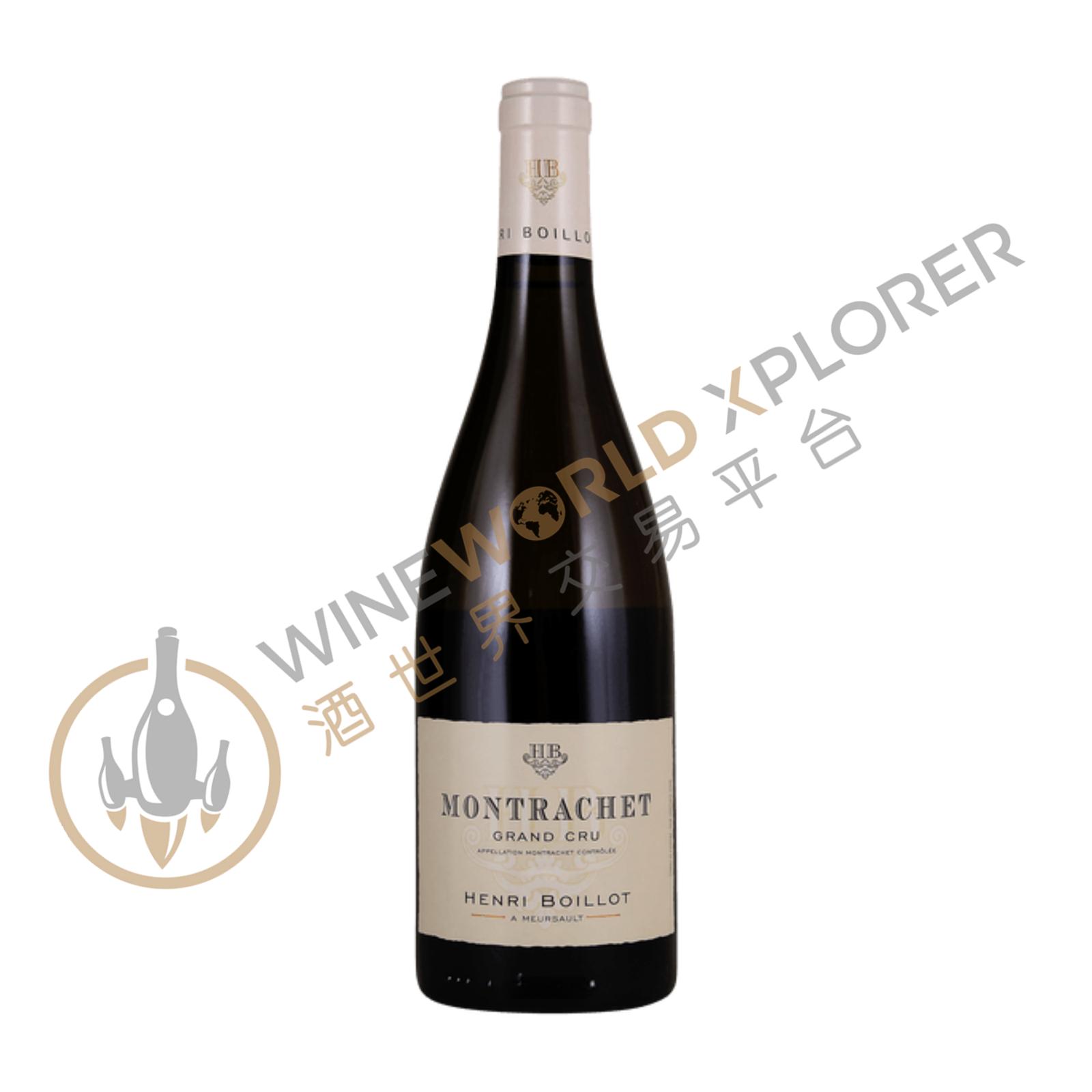
Henri Boillot, Montrachet Grand Cru 2007
 View analysis


Description
Tasting notes

Reviewed by: David Schildknecht
The Boillot 2007 Montrachet (from the Chassagne side) is alluringly scented with honeysuckle, Persian melon, white peach, heliotrope, lily, narcissus, and musk; sets up a vibratory interaction of elements on the palate that is reminiscent of the corresponding Chevalier; and exhibits as well a similarly uncanny alliance of energetic brightness with custardy richness of texture. There is a dimension of clarity and what I can only call a crystalline mineral element in the Boillot Chevalier-Montrachet (but also in a few of the other best wines of that appellation) that I have never experienced from Montrachet itself. But while this wine may be in some sense more opaque than the corresponding Chevalier, its inscrutability is part of its delicious wonder. It's like organ music with all the reverberations of the cathedral, whereas when I grasped for a metaphor to capture the Chevalier, Boillot merely flicked a finger against the rim of his glass, a gesture worth more than any words. I certainly hope and anticipate that this Montrachet will be worth following for a dozen or more years. As explained in my report in issue 180, Henri Boillot’s domaine is now legally known by his name rather than that of his father Jean, and is thus eponymous with his negociant business. Furthermore, given what seems to be a stylistic convergence as well as given Boillot's own preference in presenting his wines this year, I have folded together the coverage of these two entities, noting in the text of my notes those wines that come from the domaine. Boillot did not begin picking until the second week in September, harvesting fruit that he reported required only occasional, minimal chaptalization and had higher tartaric than malic acid, in contrast to their proportions in 2008. Since Boillot managed to achieve his ideals of “precision and minerality” even in the ripe 2006 vintage, it will come as no surprise that they have been brilliantly achieved in 2007. A preference for volume of healthy lees rather than their stirring and (as mentioned in my report on his 2006s) the utilization of 350-liter barrels rather than barriques are surely among the factors that permit these wines to marry richness with refreshment and clarity. On the other hand, even the wines of lesser appellation that receive less barrel exposure are still given extended time on their fine lees in tank before bottling, Boillot being a believer that "time is of the essence" to great white Burgundy, not in the proverbial sense but rather in that of taking enough if it. Importer: The Sorting Table, Napa, CA; tel. (415) 491 4724
About the Producer
Domaine Henri Boillot, located in the wine-producing village of Meursault in the Cote de Beaune, Burgundy, France, is a winery with a long history of quality. The vineyards of Château Boileau are located in the Côtes de Bern and Cote de Nuits appellations. The grapes for the white wines are mainly produced in the Grand Cru and Premier Cru of Prigny-Montrachet, where the soil is mainly brown limestone with occasional limestone clay soils, giving the white wines a complex and elegant taste. The grapes for the red wines come mainly from the first growths of the Volnay appellation, where the soils are mainly schist and limestone, giving the wines aromatic intensity and finesse. Château Boisrot follows traditional winemaking techniques. When the grapes reach optimum ripeness, they are picked by hand and transported to the winery. In the winery, the grapes are carefully selected and destemmed by the winery workers in order to select the best quality fruit. For the white wines, the grapes are pressed after breaking their skins and the must is then poured into fermenters where it is partially fermented and transferred to new French oak barrels for maturation. Unlike white wines, red wines are made by placing the broken skins of the grapes directly into the fermenters, allowing the skins to come into contact with the juice to extract the right amount of pigments, tannins and flavours. After fermentation, all red wines are matured in new French oak barrels, allowing oxygen to penetrate through the grain and soften the tannins, giving the wine a smooth texture and complex aromas. Currently, all of Château Boisrot's white wines are made from Chardonnay, a fresh and fruity wine that has been described as the 'star of white wines' in Burgundy. The red wines are all made from Pinot Noir, a rich and powerful wine that has received a great deal of praise from wine critics and wine reviewers.
