
 Wine Advisor




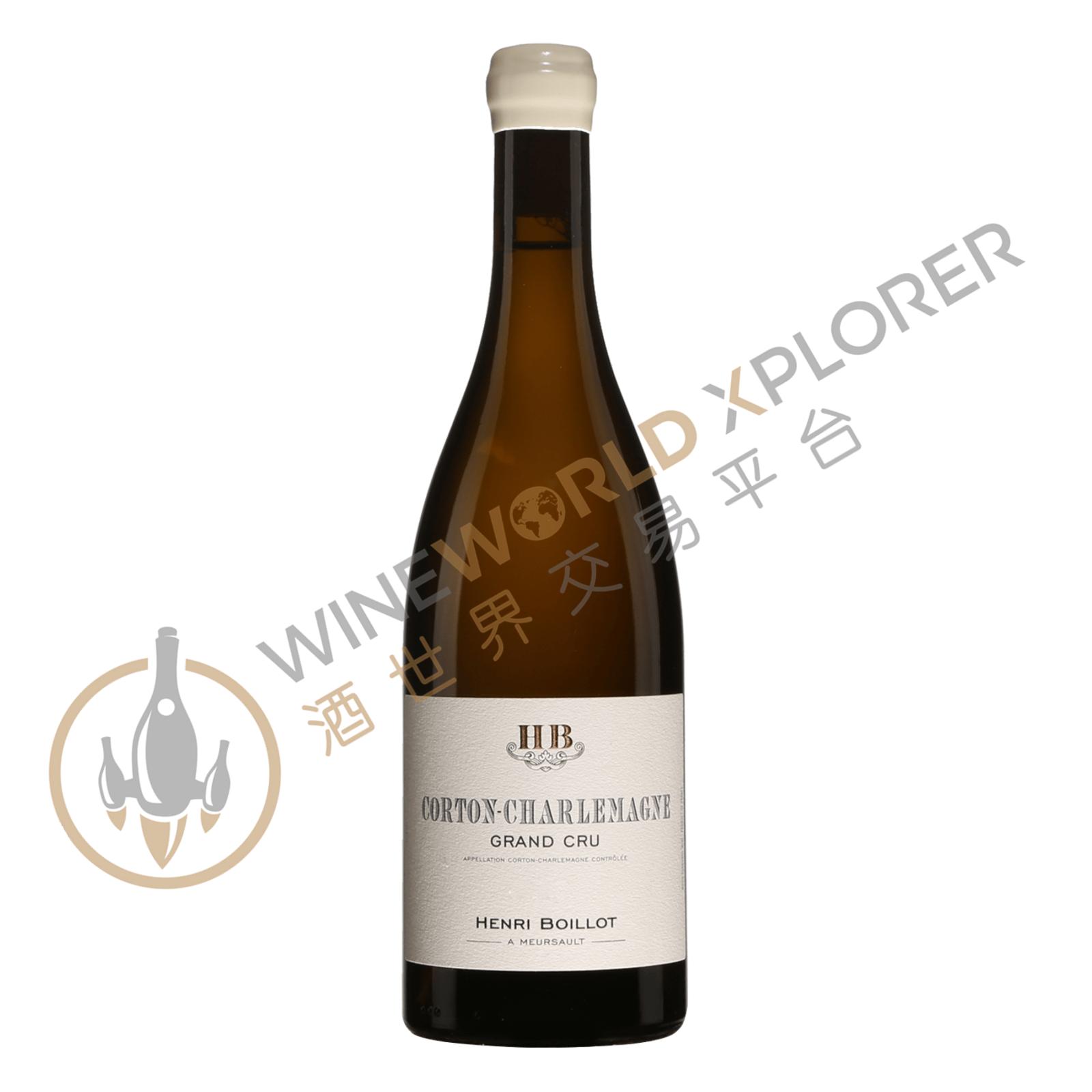
Henri Boillot, Corton Charlemagne Grand Cru 2011
 View analysis


Description
Tasting notes

Reviewed by: Antonio Galloni
An utterly mesmerizing wine, the 2011 Corton-Charlemagne conquers all of the senses with its grace and harmony. Lemon oil, white flowers, pears and crushed rocks are some of the many notes that are woven together in the glass. The 2011 is perfumed, sublime and drop-dead gorgeous from the very first taste. With time, though, the wine blossoms beautifully as it fills out its broad-shouldered frame with tons of style.
Reviewed by: Antonio Galloni
This flight of 2011s comes to a close with the 2011 Corton-Charlemagne, a cool, introspective and powerful wine. Layers of bright citrus, mint and crushed rocks fill out the wine's big, broad-shouldered frame nicely. The intense, tight finish suggests the Corton-Charlemagne is going to require a measure of patience.
Reviewed by: Stephen Tanzer
(13.8% alcohol): Pale straw-yellow. Very reduced nose hints at very ripe stone fruits, ginger, smoke and petrol. Round, sweet and quite ripe but a bit warm, and not currently showing the lift or grip of classic Corton-Charlemagne. This wine is lower in acidity than the 2012 version and comes across as rather outsized. I was blown away by a barrel sample a year ago but today this bottle does not show the energy I found last spring.
Reviewed by: Stephen Tanzer
(4.45 acidity and 3.10 pH): Bright light yellow. Highly complex and expressive aromas of citrus peel, menthol, crushed stone and tarragon accented by ginger and nutmeg. Powerful, tactile and ripe, conveying an impression of tightly coiled energy to its lightly saline apple and dusty stone flavors. Superb energy here. This very masculine Corton-Charlemagne finishes with firm tannins. Boillot's top grand crus should turn out to be among the stars of the 2011 vintage.
Reviewed by: Neal Martin
Tasted blind at the Burgundy 2011 horizontal tasting in Beaune. There is a slight reduction on the nose of Henri Boillot’ 2011 Corton-Charlemagne Grand Cru, but it opens nicely with citrus peel, mineral and sunflower seeds, gaining in intensity all the time. The palate is fresh and harmonious with a keen thread of acidity. This is well balanced, perhaps a little Puligny in style with a slightly bitter and abrupt finish. Not a bad wine, but not the best from Henri Boillot in this vintage.
Reviewed by: Antonio Galloni
This flight of 2011s comes to a close with the 2011 Corton-Charlemagne, a cool, introspective and powerful wine. Layers of bright citrus, mint and crushed rocks fill out the wine’s big, broad-shouldered frame nicely. The intense, tight finish suggests the Corton-Charlemagne is going to require a measure of patience. Anticipated maturity: 2014+. (Not yet released) Henri Boillot recently finished his move to a new modern cellar in Champ Lins, one of the industrial sections of Meursault. Boillot describes his 2011s as having a bit more richness and better balance of fruit and acidity than the 2010s. Based on what I tasted, it’s hard to argue that point. Boillot seems to be one case where the 2011s have the potential to be better across the board than the 2010s. As is often the case here, the village wines are particularly strong. Importers: Massanois Imports, Washington, DC; tel. (202) 470-6769, Cynthia Hurley French Wines, West Newton, MA Tel 617-965-4251 www.cynthiahurley.com and Chelsea Ventures, LLC, 1601 South Canal St, Chicago, IL 60616 tel. 847-920-5052
Reviewed by: Antonio Galloni
Tasted blind at the Burgundy 2011 horizontal tasting in Beaune. There is a slight reduction on the nose of Henri Boillot’ 2011 Corton-Charlemagne Grand Cru, but it opens nicely with citrus peel, mineral and sunflower seeds, gaining in intensity all the time. The palate is fresh and harmonious with a keen thread of acidity. This is well balanced, perhaps a little Puligny in style with a slightly bitter and abrupt finish. Not a bad wine, but not the best from Henri Boillot in this vintage.
About the Producer
Domaine Henri Boillot, located in the wine-producing village of Meursault in the Cote de Beaune, Burgundy, France, is a winery with a long history of quality. The vineyards of Château Boileau are located in the Côtes de Bern and Cote de Nuits appellations. The grapes for the white wines are mainly produced in the Grand Cru and Premier Cru of Prigny-Montrachet, where the soil is mainly brown limestone with occasional limestone clay soils, giving the white wines a complex and elegant taste. The grapes for the red wines come mainly from the first growths of the Volnay appellation, where the soils are mainly schist and limestone, giving the wines aromatic intensity and finesse. Château Boisrot follows traditional winemaking techniques. When the grapes reach optimum ripeness, they are picked by hand and transported to the winery. In the winery, the grapes are carefully selected and destemmed by the winery workers in order to select the best quality fruit. For the white wines, the grapes are pressed after breaking their skins and the must is then poured into fermenters where it is partially fermented and transferred to new French oak barrels for maturation. Unlike white wines, red wines are made by placing the broken skins of the grapes directly into the fermenters, allowing the skins to come into contact with the juice to extract the right amount of pigments, tannins and flavours. After fermentation, all red wines are matured in new French oak barrels, allowing oxygen to penetrate through the grain and soften the tannins, giving the wine a smooth texture and complex aromas. Currently, all of Château Boisrot's white wines are made from Chardonnay, a fresh and fruity wine that has been described as the 'star of white wines' in Burgundy. The red wines are all made from Pinot Noir, a rich and powerful wine that has received a great deal of praise from wine critics and wine reviewers.
