
 Wine Advisor



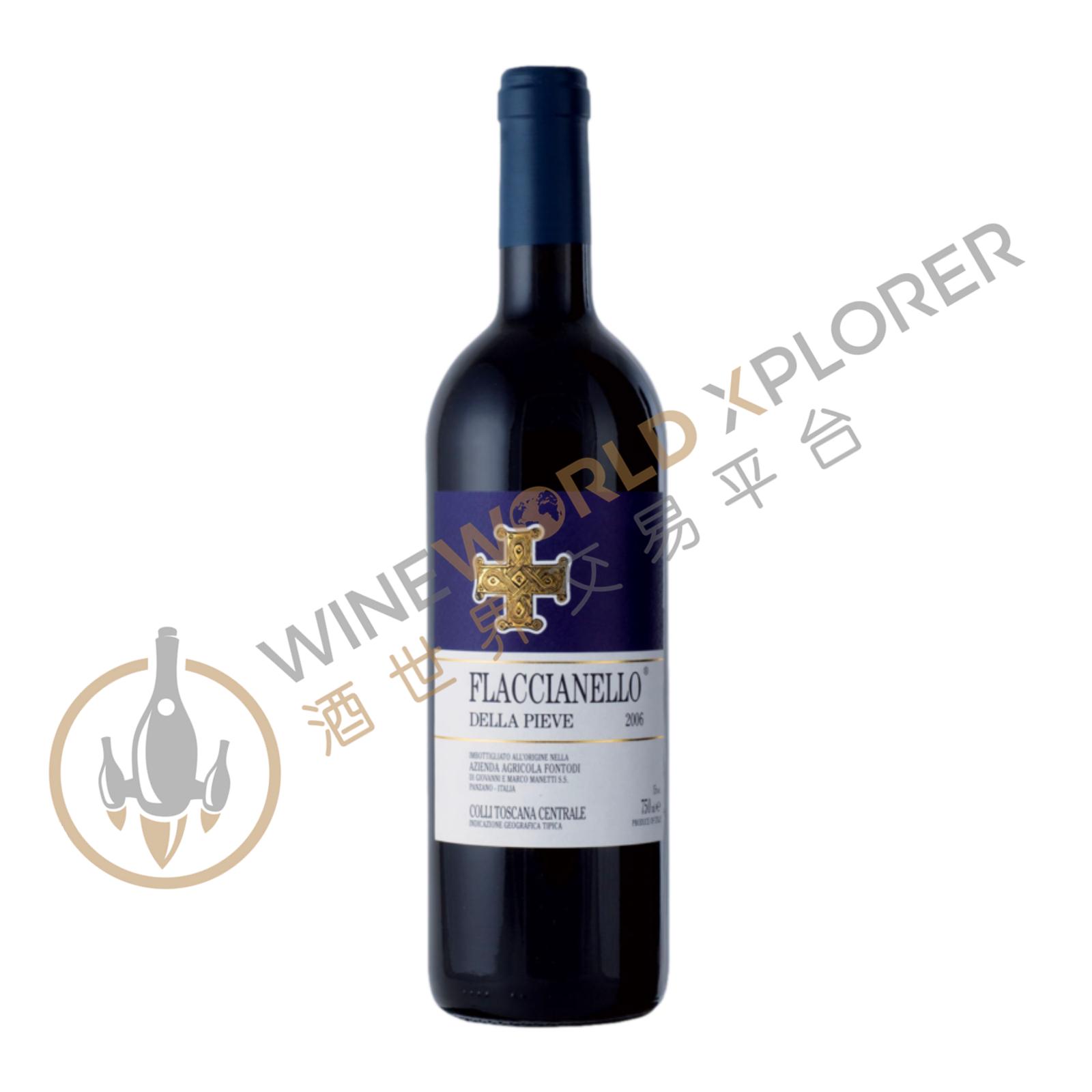
Fontodi, Flaccianello della Pieve 2001
 View analysis


Description
Tasting notes

Reviewed by: Neal Martin
A lovely pure raspberry and cranberry nose. Lots of glycerin, rich and sensuous. Wonderful definition. The palate is rich with great poise and breeding. Well-balanced, quite feminine with a lovely succulent raspberry finish. Very focused - this is Sangiovese in excelsis. Divine. Tasted September 2005.
Reviewed by: Daniel Thomases
The 2001 Flaccianello della Pieve, a wine which was one of the pioneering examples of high level Sangiovese in Chianti Classico is, for me, the best in a long and distinguished series of vintages. A brilliant ruby-garnet, its rich aromas of raspberries, smoke, and vanilla are followed by ripe, supple, and elegant flavors, a satiny, classy, lengthy style, and a full finish and aftertaste. Drink: 2006-2018. Importer: Vinifera Imports, Ronkonkoma, NY; tel. (631) 467-5907
Reviewed by: Antonio Galloni
The 2001 Flaccianello della Pieve marks a turning point, as it is the first Flaccianello to be made as a selection of the estate’s best fruit across a number of parcels rather than as a single-vineyard wine. Black cherries, plums, smoke, licorice and tobacco are some of the notes that burst from the glass in this virile, massive Flaccianello. A hint of sweet toasted oak reminiscent of the 1990 lingers on the finish. This is a great showing, but readers will have to be patient. Anticipated maturity: 2016-2031. This complete vertical of Fontodi’s flagship 100% Sangiovese Flaccianello was yet another of the remarkable tastings of my recent trip to Tuscany. Flaccianello is an interesting wine because the quality level that is the norm today only really starts around 2001. Prior to that the wines were very good, and sometimes even better than that, but not profound. In 2001 proprietor Giovanni Manetti made the decision to focus on his estate’s best fruit rather than making Flaccianello as a single-vineyard wine. Since then, Flaccianello has routinely been among the most exciting wines in Tuscany. Much of the fruit that now goes into Flaccianello comes from vineyards in the Pecille sub-zone of Panzano with a full southern exposure. Today Flaccianello is 100% Sangiovese, but the first vintages up to and including 1984 have 15% white grapes, as was common at the time. The early vintages up until 1990 spent about one year in French oak barrels, 50% new. In the mid-1990s Manetti increased the period of barrel aging to 18 months with the 1997, and then to 24 months with the 2006. Today the percentage of new barrels is close to 100%. Fontodi Flaccianello Key Points: 1. 100% Sangiovese aged in French oak barrels 2. Since 2001 made from the estate’s best fruit across a number of vineyards in Panzano’s historic Conca d’Oro, prior to that a strict single-vineyard wine. 3. Flaccianello’s status as an icon wine is cemented beginning in 2001 4. One of the more powerful of the 100% Sangioveses from Chianti Classico 5. Aging potential: 20+ years
Reviewed by: Monica Larner
Of all the wines presented in this beautiful retrospective, the 2001 Flaccianello della Pieve is the wine I was most curious to taste. This vintage marks the starting point from which the modern incarnation of Flaccianello has since evolved, and I was curious to see how much of its current DNA can be traced back to this watershed vintage. What I encountered is a somewhat enigmatic wine that was not initially easy to read. Indeed, the wine reveals itself slowly in the glass, starting off a bit closed but ultimately opening after considerable coxing. Within the progression of this retrospective, this is the oldest vintage that was not immediately open and accessible. It feels as if the wine still has additional road to cover in terms of its aging potential. This is remembered as an iconic vintage in Tuscany, with plenty of spring showers to fill ground water reserves. Budding started early, sparking a long growing season that saw healthy diurnal shifts with cool nights and warm days through the summer until harvest. Sangiovese grapes were given the perfect conditions for optimal ripeness. This edition offers thick layering with dark fruit, smoke and spice. The wine shows some fruit-driven succulence that adds to the heft and dimension on display. With time, those aromas lift more delicately, uncovering hidden background tones of licorice, pressed violets and crushed stone. The 2001 vintage is the first edition of Flaccianello made with fruit sourced across various sites. Giovanni Manetti says Fontodi had "grown up" by this point—both as winery and collection of single vineyards. Creating a cru blend was the next logical step for what would soon become one of Tuscany's most important wines.
Reviewed by: Antonio Galloni
Of all the wines presented in this beautiful retrospective, the 2001 Flaccianello della Pieve is the wine I was most curious to taste. This vintage marks the starting point from which the modern incarnation of Flaccianello has since evolved, and I was curious to see how much of its current DNA can be traced back to this watershed vintage. What I encountered is a somewhat enigmatic wine that was not initially easy to read. Indeed, the wine reveals itself slowly in the glass, starting off a bit closed but ultimately opening after considerable coxing. Within the progression of this retrospective, this is the oldest vintage that was not immediately open and accessible. It feels as if the wine still has additional road to cover in terms of its aging potential. This is remembered as an iconic vintage in Tuscany, with plenty of spring showers to fill ground water reserves. Budding started early, sparking a long growing season that saw healthy diurnal shifts with cool nights and warm days through the summer until harvest. Sangiovese grapes were given the perfect conditions for optimal ripeness. This edition offers thick layering with dark fruit, smoke and spice. The wine shows some fruit-driven succulence that adds to the heft and dimension on display. With time, those aromas lift more delicately, uncovering hidden background tones of licorice, pressed violets and crushed stone. The 2001 vintage is the first edition of Flaccianello made with fruit sourced across various sites. Giovanni Manetti says Fontodi had "grown up" by this point—both as winery and collection of single vineyards. Creating a cru blend was the next logical step for what would soon become one of Tuscany's most important wines.
Reviewed by: Antonio Galloni
The 2001 Flaccianello della Pieve marks a turning point, as it is the first Flaccianello to be made as a selection of the estate's best fruit across a number of parcels rather than as a single-vineyard wine. Black cherries, plums, smoke, licorice and tobacco are some of the notes that burst from the glass in this virile, massive Flaccianello. A hint of sweet toasted oak reminiscent of the 1990 lingers on the finish. This is a great showing, but readers will have to be patient.
About the Producer
Fontodi is located in the heart of Chianti Classico precisely in the valley which lies south of the town of Panzano and is called the “Conca d’Oro” (the golden shell) because of its amphitheatre shape. A genuine and characteristc “Terroir”, famous for centuries for its tradition of quality wine cultivation, thanks to a unique combination of high altitude, calcar clayschist soil, lots of light, and a fantastic micro-climate – warm and dry with a marked difference in day and night-time temperatures. All Fontodi wines are produced from grapes coming from their own vineyards, picked by hand, chosen with care and vinified in a way that exalts the character of the vines and the territory. The Fontodi Oil “Bio” is produced from its own olives which are delicately pressed the same day as the harvest in order to preserve all the freshness and the fragrance of the fruit.
