
 Wine Advisor



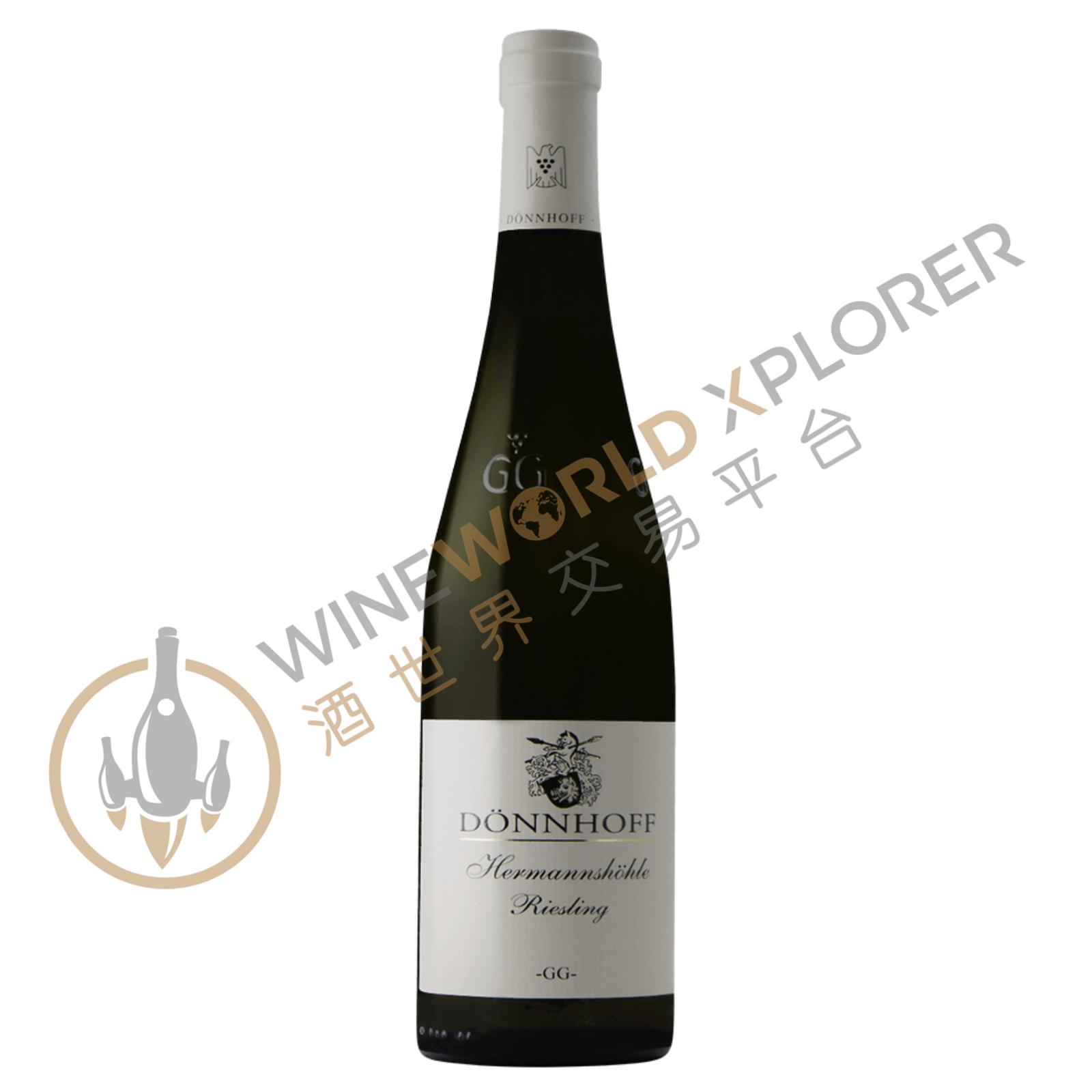
Donnhoff, Niederhauser Hermannshohle Riesling Grosses Gewachs 2023
 View analysis


Description
Tasting notes

Reviewed by: Anne Krebiehl MW
The 2023 Riesling Niederhäuser Hermannshöhle Grosses Gewächs, from a south-facing shale site with just a few calcareous veins, is golden in color. The vines were planted in 1949, and they now bring just small yields of tiny berries with a different pulp/skin ratio. A gorgeous lift tells of citrus zest, with an ethereal touch of crushed citrus leaf and spicier herb. The palate is crystalline. It's a clear-cut, taut, pure vision of stone and citrus. This is a pure, poised, precise and concentrated wine. Time and again, it is astonishing that so much flavor, stone and energy can be captured in a wine of such taut proportions at 12.5% alcohol. What an experience! There is no reliance on power, volume or fat, just slenderness, elegance and essence. (Bone-dry)
About the Producer
The Dönnhoff family first came to the Nahe region 250 years ago, establishing a traditional farm in the village of Oberhäusen an der Nahe, which included livestock and vegetable gardens in addition to some grape growing. Oberhäusen and this part of the Nahe river valley is very pastoral; it feels far away from the relative hustle and bustle of the Rheingau and wine tourism. The countryside is serene and beautiful, marked by steep hillside vineyards in the succession of villages following the river from Norheim to Niederhausen, through Oberhäusen, ending in Schlössbockelheim. The estate was started by Helmut Dönnhoff’s grandfather, Hermann, in the 1920s. Helmut took over from his father, Hermann Jr. in 1966; at that time there were only four hectares under vine and still quite a bit of farmland, which was rented out. In 1971, the farmland was sold and Helmut turned his full attention to producing quality wine. The Estate has grown to 25 hectares but both father and son feel that this is as large as they want to be; more growth would mean less time in the vineyards and cellar, where they feel most at home and in their element. Cornelius is as thoughtful as his father and the two share the same view on winemaking, viticulture, and taste in wine; balance and “Das ganze ding muss klingen – The whole thing must be sound” are at the center of their philosophy. To preserve laser-like focus and clarity in the wines, the grapes are pressed as soon as possible – within 3 hours of picking. Wines are fermented in traditional German casks (1200 L stuck and 2400 L doppelstuck) as well as stainless steel with spontaneous fermentations. Donnhoff’s cellar is unique in its capacity to hold all of its production entirely in stainless steel or in cask, allowing for the ideal élevage for any wine at any point during a vintage.
