
 Wine Advisor



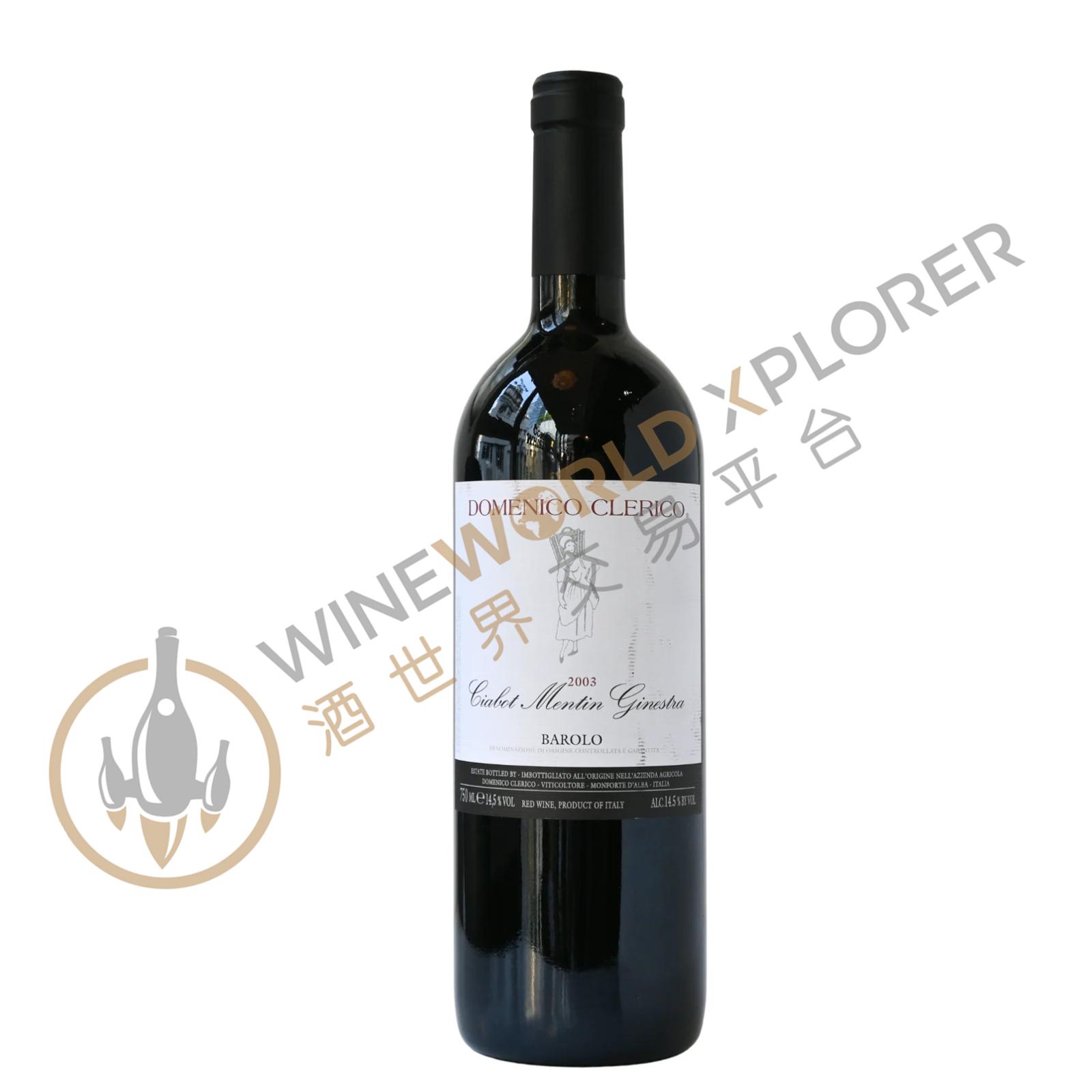
Domenico Clerico, Barolo Ciabot Mentin Ginestra 2001
 View analysis


Description
Domenico Clerico, Barolo, Ciabot Mentin, Piedmont, Red, 2008
Tasting notes

Reviewed by: Antonio Galloni
2001 Barolo Ciabot Mentin Ginestra—Rich ruby. The 2001 Ciabot Mentin Ginestra is showing beautifully today, with its entire range of aromatics and flavors on full display, with layers of spice, menthol, eucalyptus, mineral, toasted oak and sweet fruit. It is concentrated, yet medium in weight, with outstanding length and great overall balance. 95/drink after 2011, 10/05 My most recent visit provided an opportunity to taste a few wines I had previously tasted from tank before their bottling in during the summer of 2005. I also had a chance to re-taste the current Barolo releases, as well as a few older wines with Domenico Clerico late last year in New York. It was an interesting as well as educational experience to re-visit the 1996s and 1998s as both vintages appear to still be on the young side. These are among the finest of the more modern-styled wines, and readers who appreciate this producer’s style will want to secure bottles of the older vintages while they are still available. My favorite wine has typically been the Ciabot Mentin Ginestra, which comes from vines planted at 400 meters with a south to southeast exposure, which gives the wine its characteristic explosive aromas. The Pajana comes from vineyard at 300 meters in altitude, with a due south exposure, and as would be expected, it is a less perfumed on the nose, but rounder and lusher on the palate. Clerico’s Percristina is produced from old vines planted in the south-facing Mosconi cru. Stylistically I find it more similar to the Pajana, though the older vines give this wine a more concentrated profile along with heady, exotic aromas and flavors.
Reviewed by: Antonio Galloni
Even after all these years, the 2001 Barolo Ciabot Mentin Ginestra is still massively tannic and buried by oak. Hints of espresso, mocha, licorice and spice struggle to emerge over time. The 2001 Ginestra was so exciting when it was young but that potential never seemed to materialize. At this point, I don’t see the wine ever being in balance. Anticipated maturity: 2012-2016. Without question the most surprising 2001s I tasted were those of Domenico Clerico. I loved these wines when they were released, rated them highly and bought them for my own cellar. I tasted the 2001s with Domenico Clerico and his team during a visit in November 2011, and then opened the wines from my own cellar back in New York. Oddly, I found the wines from my cellar in better shape than the wines I tasted in Piedmont. Still, time has not been kind to Clerico’s 2001s. I found all of the Baroli surprisingly forward and evolved. The tannins have softened some over the years, but now the fruit is dropping out and the wines are evolving rather quickly. The Langhe Rosso Arte, a 90% Nebbiolo/10% Barbera blend, is the wine that has aged best. And when the entry-level wine (Arte was the entry-level wine in 2001) has aged better than the top selections, there is a problem. Clerico was a long-time proponent of French oak, which he employed in very high levels until around 2005 or so. Maybe it was the toast levels. It’s hard to say exacly. What is pretty clear is that the 2001s are evolving at a fast pace and aren’t likely to improve much from here. Importers: Michael Skurnik, Syosset, NY; tel. (516) 677-9300, Classic Wine Imports, Norwood, MA; tel. (800) 862-4585, Cutting Edge Selections, Mariemont, OH; tel. (513) 561-8555, Robert Houde Wines, Elk Grove Village, IL; tel. (847) 430-3887, Robert Panzer Selections, Wilmington, DL; robertpanzer@hotmail.com, Bacchus Importers, Baltimore, MD; tel. (410) 633-0400, Selected Brands, FL; tel. (954) 428-0019, Giuliana Imports, Boulder, CO; tel. (303) 547-6343, Estate Wines, tel. (415) 706-7975, Vinum Wine Importing & Distributing, Seattle, WA; tel. (206) 621-8843, Bommarito Wines, Saint Louis, MO; tel. (314) 961-8996
Reviewed by: Antonio Galloni
My favorite wine has typically been the Ciabot Mentin Ginestra, which comes from vines planted at 400 meters with a south to southeast exposure, which gives the wine its characteristic explosive aromas. The Pajana comes from a vineyard at 300 meters in altitude, with a due south exposure, and as would be expected, it is less perfumed on the nose, but rounder and lusher on the palate. Clerico’s Percristina is produced from old vines planted in the south-facing Mosconi cru. Stylistically I find it more similar to the Pajana, though the older vines give this wine a more concentrated profile along with heady, exotic aromas and flavors. The richly-colored 2001 Barolo Ciabot Mentin Ginestra opens with an unmistakable Ginestra nose of menthol, eucalyptus, spices and minerals. It is dense and structured, showing plenty of ripe dark cherry fruit, licorice, tar and toasted oak flavors, with exceptional length and substance on the palate, and closing with an inviting, beautiful, lingering finish that makes you want to come back to the wine time and again. Clerico’s Ciabot Mentin Ginestra was one of the first Barolos that really captivated my attention and for me it remains this producer’s most representative wine. It is a superb achievement and one of the highlights of the vintage. Anticipated maturity: 2011-2021. A Marc de Grazia Selection, various American importers, including Michael Skurnik, Syosset, NY; tel. (516) 677-9300; Vin Divino, Chicago, IL; tel. (773) 334-6700; and Estate Wines, Ltd., San Rafael, CA; tel. (415) 492-9411
Reviewed by: Antonio Galloni
Even after all these years, the 2001 Barolo Ciabot Mentin Ginestra is still massively tannic and buried by oak. Hints of espresso, mocha, licorice and spice struggle to emerge over time. The 2001 Ginestra was so exciting when it was young but that potential never seemed to materialize. At this point, I don't see the wine ever being in balance.
About the Producer
Clerico Barolo is one of the pioneers of the emerging movement to improve the winemaking of modern Barolo. His wines are round and concentrated, with more fruity aromas, bright ruby red wine with a mulberry taste, reminiscent of burgundy. The Estherso Grand Cru in the Roots, and it is unexpected that these wines are Barolo wines made from Nebbiolo grapes. Clerico was the first state-of-the-art winery in the Barolo region to use the single-campus concept, bottling the wines separately from the different pockets. Let the wine tell the characteristics of the land, so that the wine produced has a unique personality. Clerico believes that the timing of the grape harvest is a very important factor, picking it earlier than other wineries, because he believes that the ripening of tannins is more important than the ripening of grape sweetness. High sweetness only produces wine with a strong alcohol taste. High-quality tannin is the quality guarantee of high-level wine. He especially emphasizes acidity, because acidity will make the wine have a perfect and strong skeleton. Clerico's flagship wine, Cristina, is stored in large oak barrels for 3 years, small oak barrels for 2 years, and 5 years in the bottle for a total of 10 years. Fascinating, is a rare good wine, its wine is to commemorate the unfortunate death of the owner's daughter Cristina when she was 7 years old, and the best grapes are specially selected to make this Percristina wine to commemorate the beloved daughter. Clerico Barolo has been praised as the most representative heavyweight winery in Barolo by virtue of its continuous introduction of amazing wines over the years, and it is also highly praised by wine critics. winery.
