
 Wine Advisor



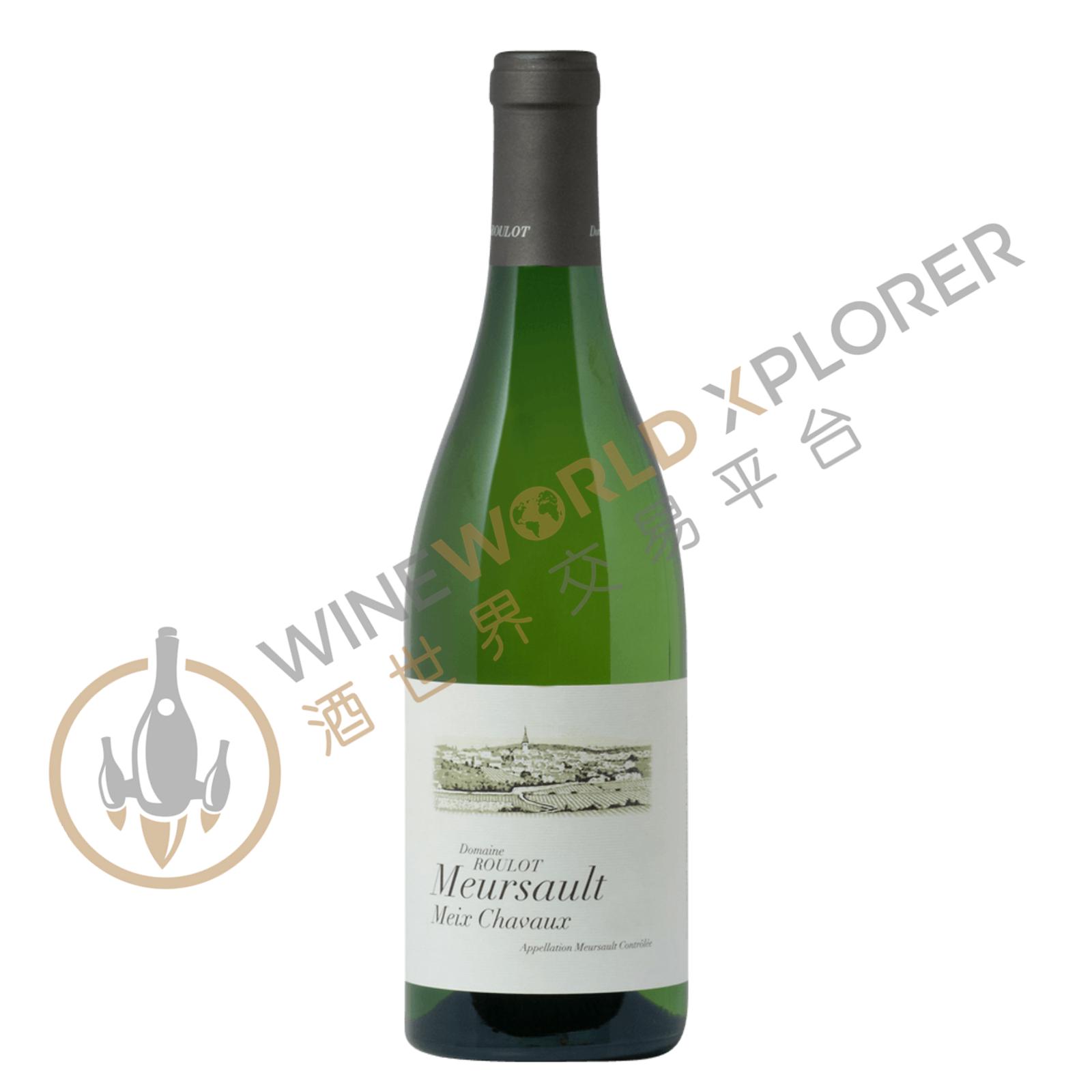
Domaine Roulot, Meursault Les Meix Chavaux 2010
 View analysis


Description
Tasting notes

Reviewed by: Antonio Galloni
The 2010 Meursault Meix Chavaux presents a rich, heady melange of juicy stone fruits, nectarine, flowers, honey, spices and orange blossoms. This is one of the fatter, more extroverted of the village-level offerings. With time in the glass, the wine’s minerality comes into greater focus, but this is essentially a forward, open wine that can be enjoyed upon release. Anticipated maturity: 2013+. (Not yet released) Jean-Marc Roulot commented that 2010 was easy in the vineyard but not so simple in the cellar, mostly because of very long malolactic fermentations that did not finish until the following August! The harvest started on September 17 and the wines came in with 12.8 -13.5 natural alcohols, which is at the higher end of the range for the domaine. Because of the lengthy malos, the 2010s were bottled a little later than normal. The 2010s are quite representative of the year in that they have considerable richness and at the same time high acidities. They are remarkably vivid, expressive to site and flat-out gorgeous. Readers will notice a new wine in 2010, the Auxey-Duresses, and can look forward to a new Clos de la Baronne and Clos des Boucheres with the 2011 vintage. Roulot fans will also want to be on the look out for Jean-Marc Roulot’s new line of eau de vies, an old family tradition that goes back many generations. The Framboise is one of the most pure expressions of fruit I have ever tasted, while the Abricot, made from Gerard and Jean-Louis Chave’s organically grown apricots in St. Joseph, is a bit more honeyed and liqueur-like.Unfortunately, my bottle of the Poire eau de vie broke, but I hope to be able to taste it soon. Importer: Kermit Lynch Wine Merchant, Berkeley, CA; tel. (510) 524-1524
Reviewed by: Neal Martin
The 2010 Meursault Meix Chavaux has a wonderful almond and hazelnut-scented bouquet with superb definition and intensity, hints of wild honey emerging with aeration. The palate is very well-defined with a touch of spice on the entry, though the 2011 displays superior delineation and tension toward the finish. Very fine. Drink now-2022+ Wine is full of hyperbole, now more than ever, but not with respect to the exceptional wines of Jean-Marc Roulot, a grower that has consistently wowed my palate for several years. Although I have met him intermittently in London, this was the first time I had visited his winery on the outskirts of Meursault, just up the road from Coche-Dury. I wonder if their geographical proximity has something to do with stylistic similarities between the two addresses since nobody captures mineralite like these two artisans. It was a good job I penciled in an appointment this week under clement skies. As we descend to his spotlessly clean, relatively capacious cellar he informs me that it was under several inches of water after the previous week’s deluges in late May. Jean-Marc is an engaging vigneron, as one might expect from the former professional actor. I should put that in the present tense since he was about to film a French drama in Beaune, playing a gendarme rather than a winemaker. We tasted a handful of slightly older wines before broaching the 2011s. Moving on to a comprehensive run through his 2011s that had been bottled between January and April, I asked him for his sentiment toward the growing season. “I feel positive toward the vintage after the 2010,” he enthused, “as it is always difficult after such a lauded vintage. The main factor is that in 2011 the grapes were healthy and everything was clean. This was not the case in 2010, which needed some sorting. Maybe the wines are not as powerful, but they are more elegant and precise with better terroir expression. Many things during the season were similar to 2007: hot spring with early flowering; July not so good but flowering and harvest early. We began 24 August with the full team beginning on the 28 August. The 2011s have lower total acidity than 2010 but pH levels are a little better. Also, alcohol potential was around 0.8 degrees lower. I feel more comfortable with this level of alcohol, around 12.5%, than say 13.5% to 14%, as the terroir is expressed better.” Needless to say, Roulot’s 2011s lived up to my expectations as some of the finest white Burgundy wines in 2011, perhaps not quite right up with the very best I have encountered from this address, but utterly delicious and exquisitely crafted. Importer: Kermit Lynch, Berkeley, CA; tel. (510) 524-1524.
About the Producer
Domaine Roulot, founded by Guillaume Roulot in 1830, is well respected Meursault-based domaine producing mainly Chardonnay wines from a range of premier cru and village-level sites across the appellation. The wines are held in high esteem by critics and are much sought-after. The domaine is currently run by actor-turned-winemaker Jean-Marc Roulot. Roulot has numerous holdings across Meursault premiers crus, including 0.28 hectares (0.69 acres) in Charmes, 0.26 hectares (0.64 acres) in Perrières and 0.16 hectares (0.39 acres) in Les Bouchères, as well as 0.2 hectares (0.5 acres) in neighboring Monthélie Premier Cru Les Champs Fulliots. A further four hectares (ten acres) cover village-level vineyards in Meusault such as Les Luchets and Les Tessons Clos de Mon Plaisir – a wine strongly associated with the Roulot label. All are Chardonnay based wines, although the domaine also produces an Aligoté, a Bourgogne Blanc and Rouge, an Auxey-Duresses Premier Cru, and a village-level red. The red wines are made from Pinot Noir – Burgundy's key red grape variety. Domaine Roulot established itself in the upper echelon of white Burgundy producers under the late Guy Roulot. Guy was one of the first producers of the region to bottle single vineyards separately, including village lieux-dits. He died in 1982 and his son Jean-Marc took over in 1989, farming the vineyards organically. As well as winemaking, Jean-Marc Roulot is also known for his cinematographic appearances (he initially studied screen acting in Paris), including the Burgundy-based coming-of-age film Ce Qui Nous Lie (released as "Back to Burgundy" for anglophone audiences), parts of which were filmed at the domaine
