
 Wine Advisor



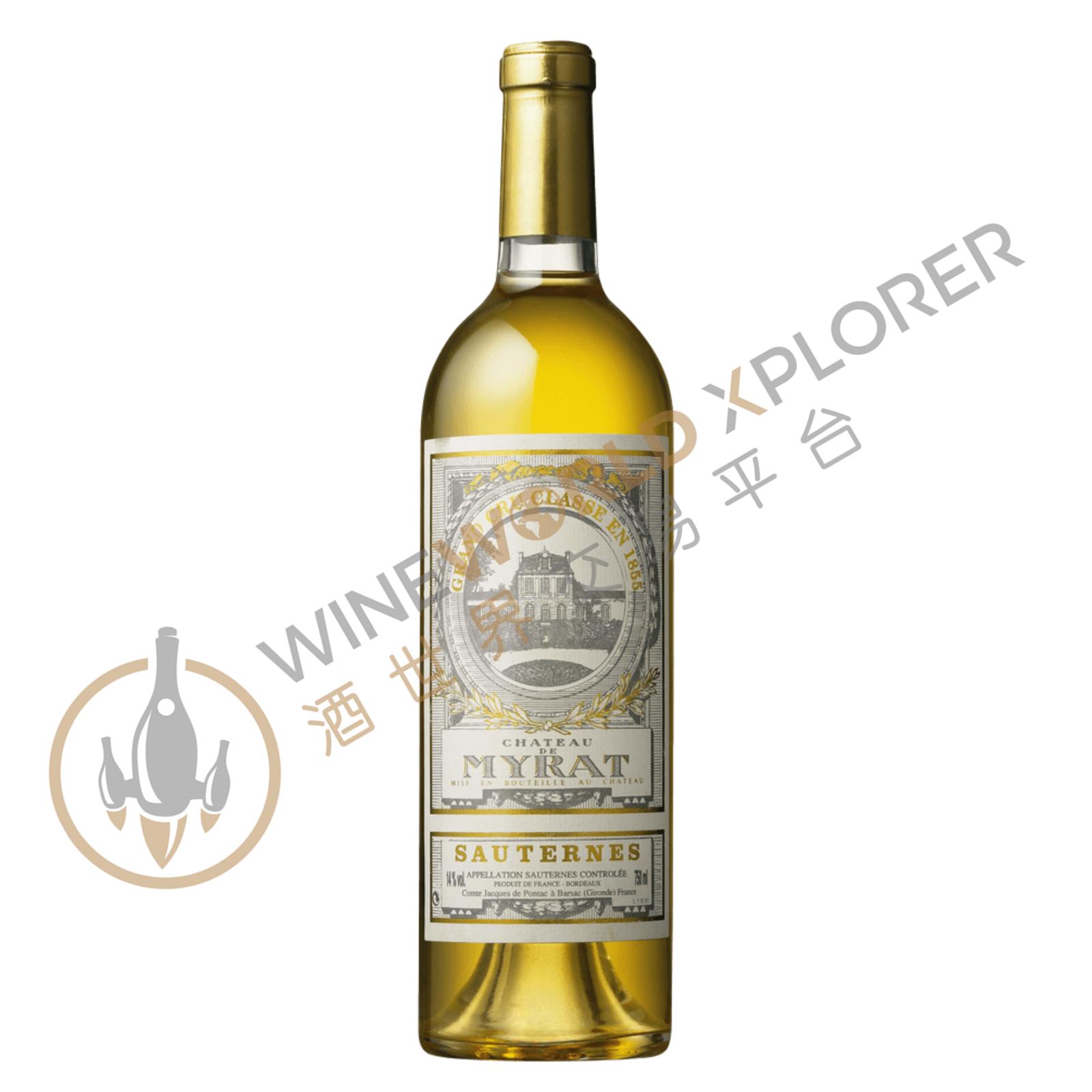
de Myrat, Sauternes 2003
 View analysis
Description
Tasting notes

Reviewed by: Neal Martin
Tasted at the de Myrat vertical at the property. The 2003 Château de Myrat has quite a deep golden color. The nose is satisfactory with dried honey and barley sugar scents, simple but with living on the final reserves of vigor. The palate is similar to the 2002 in that it is much better than the nose: smooth and viscous with honeyed fruit laced with clementine and quince, the finish perhaps the best that the estate had produced thus far. Again, if the aromatics were better, this would deserve a higher score. Tasted April 2016.
About the Producer
The Pontac family has been famous since the 16th century, when Jean de Pontac founded Château Haut-Brion in 1533. He lived to be 101, through the reigns of Louis XII, François I, Henri II, Charles IX and Henri III. A century later, his descendant Arnaud de Pontac introduced the concept of “growth” linked to a delimited terroir and in 1660 became president of the Parliament of Bordeaux, alongside renowned philosophers such as Montaigne and Montesquieu. He popularized a new type of wine known as “French Claret” and helped open a tavern in London, “Pontac’s Head”, which quickly became fashionable. In 1937, Earl Max de Pontac acquired Château de Myrat, located on the limestone plateau of Barsac, where he managed this grand cru classé of Sauternes for over 40 years. The formation of the "noble rot", essential to the production of Sauternes-Barsac, depends on the presence of botrytis cinerea, which develops in the microclimate created by the Ciron River. The harvest at Château de Myrat takes place over several weeks, from late September to early November, to harvest the grapes at their optimum maturity.
