
 Wine Advisor



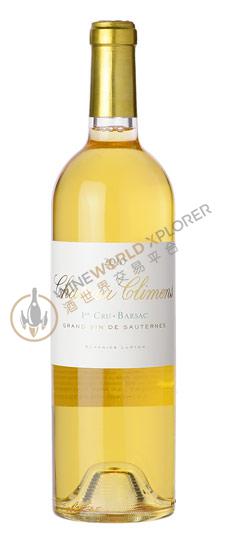
Climens 2014
 View analysis


Description
Tasting notes

Reviewed by: Neal Martin
The 2014 Climens has 141g/L residual sugar and was cropped at just 8.8hL/ha. It has a pure and elegant bouquet. Honey, quince and white peach mixes with chamomile - this is irresistible. The palate is very well balanced with a fine bead of acidity, taut and fresh with a bewitching tensile finish. Quite penetrating and a little more citrus-driven than the 2015. Superb. Tasted at the Climens vertical at the château in April 2022.
Reviewed by: Neal Martin
The 2014 Climens has to shake off a little reduction on the nose, eventually revealing dried honey, quince, apple blossom and caramelized pear aromas. The palate is very well balanced with a killer line of acidity that slices through the rich botrytized fruit. It fans out wonderfully towards the second, displaying great depth and concentration, genuine complexity that rivets you to the spot on the finish. Outstanding. Tasted blind at the annual Southwold tasting.
Reviewed by: Lisa Perrotti-Brown
Pale lemon colored, the 2014 Climens reveals wonderful botrytis-inspired scents defining the nose with a core of ripe peaches, honeydew melon and lemon marmalade plus wafts of candle wax and orange blossom. The palate possesses an almost electric intensity with tons of layers and a lively backbone framing the generous fruit, finishing very long.
Reviewed by: Neal Martin
The Château Climens was tasted from several lots that Bérénice Lurton and her team are preparing to blend together during its barrel maturation. Having conducted this practice over many years, I would point out that whereas in some years one has to conjecture to the full, in 2014 the lots were both smaller in number, less heterogeneous and paradoxically, more "complete". This made it easier to envisage the final wine. Here, you had to focus on the second trie where 80% of the crop was picked with widespread onset of botrytis. There are fleeting senses of dried honey, juniper berries and marigold, dried apricot on a couple of barrels. There is clearly good acidity here, most of the lots spicier than 2013. As usual, this Climens is bestowed a sense of volume and persistence in the mouth and you have the sense that this will be a more approachable Barsac compared to other vintages. Overall, Bérénice Lurton has a winning Climens on her hands, one that will in the top two or three sweet wines of the vintage.
Reviewed by: Neal Martin
The 2014 Climens has 141g/L residual sugar and was cropped at just 8.8hL/ha. It has a pure and elegant bouquet. Honey, quince and white peach mixes with chamomile - this is irresistible. The palate is very well balanced with a fine bead of acidity, taut and fresh with a bewitching tensile finish. Quite penetrating and a little more citrus-driven than the 2015. Superb. Tasted at the Climens vertical at the château in April 2022.
About the Producer
Château Climens is a wine producer located in the Sauternes village of Barsac on the left bank of the Gironde river, south of Bordeaux. It was classified as a first growth in the 1885 Classification of Sauternes and Barsac alongside other châteaux such as Guiraud and Suduiraut. Climens is one of only a handful of châteaux in Bordeaux that produces its wines from only one grape: Semillon. The wine is characterized by fresh citrus notes, white flowers and spice, which becomes more honeyed and concentrated with age. Semillon thrives on the limestone-rich soils in the vineyards. Botrytis develops on the grapes because of the misty mornings, humidity and warmer afternoons that are typical during the months before harvest. If the grapes are not of the highest quality, or if botrytis has not properly formed, owner Bérénice Lurton and her team will not produce their top wine, the grand vin Château Climens. They have been bold enough in the past to declassify an entire harvest of fruit – either selling the grapes off to other producers rather than bottling as their own or releasing wines under secondary labels. The grapes are harvested and brought into the winery, plot by plot, where they are gently pressed before fermentation in oak barrels. Maturation takes place in French oak barrels on lees for about 20 months. Wines from the best vintages can last decades – a recent tasting of the 1921 vintage revealed a rich, balanced and zesty wine. Château Climens has been owned by the Lurton family since the 1970s (when it was acquired by Lucien Lurton), and in 1992 the estate came under the control of Bérénice Lurton (his daughter). In 2010, Climens began to practice biodynamic winemaking and viticulture, and the 2014 vintage was the first to be entirely certified as biodynamic. Chemical sprays were replaced with natural preparations and plant infusions, from flowers such as chamomile and juniper which are grown on the estate and dried in the attics above the chais.
