
 Wine Advisor



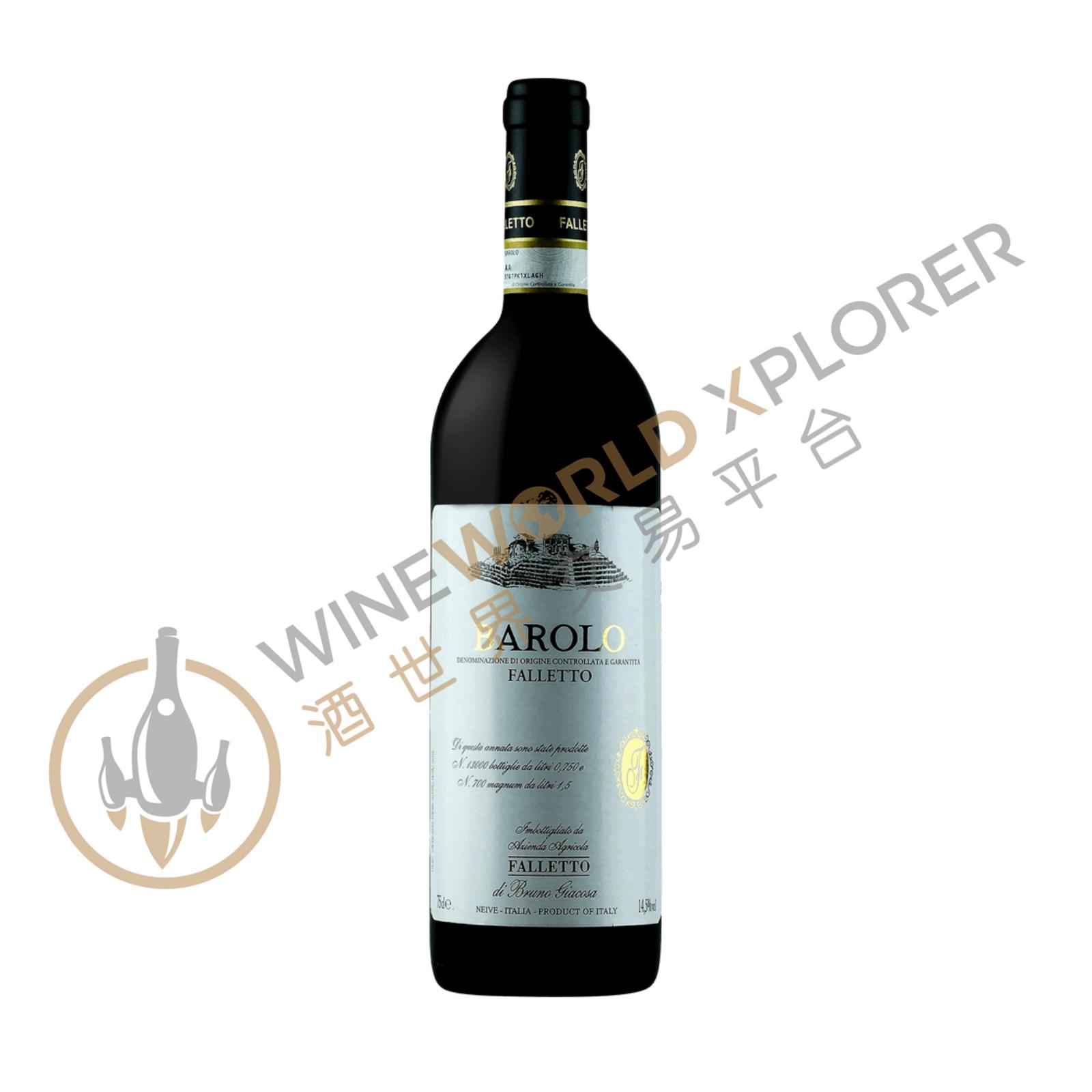
Bruno Giacosa, Barolo Falletto 2003
 View analysis


Description
Tasting notes

Reviewed by: Antonio Galloni
2003 Barolo Falletto—The Falletto offers very ripe, sweet red fruit in an accessible style, with good freshness for the vintage. Today this wine is an infant. It shows slightly rough tannins, and the wine will clearly require time to come together. (90-93), 11/05 Bruno Giacosa is a famously shy and introverted man who shuns everything that has to do with public relations. Yet despite his unassuming presence, his wines are towering achievements that are rightly considered reference-point wines for the region. Giacosa typically doesn’t allow journalists to taste wines from barrel as several years ago the estate received negative reviews from a major US publication after having been provided barrel samples. So, needless to say it is a rare treat when Giacosa decides to personally show the wines and talk about their evolution. I was blown away by the quality of the wines, and by the extraordinary dignity and humility of Bruno Giacosa and enologist Dante Scaglione.
Reviewed by: Antonio Galloni
Giacosa’s 2003 Barolo Falletto is made in an especially weighty, super-ripe style. It offers notable length but shows the adverse effects of the heat, especially on the finish. The Falletto has shut down considerably since bottling, making it hard to evaluate today. It was much more open when I tasted it last year. Anticipated maturity: 2009-2019. At a time in life when many of his colleagues have begun to slow down, Bruno Giacosa continues to make stunning wines of the highest level. Of course Giacosa has the good fortune of having the services of long-time oenologist Dante Scaglione, who is one of the most prodigiously talented winemakers in Italy. Although age has slowed Giacosa down somewhat, he was in fine form during the several hours we spent tasting his 2004, 2005 and 2006 Barolos and Barbarescos from barrel earlier this year. Simply put, 2004 will go down as one of the all-time great Giacosa vintages for both Barolo and Barbaresco. The Red Label Riservas are the Barbaresco Asili and the Barolo Le Rocche del Falletto, but his other wines aren't too far behind in terms of quality. From cask, the Barolos revealed slightly more promise, but that may be splitting hairs at this level. In 2004 Giacosa also fulfilled a long-standing dream by making his first Barolo from La Morra, the Barolo Croera, which will be released next year. The Croera is made from a newly-acquired vineyard in the Serradenari district of La Morra, an area best known for its Dolcettos. So far Giacosa's 2005s appear to be well-balanced, yet smaller-scaled wines that will likely drink well relatively early, while the 2006s are decidedly bigger and more powerful. I also noted a marked improvement in the quality of the Barbaresco Santo Stefano, which is the only single-vineyard wine the estate still makes from purchased fruit. Our tasting ended with the 1967 Barbaresco Riserva Asili. It was, in a word...sublime. The world will have to wait for the 2004 Barolos and Barbarescos to be released, in the meantime readers will find no shortage of compelling offerings among this set of new releases from Bruno Giacosa. The 2006 Dolcettos are excellent to outstanding, while the 2005 Barberas reflect the more modest qualities of that vintage. Giacosa is among the producers whose views on the 2003 vintage for Barolo and Barbaresco have changed dramatically in recent years. While many producers draw comparisons with 1947, Giacosa is one of the very few who can speak from personal experience. At first pessimistic, he initially thought he might not bottle any of his top wines but as time has passed his stance has changed, and today he is much more enthusiastic about the vintage. Importer: Winebow, Hohokus, NJ; tel. (201) 445-0620
Reviewed by: Antonio Galloni
Giacosa's 2003 Barolo Falletto is made in an especially weighty, super-ripe style. It offers notable length but shows the adverse effects of the heat, especially on the fin ish. The Falletto has shut down considerably since bottling, making it hard to evaluate today. It was much more open when I tasted it last year.
About the Producer
Bruno Giacosa, located in the south and south-west of Piemonte, has been performing well for three generations, thanks to the careful selection of high quality grapes and the emphasis on traditional winemaking techniques. The vineyard covers 44.7 acres (18 hectares) and is planted with Nebbiolo d'Alba, Barbera and Dolcetto varieties. The average age of the vines is 15 years and the planting density is between 4,500 and 5,000 vines per hectare, with an average yield of 4,800 litres per hectare. In terms of winemaking, the owner has a classic quote: "For us, the philosophy of traditionalism means making wines that are not only strongly local to the vine and the grape variety, but also maintain the various local terroirs. We have always made single-variety wines. Our winemaking techniques have been improved and we also make use of gentle pressing, crushing operations, advanced rotary systems and optimised cold and hot treatment techniques." For Garcosa, technology and tradition are not necessarily at odds with each other. In the winemaking process, the grapes are first fermented in steel containers and then transferred to wooden containers for ageing, which varies slightly depending on the type of wine. Finally, the wine is bottled without filtering. The main wines produced by the winery are the Barbaresco Garina, the Barbaresco Santo Stefano, the Barbaresco Asili, the Barbaresco Wabasha and the Barbaresco Asili. Barbaresco Rabaja, Barolo Falletto and Barolo Le Rocche del Falletto. Some of the more recent vintages are 2001, 2000, 1998, 1997, 1996, 1990, 1989, 1982 and 1978. These vintages are often relatively closed and uninteresting when first bottled, but after 10 years in the cellar, they all show an irresistible magic.
