
 Wine Advisor



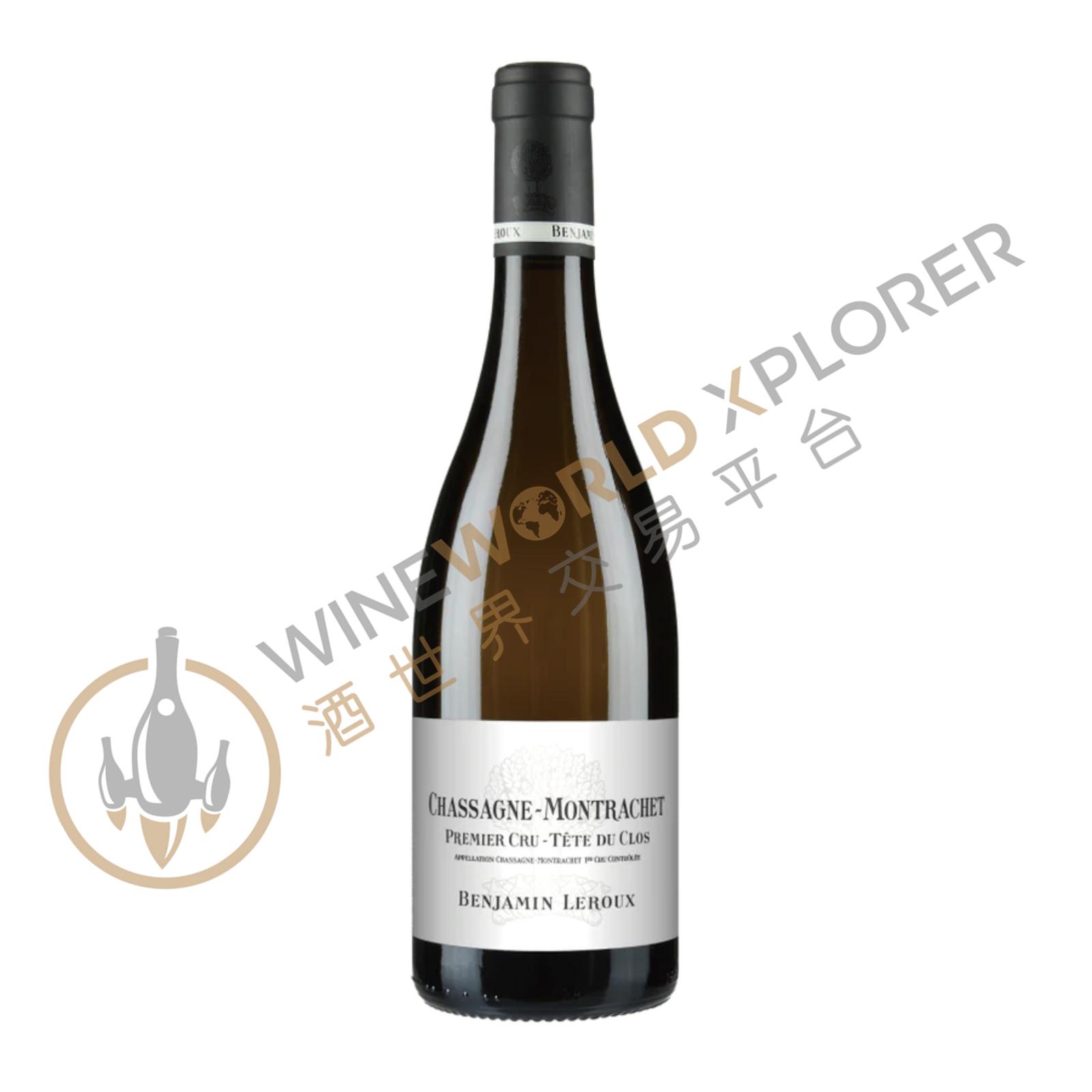
Benjamin Leroux, Chassagne Montrachet 1er Cru Tete du Clos Blanc 2012
 View analysis


Description
Tasting notes

Reviewed by: Neal Martin
The 2012 Chassagne-Montrachet 1er Cru Tete du Clos, which Benjamin discovered when working with Vincent Dancer, where it is normally blended with Morgeot, is shared with David Croix (see Domaine des Croix). It has a wonderful, mineral-driven bouquet with superb delineation: almost Puligny-like in style with great tension. The palate is very well-balanced and concentrated with fresh pear, orange zest and mineral notes that build and build in the mouth. This should be superb after bottling. There is one vigneron pleased about the late running of the 2013 harvest more than any other – Benjamin Leroux. “I had my third baby two weeks ago,” he reveals, though he looks in unnaturally fine fettle given the sleepless nights he must surely be enduring. I met Benjamin at his winery located just off the Beaune ring road opposite Albert Bichot and Domaine des Croix. Here he vinifies all his negociant wines that are labeled under his name, and when he is not there, you will probably find him down in Domaine Comte Armand, where he has been responsible for recent vintages. He shares the facility with Nicolas Rossignol, whose wines I tasted directly afterwards. Those wishing to glean more information on Leroux’s background should peruse the article I wrote in the August issue of The Wine Advocate concerning Clos des Epeneaux. He told me that he will bottle his 2012s relatively early this year and, in fact, several were already under cork. Like practically everyone, his crops are depleted in 2012 depending upon the area, up to 80% in the worst affected by frost and hail. The samples that I tasted were either in bottle (wines with single figure scores) or in barrel just after malo-lactic but before racking (given by banded scores). Generally, these constituted an outstanding set of wines, albeit often in miniscule quantities, which is why some of the cuvees are exclusive to certain markets (for example, you will have to go to Hong Kong to find his elusive Clos Saint Denis.) While the grand crus could stand shoulder-to-shoulder with many growers, readers should check out some of his over-performing Village and Premier Crus, particularly the former that were bolstered by the blending of the latter due to depletion of crop. Importer: Becky Wasserman Selection (Le Serbet) and through various US importers (see www.leserbet.com for full list.)
About the Producer
Located in the Cote de Beaune region of Burgundy, France, Maison Benjamin Leroux is a small boutique winery in the region. Established in 2007, Benjamin Leroux is a very young winery, but the owner, Benjamin Leroux, has a lot to live up to. Benjamin does not come from a family of winemakers, but from his childhood he set out to become a winemaker. He entered the Lycee Viticole de Beaune at the age of 13, went on to obtain a degree in oenology at the University of Dijon and was head winemaker at Domaine Comte Armand from the age of 26. With a thorough and comprehensive knowledge of the terroir of the vineyards of the Côte de Bern and a strong sense of innovation in winemaking, Benjamin has been hailed by the renowned wine critic Allen Meadows not only as one of the most talented and gifted winemakers in the region, but also as the most likely successor to Henri Jayer, the master winemaker of Burgundy. The number of vineyards owned by Château Benjamin Le Hu is small and most of the grapes used to make the wine are purchased from other vineyards. Benjamin's aim is to produce wines of comparable quality to those of the great estates without owning a large number of vineyards, and to this end he sets high standards for the vintners he works with, most of whom he has known for many years, who practice organic or biodynamic farming, and who grow grapes of consistently high quality. Benjamin also often pays these growers on the basis of acreage rather than yield, giving him absolute control over ripeness, yields and harvest dates. Benjamin also has a knack for discovering lesser-known vineyards with very distinctive terroirs, each of which he treats as a Grand Cru, giving them the same attention and effort as a Grand Cru. At present, Benjamin Le Hu has over 40 wines released. The estate produces around 60,000 bottles a year, of which two, Auxey-Duresses Blanc and Savigny-les-Beaune, alone account for a third, with the majority of the rest being produced in quantities of only 600-1,500 bottles. The wines produced by the estate are well balanced and expressive, and are favoured by critics and consumers alike.
