
 Wine Advisor



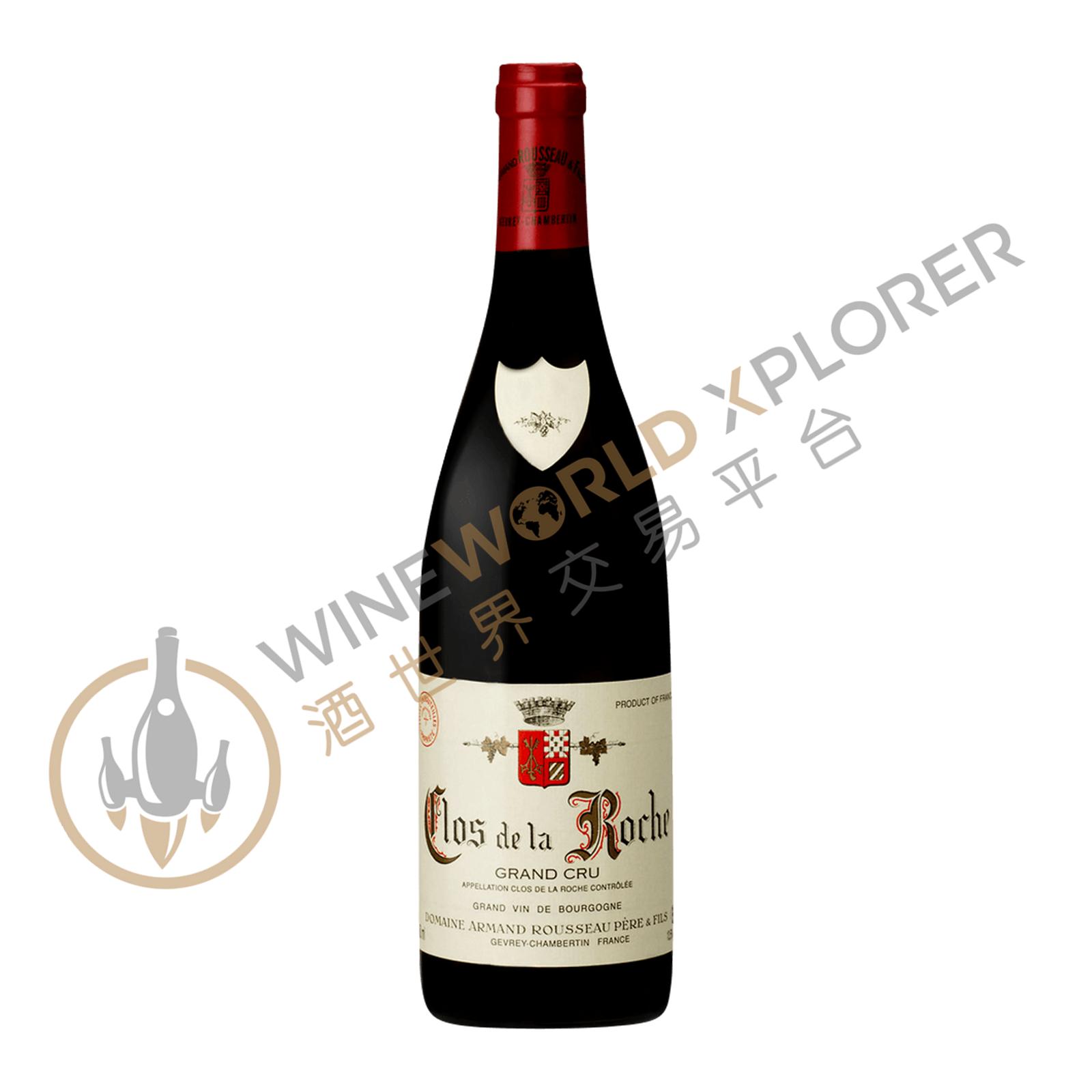
Armand Rousseau, Clos de la Roche Grand Cru 2016
 View analysis


Description
Tasting notes

Reviewed by: Neal Martin
The 2016 Clos de la Roche Grand Cru was showing a touch of reduction on the nose, so I had to leave the aromatics to one side. The palate is medium-bodied with a firm grip on the entry. This is a stricter, less opulent, more masculine Clos de la Roche with a saline note that became more prominent toward the finish. This will deserve at least five years in bottle: broody, a little saturnine at the moment but one surely destined to repay cellaring. Keep your eye out for this one.
Reviewed by: William Kelley
When I tasted the 2016 Clos de la Roche Grand Cru from barrel, I wasn't convinced that it could match Rousseau's finest recent renditions of this cuvée such as the 2012, 2010 or 2005. From bottle, the wine has closed the gap, wafting from the glass with a deep bouquet of cherries, ripe red berries, raw cocoa, beetroot and sweet soil tones. On the palate, it's medium to full-bodied, with a pretty core of fruit framed by fine-grained tannins and lively acids. This is a delicate, sapid Clos de la Roche that will drink well with a decade of bottle age.
Reviewed by: Stephen Tanzer
(25% new oak): Bright, dark red. Very ripe, musky nose combines purple fruits, mocha, brown spices and game, along with some subtle earth notes. The sweetest of these 2016s to this point but also fine-grained and elegant, with its intense fruit and soil flavors nicely framed by lively acidity. Very rich, dense and alive. Offers a classic Clos de la Roche combination of fruits, spices and soil character.
About the Producer
Domaine Armand Rousseau Pere et Fils was founded in the early 20th century by Armand Rousseau when he was only 18 years old and inherited the vineyard from his father. Armand Rousseau was born into a family of small landowners, and his family members were mostly engaged in wine-related occupations, such as grape farmers, coopers and wine merchants. After Armand married in 1909, he acquired additional vineyards and estate. The property is set around a church built in the 13th century, and the property includes a house, storeroom and wine cellar. When he first entered the wine business, Armand sold wine in bulk to local distributors. After that, Armand successively purchased a batch of new vineyards, such as the plot in Charmes-Chambertin in 1919 and the Clos de la Roche in 1920. The plot, that is, since then, on the advice of Raymond Baudoin (founder of the magazine Revue des Vins de France), Oman decided to bottle and sell its own fine wines, especially for restaurants and wine lovers . Armand Rousseau's wine business is booming, and at the same time he is also expanding the scale of the winery, especially he has also successively purchased many famous vineyards, such as the purchase of Mazy-Chambertin in 1937. Garden, purchased in 1940 Mazoyeres-Chambertin garden (Mazoyeres-Chambertin). At present, the winery has a total vineyard area of 14.1 hectares, of which 2.21 hectares are village-level vineyards, 3.48 hectares are first-class vineyards, and 8.41 hectares are AOC-classified vineyards. The average age of the vines is 40 to 45 years old, the grape variety is 100% Pinot Noir, and the planting density is 11,000 vines per hectare. In 1945, Armand Rousseau's son, Charles Rousseau, joined his father in wine studies after studying wine studies. In 1959, Armand Rousseau tragically passed away in a car accident, and Charlie Rousseau took the responsibilities alone and supported the development of the entire winery. Armand Rousseau has a very amazing language talent, he can communicate with others fluently in English and German, therefore, he decided to vigorously expand the wine export business, the business scope expanded rapidly from the United Kingdom, Germany, Switzerland to the whole of Europe, followed by Countries such as Canada, Australia, New Zealand and Brazil. In 1982, Eric Rousseau, the son of Charles Rousseau, injected new vitality into the development of the winery. In terms of vineyard management, Eric has introduced new technologies, such as controlling grape yield and improving fruit quality through green harvesting (Green Harvest) and leaf pruning, and using almost no pesticides or chemicals in the vineyard Substances are used to protect the soil and guide the winery to develop in an organic direction. At the same time, he also respects traditional winemaking techniques and tries his best to reduce manual intervention in the winemaking process. In 2014, Cyrielle Rousseau, Eric's daughter, joined the winery to jointly manage the winery. Seriller learned foreign winemaking techniques and accumulated rich experience in cooperation with wine merchants. With the joint efforts of four generations of the Rousseau family, the quality of the wines produced by Aman Rousseau has been very stable and widely recognized by consumers. The winery produces many grand cru wines, such as Domaine Armand Rousseau Pere et Fils Chambertin Clos de Beze Grand Cru, Cote de Nuits, France. Made from the finest Pinot Noir grapes, with fruity aromas of raspberries and cherries, with hints of leather, cinnamon and dark chocolate, the palate reveals ripe red fruit flavours, with a firm and supple mouthfeel with an impressive structure, with a persistent and wonderful finish. It has won over 95 points from well-known wine critics such as Robert Parker Team and Wine Spectator for many years.
1984(1)1986(1)1988(1)1989(1)1990(2)1996(1)1997(1)2001(1)2002(3)2003(2)2004(2)2005(5)2006(1)2007(1)2008(3)2009(3)2010(4)2011(4)2013(8)2014(4)2015(4)
Package Size
1 x 75cl2 x 75cl3 x 75cl
