
 Wine Advisor



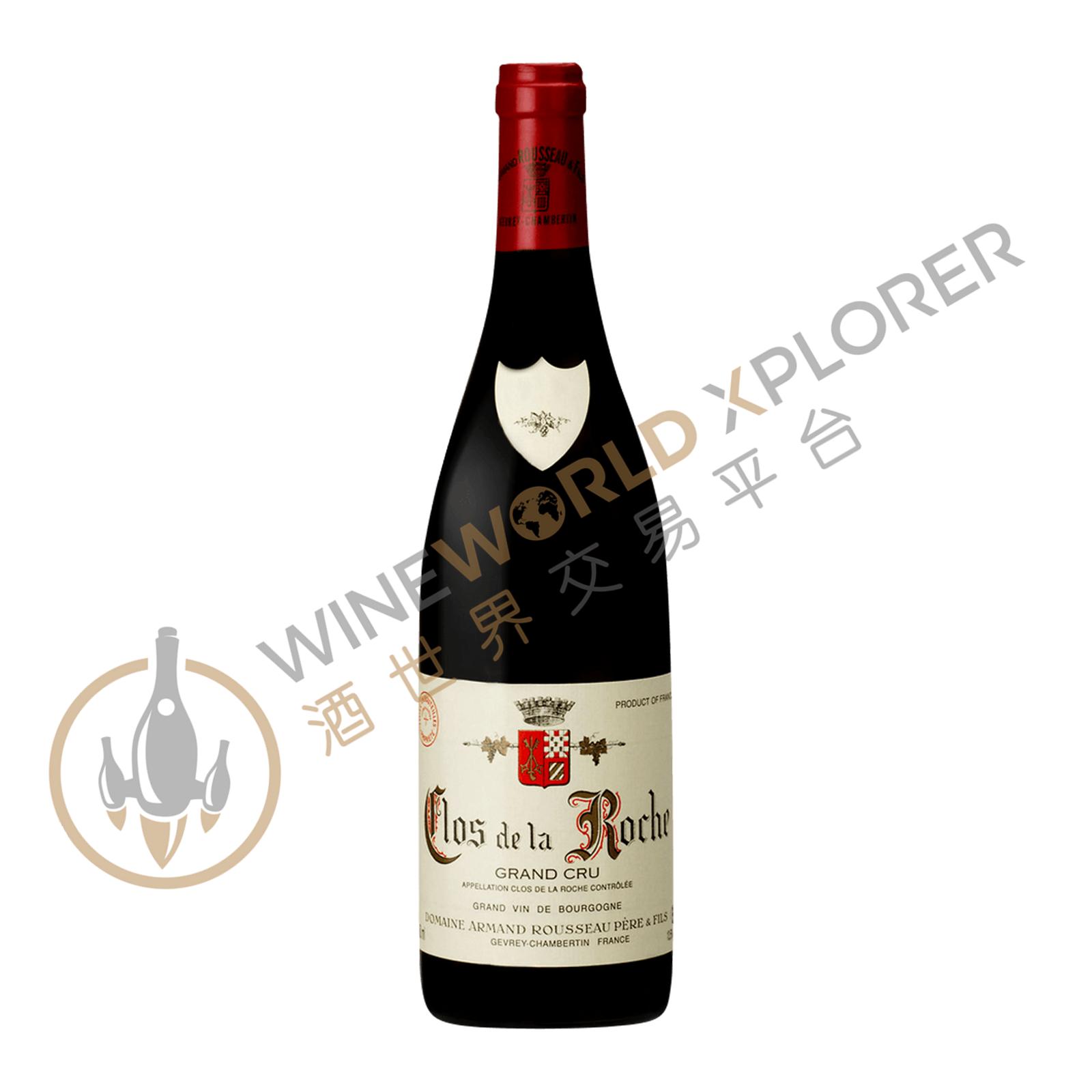
Armand Rousseau, Clos de la Roche Grand Cru 2006
 View analysis


Description
Tasting notes

Reviewed by: David Schildknecht
Nutmeg, coriander, and fresh sour cherry aromas on the nose of Rousseau's 2006 Clos de La Roche usher in a fascinating palate, pungently spicy, tartly-fruited, and backed by an alkaline, saline, very marine sense of mineral abundance. The smoky, stony, and bitter-sweet elements in common with so many wines of this collection here steer clear of austerity thanks to the wine's sheer primary juiciness and the invigorative potential of its distinctive minerality. If tasted blind, I might well have picked it as a rarified expression of Clos St.-Denis. I expect this will be worth savoring over the next 6-8 years, but given the relative delicacy of its frame, I would want to monitor its evolution in case it seems a shame not to enjoy it sooner. Since Eric Rousseau – as mentioned in my issue 170 run-down of his methodology – does not on principle utilize a sorting table, I imagined the aftermath of hail in 2006 presenting a special challenge to his pickers and to bottled quality, but it was one he and his team clearly surmounted. Clos de Beze, Griotte-, and Chapelle-Chambertin were the worst-effected, relates Rousseau, along with numerous of his village-level parcels. Potential alcohol levels are closer to 2003's record highs than they are to those of 2005, but the finished 2006s – while hardly as successful as their immediate predecessors – do not suffer any spirituous roughness or heat, and are thus free to effectively make their relatively light, bright, and in the best instances distinctive statements. Rousseau reports – and my limited opportunities for comparison confirm – that the initially rather austere and even brittle, disjointed personalities of these wines were ameliorated in the course of elevage, and the best of them have blossomed beautifully. (I was unable to taste several top wines here after bottling, so my notes on those are based on a representative sampling and blending from cask shortly before bottling.) Importer: Frederic Wildman & Sons, New York, NY; tel. (212) 355-0700
Reviewed by: Stephen Tanzer
Good full red. Serious, brooding nose dominated by meat and spices. Bigger and broader in the mouth than the Mazy, with a lower pitch and a wilder character to its flavors of dark berries, mocha, menthol, meat and spices. Finishes broad and suave, with big, dusty tannins.
Reviewed by: Stephen Tanzer
Medium red. Musky brown spices, wild herbs, licorice and wild berries on the nose; distinctly more masculine and less refined than the foregoing samples from Gevrey. Sweeter and broader in the mouth, with dark flavors of blueberry and licorice complicated by spices, herbs and underbrush. More closed than the Mazy. Finishes with substantial dusty tannins.
About the Producer
Domaine Armand Rousseau Pere et Fils was founded in the early 20th century by Armand Rousseau when he was only 18 years old and inherited the vineyard from his father. Armand Rousseau was born into a family of small landowners, and his family members were mostly engaged in wine-related occupations, such as grape farmers, coopers and wine merchants. After Armand married in 1909, he acquired additional vineyards and estate. The property is set around a church built in the 13th century, and the property includes a house, storeroom and wine cellar. When he first entered the wine business, Armand sold wine in bulk to local distributors. After that, Armand successively purchased a batch of new vineyards, such as the plot in Charmes-Chambertin in 1919 and the Clos de la Roche in 1920. The plot, that is, since then, on the advice of Raymond Baudoin (founder of the magazine Revue des Vins de France), Oman decided to bottle and sell its own fine wines, especially for restaurants and wine lovers . Armand Rousseau's wine business is booming, and at the same time he is also expanding the scale of the winery, especially he has also successively purchased many famous vineyards, such as the purchase of Mazy-Chambertin in 1937. Garden, purchased in 1940 Mazoyeres-Chambertin garden (Mazoyeres-Chambertin). At present, the winery has a total vineyard area of 14.1 hectares, of which 2.21 hectares are village-level vineyards, 3.48 hectares are first-class vineyards, and 8.41 hectares are AOC-classified vineyards. The average age of the vines is 40 to 45 years old, the grape variety is 100% Pinot Noir, and the planting density is 11,000 vines per hectare. In 1945, Armand Rousseau's son, Charles Rousseau, joined his father in wine studies after studying wine studies. In 1959, Armand Rousseau tragically passed away in a car accident, and Charlie Rousseau took the responsibilities alone and supported the development of the entire winery. Armand Rousseau has a very amazing language talent, he can communicate with others fluently in English and German, therefore, he decided to vigorously expand the wine export business, the business scope expanded rapidly from the United Kingdom, Germany, Switzerland to the whole of Europe, followed by Countries such as Canada, Australia, New Zealand and Brazil. In 1982, Eric Rousseau, the son of Charles Rousseau, injected new vitality into the development of the winery. In terms of vineyard management, Eric has introduced new technologies, such as controlling grape yield and improving fruit quality through green harvesting (Green Harvest) and leaf pruning, and using almost no pesticides or chemicals in the vineyard Substances are used to protect the soil and guide the winery to develop in an organic direction. At the same time, he also respects traditional winemaking techniques and tries his best to reduce manual intervention in the winemaking process. In 2014, Cyrielle Rousseau, Eric's daughter, joined the winery to jointly manage the winery. Seriller learned foreign winemaking techniques and accumulated rich experience in cooperation with wine merchants. With the joint efforts of four generations of the Rousseau family, the quality of the wines produced by Aman Rousseau has been very stable and widely recognized by consumers. The winery produces many grand cru wines, such as Domaine Armand Rousseau Pere et Fils Chambertin Clos de Beze Grand Cru, Cote de Nuits, France. Made from the finest Pinot Noir grapes, with fruity aromas of raspberries and cherries, with hints of leather, cinnamon and dark chocolate, the palate reveals ripe red fruit flavours, with a firm and supple mouthfeel with an impressive structure, with a persistent and wonderful finish. It has won over 95 points from well-known wine critics such as Robert Parker Team and Wine Spectator for many years.
1984(1)1986(1)1988(1)1989(1)1990(2)1996(1)1997(1)2001(1)2002(3)2003(2)2004(2)2005(5)
Package Size
