
 Wine Advisor




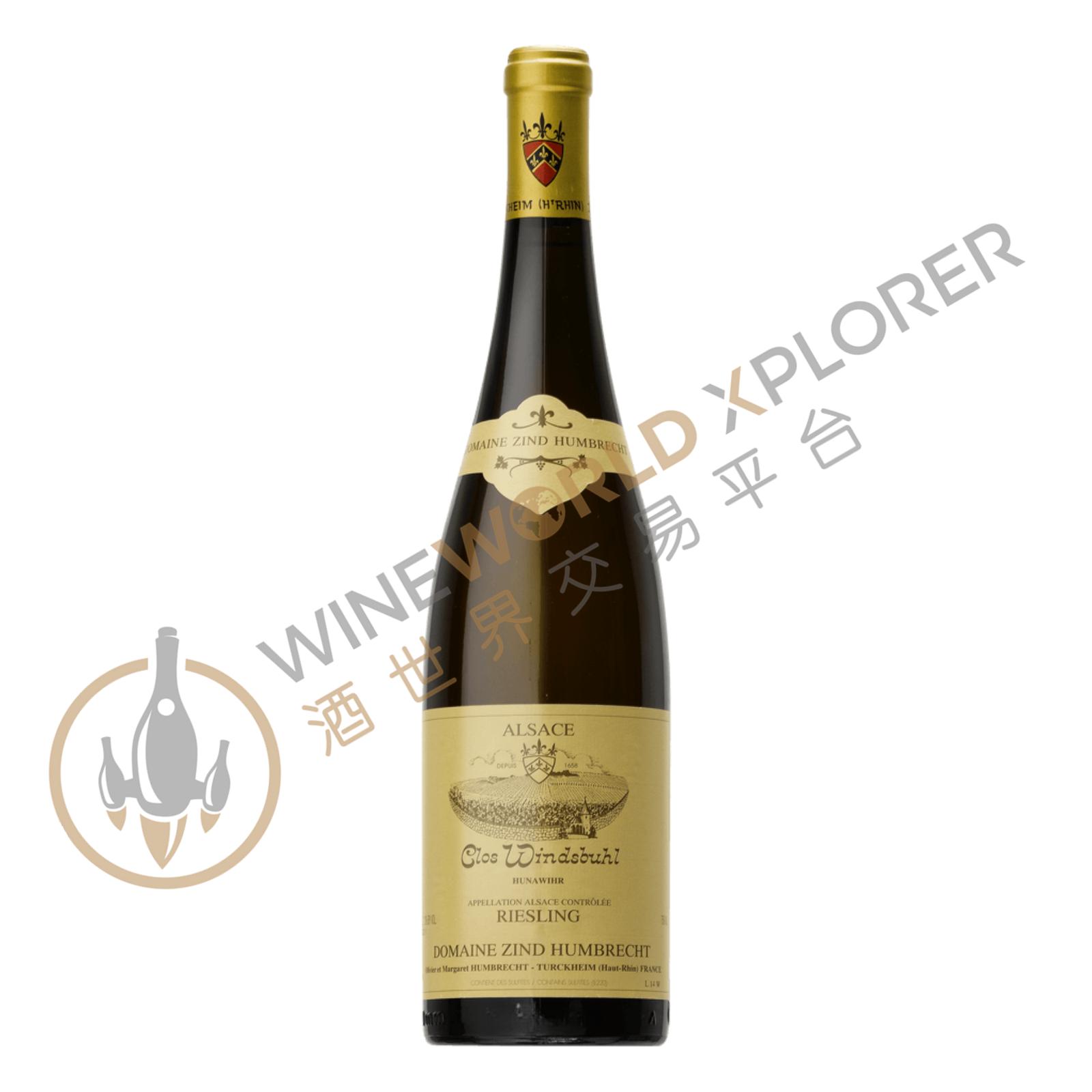
Zind Humbrecht, Riesling Clos Windsbuhl 2008


Description
Zind Humbrecht, Riesling, Windsbuhl, Clos Windsbuhl, France, Alsace, Still, White, 2011
Tasting notes

Reviewed by: David Schildknecht
Another virtually-dry member of its collection (at only 12.7% alcohol), Olivier Humbrecht says he had hoped that his 2008 Riesling Clos Windsbuhl – from some of his latest-picked grapes – would finish even drier than nine grams but, like me, he loves the wine’s balance now. I am reminded of 1996 by the nose of gooseberry, fresh white peach, citrus oils, and white truffle. A correspondingly prickly brightness on the palate is offset not only by the residual sugar but also by a silken texture and formidable sense of sheer stuffing. A strikingly persistent, bittersweet finish brings into play copious salt and chalk for a palpably extract rich and saliva-inducing finish. This should be worth following for at least two decades. Tasting the Zind-Humbrecht collections armed with what one knows of these vintages from most other establishments, both the 2008s and 2009s will harbor surprises. A number of 2008s are ornery in finished acidity, and some are more marked by botrytis than most other exemplars of their vintage from top addresses, this occasionally taking the form of fungal notes and piquancy that some tasters may find off-putting. The 2008 harvest began here already on September 23, lasting exactly one month. Selectivity in October – especially with Pinot Gris – consisted, explained Humbrecht, more in the careful removal of healthy bunches to insure some dry wines, with the remaining crop being left until later, the opposite of what more usually happens and at many other top-quality Alsace (or German) estates – notwithstanding the literal meaning of the expression “vendange tardive.” “Gewurztraminer was the last to ripen,” notes Humbrecht, and presumably for that reason grape sugars were very high by the time he picked, making for a collection nearly all of which exhibits V.T.-like sweetness. “It was almost easier and more sensible to make S.G.N. this vintage than V.T.,” remarks Humbrecht by way of explaining why he rendered six of the former and only one 2008 wine in the latter category. “If there had been pressure to harvest,” he notes, “then we would have had V.T.s instead.” The majority of 2008 Rieslings – as well as the Pinot Blanc and two Muscats – were not bottled until February, 2010 on account of their high acidity and/or sluggish fermentations. But most of those wines underwent malo and finished dry or virtually so. (The yeasts and beneficial bacteria may have found it tough working in such a low pH medium, but – eventually – they succeeded.) Yet even in early-harvested instances, Humbrecht says that the proportion of malic acidity – which thereafter diminished – was never higher than one-third. Most of the 2008 vintage Pinot Gris and Gewurztraminer, even including the S.G.N.s, were bottled already in September, 2009. The surprise on tasting the Zind-Humbrecht 2009s is an entirely pleasant one. The exceptional expressiveness of so many of these wines – even if Olivier Humbrecht admits that “they aren’t always perfectly precise or pure” – is surely in large part a tribute to vineyard management that permitted such a substantial portion of so large a crop to be picked unusually early, yet expressively ripe, although, a few sites succumbed to fortunately noble rot. Among practices to which Humbrecht points as relevant to his 2009 quality is his elimination in recent years of vine hedging to achieve earlier and more uniform flavor ripeness without excess grape sugar. Instead, his crew now lets the tips grow and then laboriously ties or tucks them back into the canopy, an approach for which fellow-proponent of biodynamics Lalou Bize-Leroy has become well-known. Against a background in vintage 2009 of wines that fermented rapidly for most growers, Humbrecht explains that this was the case for many of his, too; but some that had stopped with significant residual sugar over the winter began fermenting again in early summer of last year, a few not finishing until autumn and thus missing the main bottling session that takes place here each September. When I visited the domaine last November, Riesling Windsbuhl; multiple Rieslings from Turckheim including two Brands; and the Jebsal Pinot Gris S.G.N. were not ready to be assessed. Those who (like me) have harbored reservations about noticeably high alcohol in certain recent Zind-Humbrecht wines will be delighted to find 2009s that have in that respect also beaten the vintage odds, though to be sure, sometimes at the price of high residual sugar. With minor exceptions, retail prices have dropped for Zind-Humbrecht wines, in some instances significantly. Add to this an expanded range of generic cuvees and the Humbrechts’ willingness to declassify fruit from many outstanding sites (which helps account for the 2009 collection’s – relatively! – reduced number of bottlings), and most consumers can afford to enjoy – indeed, really have no excuse for remaining strangers to – at least some of these much-talked about and often iconic wines. Importer: The Sorting Table, Napa, CA; tel. (415) 491-4724
Reviewed by: Neal Martin
Tasted at the Boutique Wineries Fair in London. There is something almost ‘fishy’ on the nose: oyster shells perhaps. Very good aromatic tension here with a mote of chalk dust. The palate is complex, very well balanced with racy acidity and wonderful sense of mineralite towards the finish. Tightly coiled and meriting several years cellaring. Tasted September 2010.
About the Producer
Founded in 1959, Domaine Zind-Humbrecht is one of the most prestigious wineries in Alsace. The Humbrecht family has been growing grapes in the region since 1620. Since the 1980s, the estate has been run by their son, Olivier Humbrecht. Olivier is a world-renowned winemaker and the first Frenchman to be awarded the title of "Master of Wine". In France, it is common that the vineyards owned by Château Humbrecht are not located in the same place. The vineyards of Château Humbrechts are located in 5 different villages and cover a total area of 40 hectares. A wide range of grape varieties are planted, mainly Riesling, Gewurztraminer and Pinot Gris. The average age of the vines is 30 years, with some vines as old as 70 years. The winery produces 13,000 to 16,000 cases of wine per year, with yields of 3,000 to 4,000 liters per hectare. Old vines, the best vineyards, low yields, late harvesting, a biologically based growing system and vinification in old, temperature-controlled vats are the hallmarks of the winery's wines. The harvest at Château Humbrechts generally lasts more than 3 months, as the grapes are picked only when a parcel of vineyards has reached their approved full ripeness. The grapes are pressed in whole bunches and they tend to use heavy vats with large capacity. All materials are moved by gravity and aged with premium vats, with little to no use of sulfur dioxide. The fermentation process is completely natural - indigenous yeasts are used, no enzymes and such additives as oxygen, nitrogen, clarifiers, vitamins, etc. are added. The fermentation process at Château Humbrechts is very slow, ranging from 3 months to 1 year, even longer for very sweet wines, and 12 to 18 months for the drier ones. Generally speaking, Château Humbrechts produces mostly sweet wines (depending on the vintage), but in years when natural conditions allow, it also produces less sweet wines with an alcohol content of 15% to 16%. The wines of Château Humbrechts, however, are made with the utmost care and reflect the best local winemaking techniques.