
 Wine Advisor



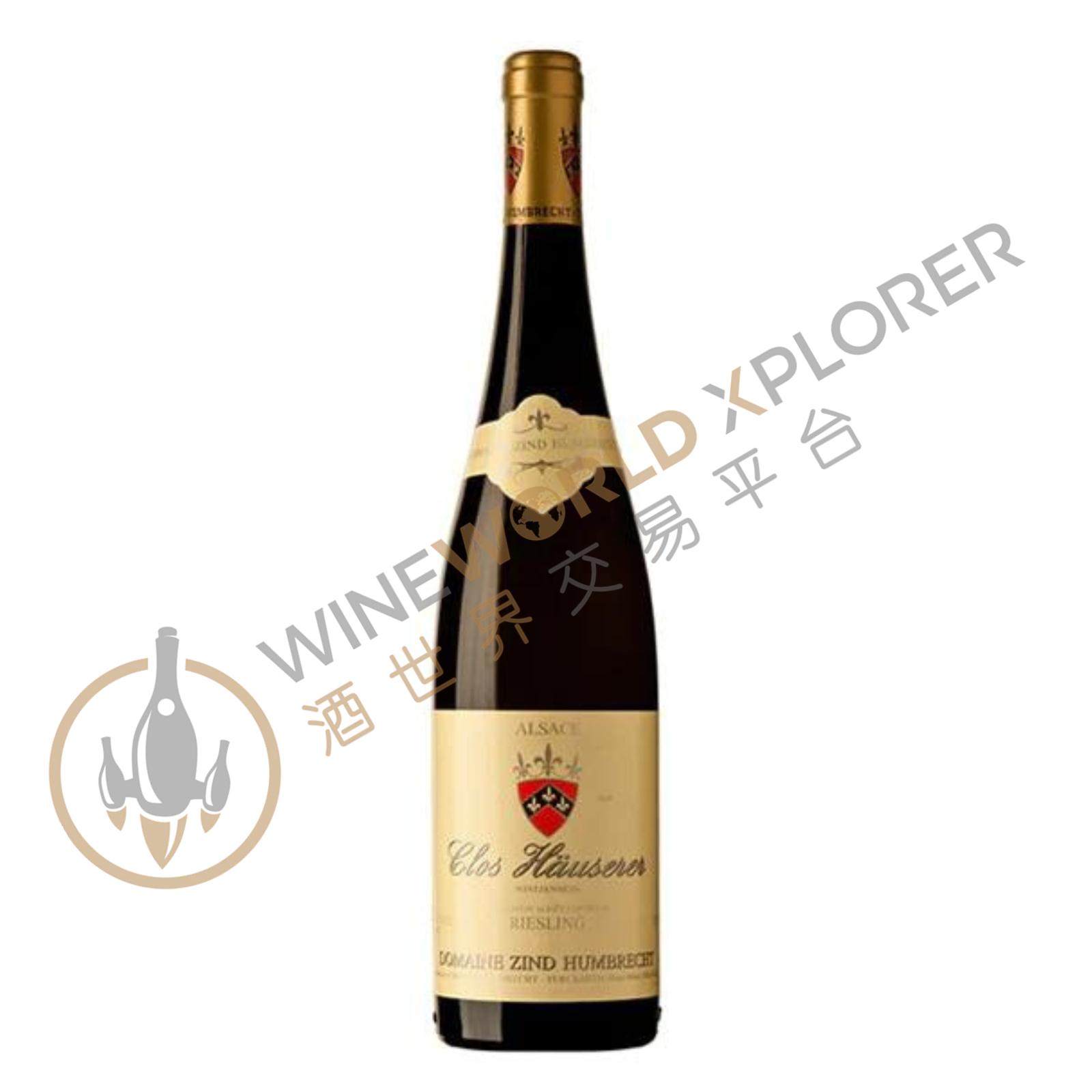
Zind Humbrecht, Riesling Clos Hauserer 2005
 View analysis


Description
Tasting notes

Reviewed by: David Schildknecht
The 2005 Riesling Clos Hauserer was another of Humbrecht’s reluctant fermentors, from very ripe and rot-tinged grapes, but thanks to high acidity 22 grams of residual sugar only subtly make their presence known. Vanilla, licorice, sage, quince and peach preserves, orange zest, and brown spices are the key notes in this rich yet almost aggressively penetrating Riesling, but there is also an undeniably chalky undertone to its blazingly citric as well as honeyed and bitter-sweetly herbal finish. The tactile sense of citrus zest and herbal pungency really extends the finish, yet without turning downright bitter. Humbrechts considers his 2005 Riesling bottlings from Clos Windsbuhl, Brand and Rangen to be not only superior but possessed of greater aging potential than this Clos Hauserer. That is not how I perceive this unusually strong and concentrated Clos Hauserer, which I wouldn’t be surprised to see benefit from 12-15 years in bottle. Olivier Humbrecht compares his 2004s with 1992. These were the two most copious vintages of recent times, delivering truly dry wines with quite high acidity. Although he characterized 2004 as more precocious than 2005, Humbrecht kept harvesting through early November, insisting that this was only possible due to his stringent, biodynamic viticultural practices and consequent generally healthy fruit. Humbrecht insists too that he did not seek botrytis, as rain was rendering noble rot nearly impossible. But it certainly seems sometimes as if botrytis sought out him! One price for his protracted harvest was elevated alcohol, which some wines struck me as hard-pressed to gracefully support; and acid levels too occasionally reached extremes. Overall, in fact, I have never tasted such a wide rage of quality nor so many unusually distinctive and at times downright inscrutable wines at this address as those of 2004. Two thousand five, relates Humbrecht, brought ample botrytis, especially with Pinot Gris, but later ripeness, again with formidable acid and extract levels thanks to the cool, well-watered August. Nearly all of the Riesling musts fermented dry. Humbrecht considers it a classic vintage for (in most instances dry-tasting) Gewurztraminer. And despite the blanket of rot that descended on the Pinot Gris vineyards, a cold, virtually cloudless five day period permitted patient and rigorous selection of fruit. A tribute to the ripeness and high tartaric acidity of these 2005s is that although well more than half of his lots of Riesling and Pinot Gris underwent malolactic transformation, an experienced taster would be hard-pressed to identify which! “Had we had the challenging October of 2004 in 2005 as well,” he says, “most ‘04s would be better than the ‘05s.” But as things turned out – October 2005 having been the second warmest after 2001 in the last decade – Humbrecht believes that in the long run these two collections will prove well matched in overall quality. Importer: The Sorting Table, Napa, CA; tel. (415) 491-4724
About the Producer
Founded in 1959, Domaine Zind-Humbrecht is one of the most prestigious wineries in Alsace. The Humbrecht family has been growing grapes in the region since 1620. Since the 1980s, the estate has been run by their son, Olivier Humbrecht. Olivier is a world-renowned winemaker and the first Frenchman to be awarded the title of "Master of Wine". In France, it is common that the vineyards owned by Château Humbrecht are not located in the same place. The vineyards of Château Humbrechts are located in 5 different villages and cover a total area of 40 hectares. A wide range of grape varieties are planted, mainly Riesling, Gewurztraminer and Pinot Gris. The average age of the vines is 30 years, with some vines as old as 70 years. The winery produces 13,000 to 16,000 cases of wine per year, with yields of 3,000 to 4,000 liters per hectare. Old vines, the best vineyards, low yields, late harvesting, a biologically based growing system and vinification in old, temperature-controlled vats are the hallmarks of the winery's wines. The harvest at Château Humbrechts generally lasts more than 3 months, as the grapes are picked only when a parcel of vineyards has reached their approved full ripeness. The grapes are pressed in whole bunches and they tend to use heavy vats with large capacity. All materials are moved by gravity and aged with premium vats, with little to no use of sulfur dioxide. The fermentation process is completely natural - indigenous yeasts are used, no enzymes and such additives as oxygen, nitrogen, clarifiers, vitamins, etc. are added. The fermentation process at Château Humbrechts is very slow, ranging from 3 months to 1 year, even longer for very sweet wines, and 12 to 18 months for the drier ones. Generally speaking, Château Humbrechts produces mostly sweet wines (depending on the vintage), but in years when natural conditions allow, it also produces less sweet wines with an alcohol content of 15% to 16%. The wines of Château Humbrechts, however, are made with the utmost care and reflect the best local winemaking techniques.
