
 Wine Advisor



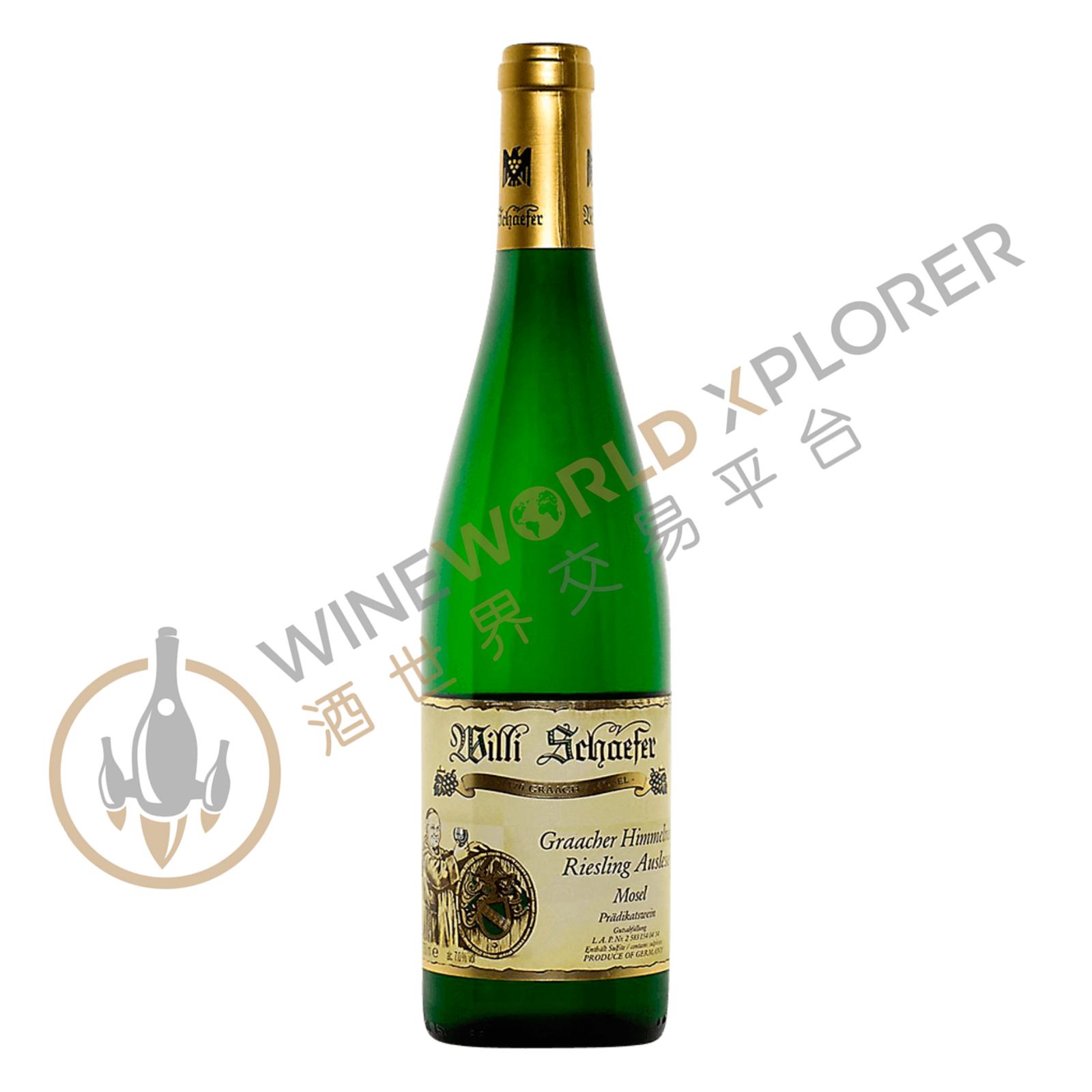
Willi Schaefer, Graacher Himmelreich Riesling Spatlese 2010
 View analysis


Description
Tasting notes

Reviewed by: David Schildknecht
Bright, zesty apple, lime and grapefruit donate aromatic pizzazz and generous refreshment to the Schaefers’ 2010 Graacher Himmelreich Riesling Spatlese, whose suggestions of brown spices and herbal essences, along with saliva-inducing salinity and scallop-like savor as well as a classic Mosel cantus firmus of wet stone, make for a levitating and irresistible performance that finishes with tenacity and panache. This promises to remain a hit for at least the next quarter of a century. “You had to keep delaying harvest,” says Christoph Schaefer, “but when it did come time, a significant share of the crop needed to be picked pretty quickly,” due to pressure from botrytis. Of course, when two experienced grower-owners have only ten – albeit extremely morsellated – acres to tend, 2010 challenges are a bit more manageable. “It was really important this year,” Schaefer junior continues, “to let the small amount of fruit that was still green hang, because such bunches were retarded in ripeness; high in malic acid; and would have been very noticeable in a blend.” “Even if you have only 10 or 20% of those sour grapes in the picking, you’ll never get that sour note out of the wine” adds Willi Schaefer, who is a champion in other contexts of including fresh green-gold grapes in one’s material, but suspects that failure to recognize the aforementioned danger was the cause of many a disappointing 2010. Notwithstanding – but also not contradicting – that opinion, as I noted in my introduction to this vintage, many Mosel growers observed not only higher concentration of total acidity in precisely their botrytized fruit but also the locking-in of more malic, and as my tasting notes demonstrate, the acids in some of the Schaefers’ most botrytized batches bordered on the obstreperous. “Only after fermentation – in which a significant (but variable) amount of acidity is lost anyway – can you really tell the structure of your wine,” insists Christoph Schaefer, “so what de-acidifying we did – largely in Q.b.A. and Kabinett – was as a correction to wine.” Willi Schaefer is keen to remind us that what tastes balanced is partly an imponderable function of terroir. “You’ll see that ten grams of finished acidity tastes well-integrated and -buffered in wine from one parcel, while a wine with approximately the same gross analysis from another parcel tastes sour. When I see bunches looking and tasting a certain way, and I know where they’re growing, then the analysis doesn’t interest me; I know the wine is going to turn out right.” You can taste that sort of confidence in a 2010 performance from Schaefers of unusual qualitative consistency, even if there will be differences of opinion as to the potential greatness of certain wines that are extreme in ways which would only in this vintage fail to elicit a gasp. “You can’t really say that earlier or later pickings were more successful this year,” adds Schaefer senior, but as at so many top Middle Mosel addresses this year, Spatlese and Auslese predominate, an outcome of which nobody even dreamt at the end of 2010’s rainy September. Only the heaviest lees were separated in January and the rest left in the wines until bottling, which (with the exception of this year’s tiny, sole trocken batch) took place a month later than usual in June. Importer: Terry Theise Estate Selections, imported by Michael Skurnik Wines, Inc., Syosset, NY; tel. (516) 677-9300
About the Producer
The estate is all of 4.2 hectares with no desire to grow. Part of is the wines themselves; they’re silly delicious. You cannot be unhappy drinking these perfect ur-Mosel Rieslings. And as crystalline as they are, as ethereally complex and limpidly clear, they have a quality of calm; they don’t fuss at you with how amazing they are. Since 2015, Christoph Schaefer and his wife Andrea run this storied family winery in Graach, the pair met while studying enology at Geisenheim. Their winemaking philosophy is not much different than that of Christoph’s father or grandfather. The focus is not on numbers or analytics, but on how the grapes taste. From harvesting each plot to the fermentations with natural yeast, all the way through bottling, everything is done by taste and feel. In the village of Graach, with south-to-southwest exposition, the vines have great sun exposure all day as well as natural spring that runs through the hillside, guaranteeing good water supply even in warm vintages. The Romans already knew the benefits of Graach’s sites and cultivated vines here. In the Prussian classification of the Mosel vineyards from 1816 to 1832, Graach’s vineyards had the highest ratings. Compared to the wines just slightly northwest in Zeltingen, the wines from Graach show cooler green and white tones rather Wehlen and Zeltingen’s more orange and red flavors. These wines perfectly reflect this unique terroir and show the distinct differences between these two sites right next to each other. Domprobst is more mineral, smokier, shadowy, and takes longer to emerge while Himmelreich is buoyant, more floral, lighter in texture, and is open from day one.
