
 Wine Advisor



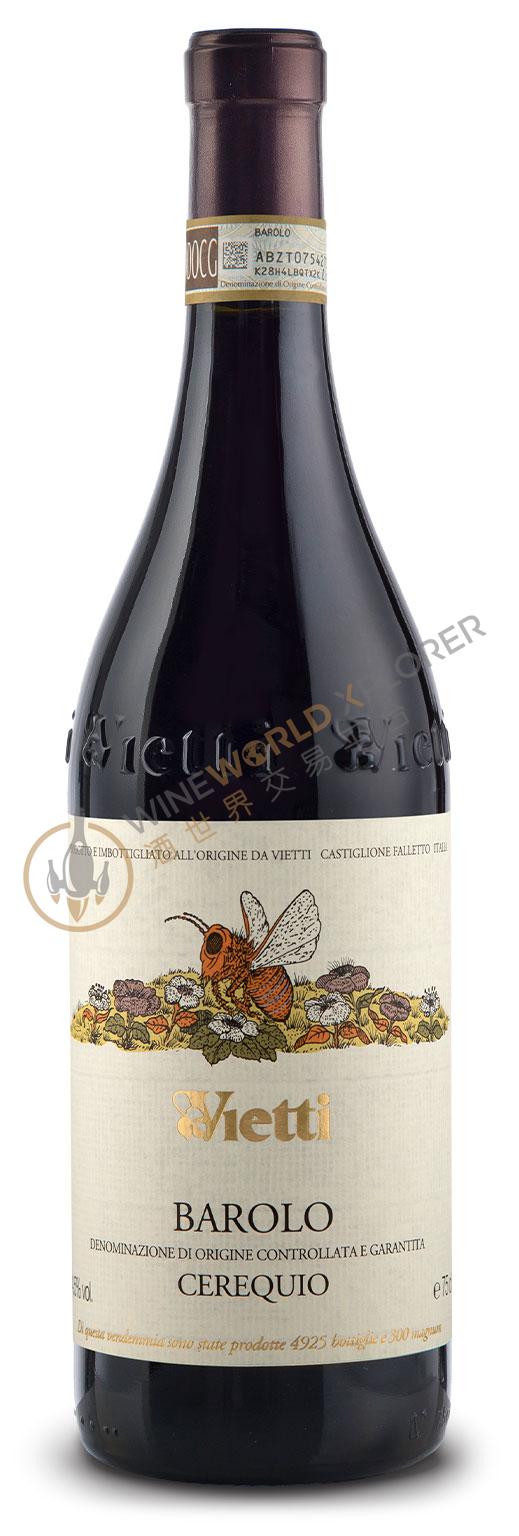
Vietti, Barolo Cerequio 2019
 View analysis


Description
Tasting notes

Reviewed by: Antonio Galloni
The 2019 Barolo Cerequio is a worthy follow up to the stellar 2018. Aromatic and deeply pitched, the 2019 races across the palate with remarkable depth and intensity. Crushed red berry fruit, rose petal, mint and cinnamon all open in the glass, but it is the wine's silkiness and suppleness that impresses most. A kick of acids and tannins puts an exclamation point on the finish. This is a gorgeous Cerequio that takes all the finesse this site offers, and then turns up the volume. What a wine.
Reviewed by: Monica Larner
Vietti was able to buy a 9,000-square meter piece of Cerequio from Michele Chiarlo, arguably the king of this celebrated cru. And because this is a new addition to the portfolio, the Vietti team is still learning the ropes. For example, there is a fresh minty tone that pops up from the bouquet of the 2019 Barolo Cerequio. "That minty note was a mystery to us," Luca Currado tells me. "But then we understood that its part of Cerequio." This wine shows a firm grip on the palate that does extend out to include some textural softness, but it ultimately remains quite structured. Among the grand cru sites of La Morra, Luca Currado tells me that "Cerequio is the brother and Brunate is the sister." His wife Elena Penna adds, "We've never had two sites so close to one another show such a great difference between them."
Reviewed by: James Suckling
Extremely fresh and perfumed with lavender, violets and fresh plums. Wonderful to smell. Full-bodied with firm and focused tannins that give structure and intensity. Excellent length. Fantastic for the vintage. Only the second vintage of this for Vietti. Vegan. Drink after 2028.
Reviewed by: Antonio Galloni
The 2019 Barolo Cerequio is a worthy follow up to the stellar 2018. Aromatic and deeply pitched, the 2019 races across the palate with remarkable depth and intensity. Crushed red berry fruit, rose petal, mint and cinnamon all open in the glass, but it is the wine's silkiness and suppleness that impresses most. A kick of acids and tannins puts an exclamation point on the finish. This is a gorgeous Cerequio that takes all the finesse this site offers, and then turns up the volume. What a wine.
About the Producer
Vietti is located in the Castiglione Falletto wine region in the Cuneo province of Piedmont, Italy. The wines produced by the winery are not only of excellent quality, among which the Vietti Barolo Ravera 2010 wine won a perfect score from the wine critic Antonio Galloni (Antonio Galloni), who was once the "Wine Spectator", but also launched the "Artist's Wine". The "target wine" idea adds a strong artistic flavor to the wine. The Vietti family's passion for art has so far been fully reflected in the creation of wine art labels. Since 1974, certain Vietti wines have been decorated with specially designed original works (lithographs, woodcuts, etchings, silkscreens, reliefs) inspired by specific vintages. The number of prints is the same as the number of bottles produced, with the first 100 labels signed by the artist. Each piece is used only once for a particular vintage. From the 1982 vintage of Barolo Villero sold in 1988, the artist's label has been dedicated to the wines made in this great vineyard. The history of Chateau Vietti can be traced back to the 19th century. But it wasn't until the early 20th century that Vietti became a winery and sold its own bottles under that name. The founder of the winery, Mario Vietti, began making the first Vietti wines in 1919, mainly for sale in Italy. His most important achievement was the transformation of a family farm in many industries into a viticulture and winemaking business. In 1952, Luciana Viett's husband, Alfredo Currado, continued to make high-quality wines from grapes from their own vineyards and from purchased grapes. Very quickly, Chateau Vietti grew into one of Piedmont's top wine producers and one of the first wineries to export to the American market. Alfredo was one of the first pioneers to select grapes from a single vineyard for winemaking, which was a radical concept at the time, but today virtually every Barolo and Barbaresco wine is made Merchants sell "single vineyard" or "appellation" wines. Alfredo is also known as the "Father of Arneis" because he spent much time in 1967 rediscovering and understanding this nearly extinct breed. Today Arnes is the most prestigious white wine from the Roero region north of Barolo. The wines made by Arnes are so successful that fellow vintners as far away as the West Coast are now cultivating Arnes to make wine! After 1970, the winery launched the idea of "wine with artist label". The Gualado family has 3 children: Emanuela, Elisabetta and Luca. In 1970, Alfredo and Luciana, thanks to their friendship and support with a number of local artists, started updating their labels. They mentioned that, on a long winter night in Langa, a group of artists were eating and drinking with them around the table, suggesting that they decorate their art at the winery with "art on the label". From that moment on, a new label for Vietti wines took shape, which is still in use today. At the same time, the idea of "artist-labeled wines" began to take shape and is still used in the winery's Barolo Riserva Villero.
