
 Wine Advisor



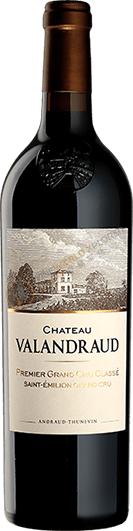
Valandraud 2003
 View analysis


Description
Tasting notes

Reviewed by: Stephen Tanzer
Impressive ruby-red color. Lively aromas of violet, mint and licorice, further lifted by a mineral component. Sweet, silky and nicely delineated, with little of the roasted aspect of the year. (The pH is a reasonable 3.7 without acidification, says Jean-Luc Thunevin.) Finishes with lovely sweetness and thickness (the wine is close to 15% alcohol), with a layer of sweet tannins saturating the palate. This would be better for a few years of patience and should last for a couple of decades.
Reviewed by: Stephen Tanzer
Full medium ruby. Explosive aromas of berry liqueur, minerals and violet; quite precise for 2003. Rich, sweet, dense and thick, with terrific concentration and lift. Almost too big for the mouth, and yet this offers a light touch considering its superb richness. Flavors of dark berries, licorice and violet pastille. Finishes with very fine tannins and excellent precision and verve. A great showing; at 15% alcohol, this wine could stand up to today's monsters from Napa Valley.
Reviewed by: Stephen Tanzer
(a blend of 60% cabernet franc, 37% merlot and 3% malbec and cabernet sauvignon; 15% natural alcohol, from a yield of just 28 hectoliters per hectare) Bright medium ruby. Pure aromas of cherry, minerals and violet. Complex, juicy and bright, with impressive clarity, penetration and energy for such a rich, large-scaled wine. I would never have guessed 15% alcohol. Spreads out on the back end to saturate the entire palate. Finishes with big, rich tannins and excellent grip. A very strong vintage in the making for this renowned garage wine.
Reviewed by: Robert M. Parker, Jr.
This wine, conceived in a period when this property was not as well-known as it is today, is strutting its stuff. Proprietors Jean-Luc Thunevin and Murielle Andraud should be pleased. The color is a healthy dense plum/ruby. Aromas of sweet licorice, black currants and tobacco leaf are followed by a full-bodied, opulent wine without a trace of oxidation or fatigue. This beauty is a true success for a 2003 Right Bank offering. Drink it over the next 10-15 years.
Reviewed by: Neal Martin
The first Saint Emilion that shows real, bona fide quality. A tempered nose of raspberry, redcurrants, damsons and a touch of fennel. A very elegant nose, plump and with great delineation. Very focused with good weight, this is a wine that has brushed aside the limitations of the 2003 growing season to produce a seamless, delectable wine in a “traditional” style (written blissfully ignorant of its identity!) Wonderful. Drinking 2008-2018. Tasted January 2007.
Reviewed by: Robert M. Parker, Jr.
The well-known Jean-Luc Thunevin, who has done so much to inspire a young generation of St.-Emilion wine producers, may have produced the finest wine in this estate’s short history. Cropped at 28 hectoliters per hectare, there are just over 1,000 cases of this blend of 50% Merlot, 40% Cabernet Franc, and small portions of Malbec and Cabernet Sauvignon. An inky/blue/purple color accompanies a powerful perfume of black fruits, underbrush, licorice, crushed stones, cocoa, espresso, and spice box. It hits the palate with a thunderous display of power and fruit. With beautifully integrated tannin, a ripe personality, and a 50-second finish, this serious effort may be the biggest and longest-lived Valandraud has yet produced. Anticipated maturity: 2008-2020+.
Reviewed by: Neal Martin
Tasted blind at the Valandraud vertical at the property, the 2003 Valandraud did nothing to dispel my doubts about the longevity of this wine. It is a blend of 80% Merlot and 20% Cabernet Franc matured in new oak for 20 months, actually the shortest duration from 2000 to date. It has a light and rather ephemeral bouquet that just seems to drift away in the (non-existent) breeze. Despite coaxing, this offers little compared to the 2002 or 2004 either side. The palate is medium-bodied with a rather chewy, meaty opening. There is dry fruit here that lacks joie-de-vivre, some presence but not life, and it feels bitter on the finish. It is simply a case of the merciless heat of the growing season vanquishing longevity. As such, given how many Valandrauds from mediocre vintages are maturing so well, I would consume bottles in the near future. Tasted December 2016.
Reviewed by: Robert M. Parker, Jr.
The home property of Jean-Luc Thunevin, the inspirational spirit for Bordeaux’s garagiste movement, is Valandraud. The 2003 is a full-bodied, powerful St.-Emilion offering up notes of espresso roast, chocolate, sweet currants and cherries, and hints of minerals as well as cedar. Expressive and pure, with copious tannins lurking behind the cascade of fruit and glycerin, this wine requires 2-4 years of bottle age, and should drink well for two decades or more.
Reviewed by: Neal Martin
The 2003 Valandraud, which was blended with 20-25% Cabernet Franc, was poured by Jean-Luc Thunevin when I visited to taste his 2015. This was one of the better Saint Emilion wines in its youth, but even Jean-Luc Thunevin himself did not appear enamored by his 2003, which for anyone that knows him, is not a good sign. The nose is fully mature, a little mushroom-like and leathery, the fruit has receded in recent years. The palate is medium-bodied with a slightly acetic note, vestiges of freshness here, but I find the finish too volatile and suspect that this would have drunk better several years ago. This is one of a number of Right Bank 2003s that offered much pleasure in their flush of youth, but I would be very wary of keeping bottles for the long-term. Tasted March 2016.
Reviewed by: Robert M. Parker, Jr.
The powerful, black/purple-tinged 2003 offers pure floral notes intermixed with blackberries, charcoal, espresso, and chocolate. Multilayered, full-bodied, and concentrated, with sweet tannin and low acidity, this already accessible St.-Emilion will be drinkable between 2007-2020. Note: Valandraud also produces a limited production kosher cuvee. The 2003 merited (90-92 points), and the 2002 (89 points). It may be the world’s finest kosher wine.
About the Producer
Chateau Valandraud is located in the Saint-Emilion appellation on the right bank of Bordeaux, France. It is a famous pioneer winery of Garage Wine in Bordeaux. One of the most expensive wines in the Loh region. The achievements of Château Valenzo are inseparable from a wine-passionate couple, Jean-Luc Thunevin and Murielle Andraud. This well-known couple in the wine world started out selling wine in the Saint-Emilion region. After their business success, they decided to open up a vineyard of their own and make their own wine. So, in 1989, the couple bought a 0.6-hectare vineyard near Chateau Pavie Macquin and Chateau La Clotte in Saint-Emilion. The winery is named after the place name Vallon de Fongaban and the family name of the hostess Andro. In this way, Valanzo Winery was born. After that, Jean-Luc Touven and Muriel Andrew successively bought several other small vineyards. Today, the winery has 8.88 hectares of vineyards. In 1991, Château Valenzo released its first vintage. And just five years later, the 1995 Château Valandraud (Saint-Emilion Grand Cru Classe, France) was awarded 95 points by Robert Parker, the "Wine Emperor". Since then, its value has soared, becoming one of the most expensive wines in Saint-Emilion. In 2012, Valenzo Winery was ranked Saint-Emilion Premier Grand Cru Classe B in the latest Saint-Emilion classification results with its outstanding performance. The winery also joined the Union des Grands Crus de Bordeaux in 2017. Jean-Luc Tournevin was called "Bordeaux's Black Sheep" by Robert Parker, also known as "Saint-Emilion's Bad Boy". However, these seemingly derogatory titles are an affirmation of his pioneering innovation in winemaking. He created a new style of red Bordeaux wine by further compressing the grape yield, delaying the harvest time, increasing the extraction time and using new oak barrels for long aging. And it is this kind of Varanzo that makes the famous wine critic Michel Bettane give the highest evaluation of "love at first sight". The vineyards of Valenzo Winery have a superior terroir. The soil types in the garden are mainly limestone and clay. The red grape planting includes 65% Merlot, 25% Cabernet Franc and 5% Cabernet Sauvignon. Cabernet Sauvignon, 4% Malbec and 1% Carmenere, white grapes are mainly Sauvignon Gris, Sauvignon Blanc and Semillon. Three varieties. To this day, the winery has always adhered to the high requirements for the quality of grapes, and manually screened the wine grapes with extremely strict standards. In terms of brewing, the winery has achieved a combination of tradition and modern technology. Grapes are harvested by hand when they reach their peak ripeness and undergo a first screening in the vineyard, followed by an extremely rigorous secondary screening in the winemaking workshop. The selected grapes undergo alcoholic fermentation in different vessels (stainless steel tanks, concrete tanks and oak barrels), followed by a three-week maceration, during which the skins are manually pressed to fully extract the color, tannins and flavor substances. The wine is then placed in oak barrels for Malolactic Fermentation. Next, the wine will be matured for 18-30 months in 100% new French oak barrels. The winery spends huge sums of money to replace expensive new oak barrels every year. Finally, the wine is bottled without filtration and clarification. Valenzo Winery's authentic wine-Valanzo Winery's red wine is gorgeous in style, rich in aroma, silky tannins, fruity and fresh, rich and complex on the palate, rich in black berries and spices in oak barrels The taste adds a charming roasted aroma and has excellent ageing potential. In addition, the winery also produces a second-brand wine - Virginie de Valandraud, Saint-Emilion Grand Cru, France, and a third-brand wine - Château Valenzo No. 3 Dry red wines (3 de Valandraud, Saint-Emilion, France) and 2 very good white wines.
1995(4)1997(1)1998(2)1999(2)2000(3)2001(2)2002(3)
Package Size
