
 Wine Advisor



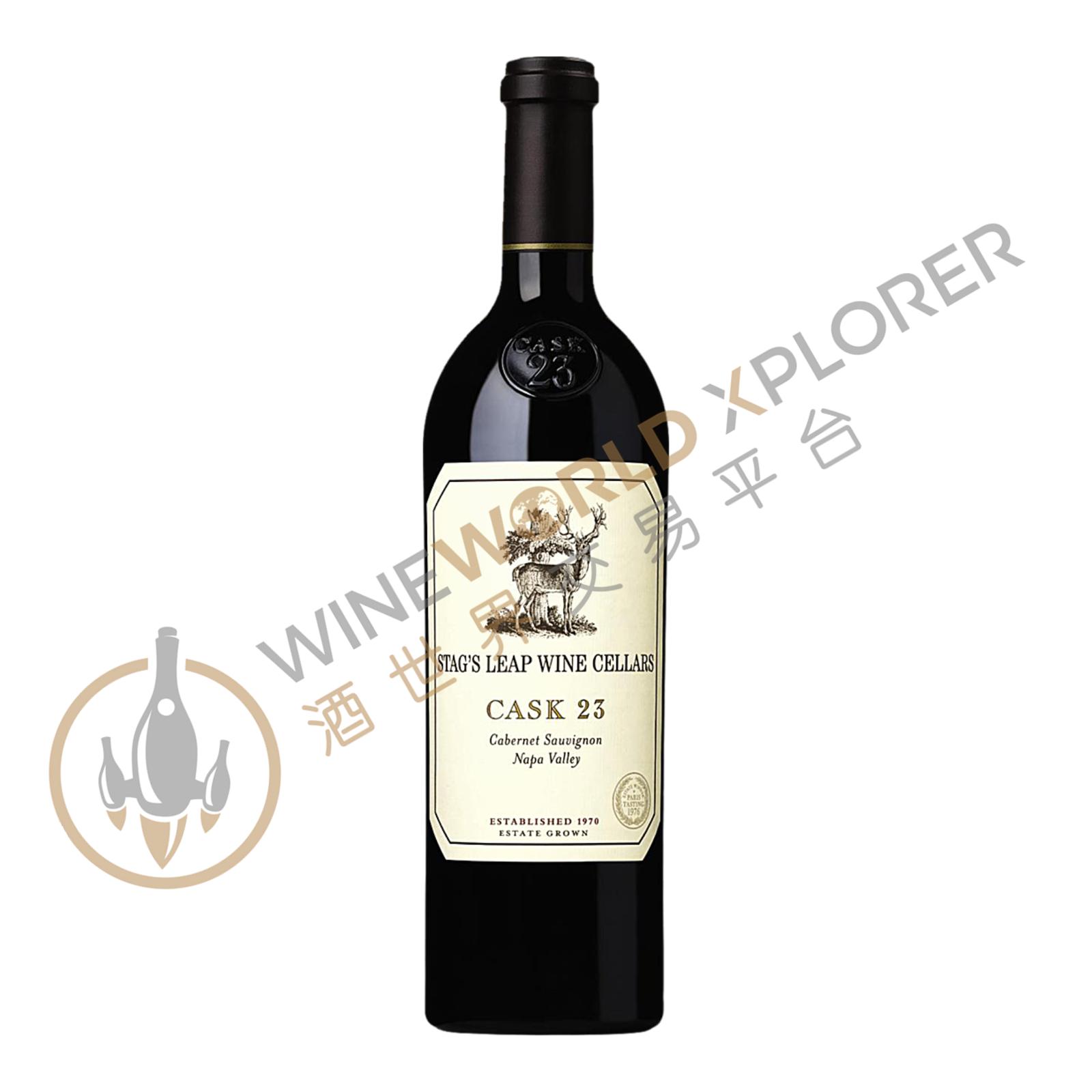
Stag's Leap Wine Cellars, Cask 23 Cabernet Sauvignon 2016
 View analysis


Description
Tasting notes

Reviewed by: Antonio Galloni
The 2016 Cabernet Sauvignon Cask 23 is powerful and savory in the glass, with tons of both aromatic nuance and supporting structure that give the wine gravitas as well as a very clear sense of direction. The plum, blackberry jam, grilled herb, lavender and dark spice notes are all very finely drawn in this big but polished Cabernet Sauvignon from Stag's Leap Wine Cellars.
Reviewed by: Lisa Perrotti-Brown
The deep purple-black colored barrel sample of 2016 Cask 23 Cabernet Sauvignon features compelling, youthful notes of freshly crushed red and black currants, black cherries, kirsch and mocha with nuances of Marmite toast, roasted nuts, underbrush and truffles. Medium to full-bodied, the palate has a very firm frame of super ripe tannins supporting the multilayered flavors, finishing on an epically long, lingering fragrant earth note. Beautiful.
Reviewed by: Antonio Galloni
The 2016 Cabernet Sauvignon Cask 23 is powerful and savory in the glass, with tons of both aromatic nuance and supporting structure that give the wine gravitas as well as a very clear sense of direction. The plum, blackberry jam, grilled herb, lavender and dark spice notes are all very finely drawn in this big but polished Cabernet Sauvignon from Stag's Leap Wine Cellars.
About the Producer
Stag's Leap Wine Cellars was founded by Warren Winiarski, who bought an 18-hectare plot of land near the town of Yountville on the eastern slopes of Napa Valley, California, in 1972 and named it Stag's Leap. Stag's Leap" and later purchased neighbouring properties, which he merged with Stag's Leap to form a large wine estate known as Stag's Leap Cellars. Warren Winiarski, a Greek-American who taught Greek cultural history at the prestigious University of Chicago, left his old books behind for a career in winemaking through a variety of circumstances. Deer Leap Cellars began making wine in 1972 and produced a masterpiece the following year, the 1973 Cask 23. This cask won the first prize in a blind tasting in Paris, France, in 1976, ahead of the 1970 Mouton Rothschild, and has been a hit ever since. Of course, it may not be reasonable to compare these two vintages, and many people feel that Luyue has "failed to win" because of this, but nonetheless, it is a testament to the quality of Luyue's wines that they are among the best in the world. Thirty years later, the blind-tasting competition was repeated. In 1973 Luyue 23 was again put to the test and successfully defended its reputation, coming third in the London category, second in the California category and second overall. Since then, Luye 23 has been able to dispel all the doubts cast on it. Although a latecomer to the game, Deer Leap has been impressive and impressive from the start. After the initial vintage, the wines from the Luyue cellar go through a rigorous selection process to determine the winner for the 23rd cask. In 1985, when President Reagan hosted Mikhail Gorbachev at the White House, he drank from Barrel 23. Queen Elizabeth II also used it to celebrate President Reagan's anniversary on her private yacht. Deep red in colour, with complex flavours of roasted coffee, olives and chocolate, Deer Leap 23 has a fine, firm structure and a strong finish, which will develop in maturity over a period of 10 years, giving it an extremely harmonious and full-bodied appearance. The vineyards at Luyue are planted with red and white grapes, including Cabernet Sauvignon, Merlot, Riesling and Chardonnay, depending on the soil and climate, so Luyue makes not only red wines but also some white wines, such as the sweet Riesling with a German character and the dry Chardonnay. Riesling and dry Chardonnay. Of course, Luye's best wine is the red wine Barrel 23.
