
 Wine Advisor



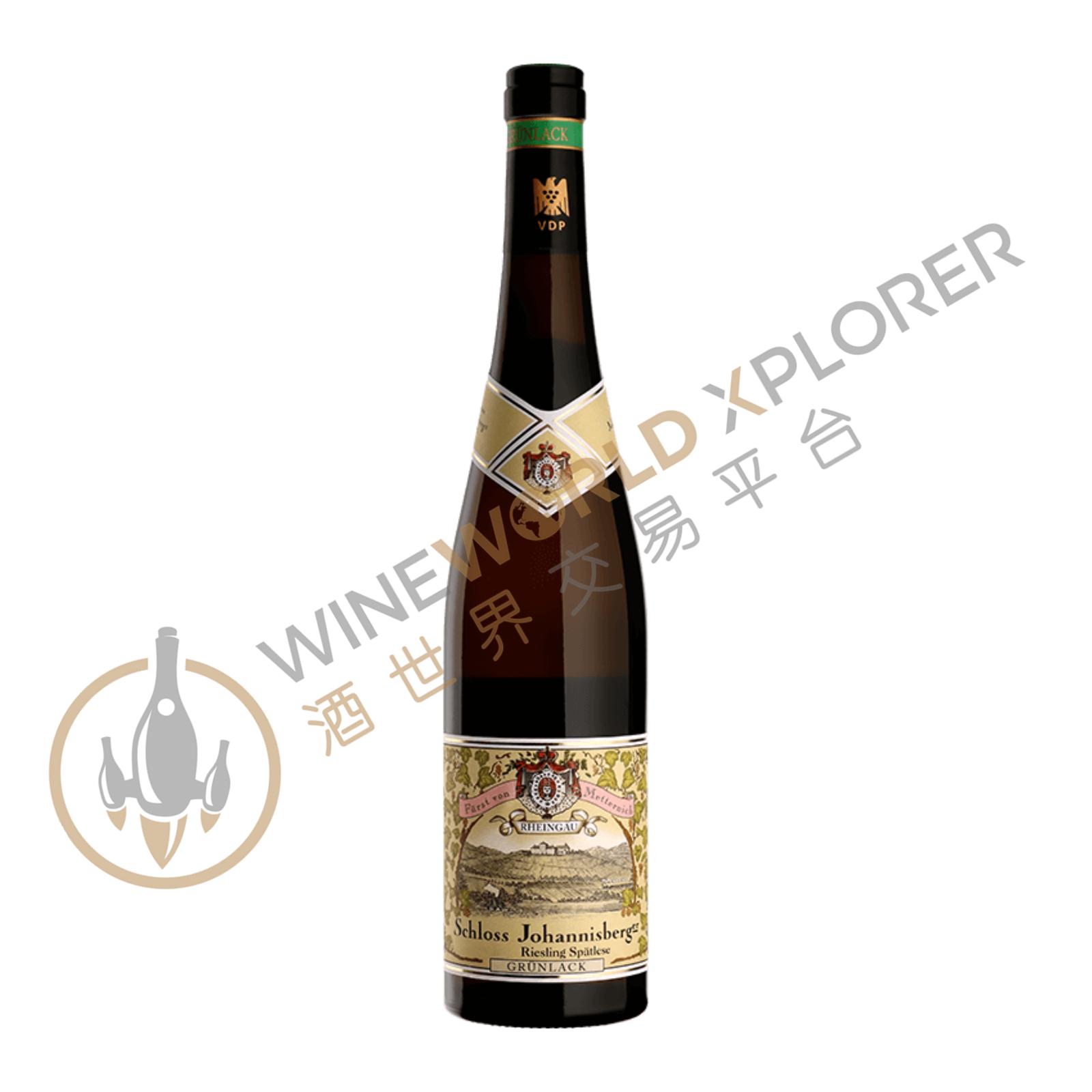
Schloss Johannisberg, Grunlack Riesling Spatlese 2019
 View analysis


Description
Tasting notes

Reviewed by: Stephan Reinhardt
The 2019 Schloss Johannisberger Riesling Spätlese Grünlack is coolish, intense yet subtle, fresh and elegant on the nose, and the fruit is still discreet and free of botrytis. Sweet and clear on the palate, this is a pure, fresh, elegant and tightly structured Spätlese with stimulating salinity on the persistent and grippy finish. Still far too young to be served today but promising. Tasted in June 2020.
Reviewed by: Neal Martin
This pair was partnered by a 2019 Schloss Johannisberger Riesling Spätlese Grünlack, from the historic Rheingau estate. It is clearly very primal on the nose, offering fragrant scents of pineapple, quince and a light Muscat-like aroma. The palate is well balanced with a fine spine of acidity, not overly complex yet texturally satisfying. There’s good substance on the finish and melon and tinned white peaches on the aftertaste. This is a wine I would cellar away for three or four years.
About the Producer
Located in the Rheingau region of Germany, Mount John Winery is the most representative winery in the region and a winery full of legends. It is said that as early as the 8th century AD, once Charlemagne (742-814) saw that the snow near Mount John was melting earlier, knowing that the weather here was warm and suitable for planting grapes, he ordered people to plant grapes here. Soon, vineyards were established at the foot of the mountain and belonged to Prince Ludwig der Fromme. Before long, the Archbishop of Mainz built a chapel here dedicated to Sankt Nikolaus. In 1130, the monks of the Church of St. Benedict built a monastery dedicated to St. John next to this church, so the winery officially has the name of "John Hill". Since then, the winery has been managed by monks. In 1802, the monks were expelled by the French army, the church was secularized, and the Count of Oranien (Furst von Oranien) became the new owner of the place. Later, the winery changed hands several times and passed into the hands of Count Metternich-Winneburg (Furst Metternich-Winneburg, 1773-1859). Although the Metternich family still owns Mount John Winery, the management of the winery has been handed over to food tycoon Rudolf August Oekter. Riesling grapes are mainly grown in the vineyards of Mount John Winery, which has a very long history of growing Riesling, dating back to 720 AD. Now the full name of Riesling grown in various countries is "John Hill Riesling". Currently, the vineyards are planted at a very high density, with 10,000 vines per hectare. In total, around 25,000 cases of wine are produced each year. The average age of the vines is between 30-35 years. In terms of vineyard management, half of the vineyards are weeded with shovels and the other half are not weeded to allow the soil to produce more organic matter. After the grapes here are ripe, they are also harvested and juiced in stages. After 4 weeks of fermentation, they are moved into century-old wooden barrels for about half a year. By March and April of the following spring, the wines are fully ripe and then bottled. The dry grape selection (TBA), late harvest wine and grand wine produced by John Hill Winery have performed very well. In addition, John Hill Winery is also the birthplace of Kabinett.
