
 Wine Advisor



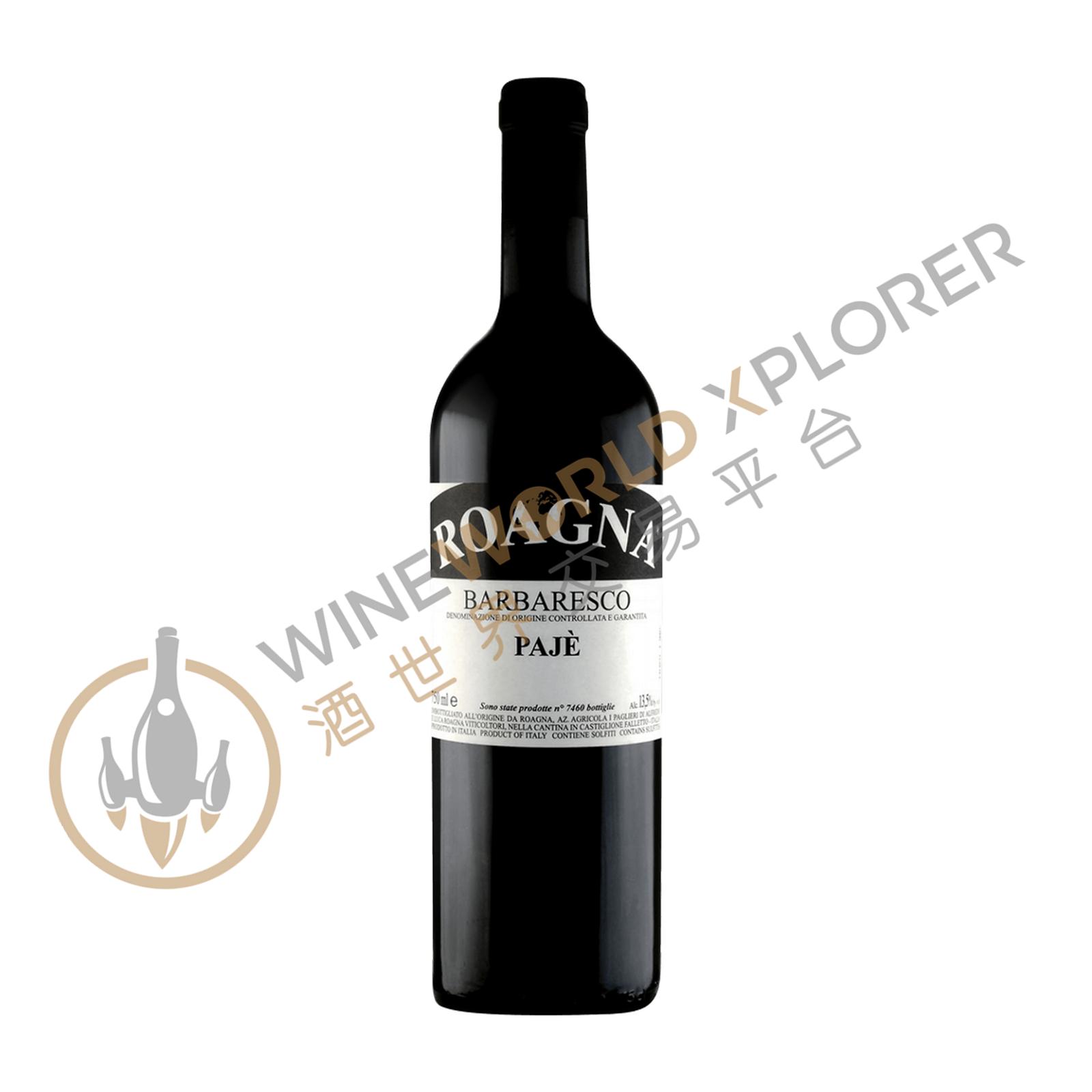
Roagna, Barbaresco Paje 2003
 View analysis


Description
Tasting notes

Reviewed by: Antonio Galloni
The 2003 Barbaresco Paje is an insanely beautiful, huge wine loaded with fruit. Amazingly, the 2003 Paje remains almost primary, with little development of tertiary aromas and flavors. The tannins are almost impossibly elegant for a wine from this torrid vintage and the level of freshness is unmatched by any other 2003 Barbaresco. The wine's inner perfume and sweet, plump core of fruit hint at a hot vintage, but the balance here is simply mind-blowing. Subtle suggestions of menthol, smoke, tar and spices come to life on the finish. The Paje is made from vines in excess of 20 years old. This is the Barbaresco of the vintage. In 2003 Roagna sacrificed their top lots (usually destined for the Riservas) to strengthen this entry-level bottling, and it shows. Anticipated maturity: 2013-2028. Roagna is one of the most fascinating properties in Piedmont. The family owns small, but choice, plots in some of the region's best vineyards. The estate makes a wide range of wines, but the Barbarescos and Barolos are the highlights. In top vintages there can be as many as three selections of Barbaresco (Barbaresco Paje, Barbaresco Riserva Paje and Barbaresco Crichet Paje) and two of Barolo (Barolo La Rocca e La Pira, Barolo Riserva La Rocca e La Pira). The wines are fermented in oak vats and remain on the skins until mid-December, after which they are aged in oak barrels for as many as a dozen years prior to being bottled. This year Roagna has three new wines; a Barbera made from vines in the La Rocca e La Pira vineyard in Castiglione Falletto, and small-production Barbarescos from the Asili and Montefico vineyards. Among the many highlights are the 2003 Barolo La Rocca e La Pira and Barbaresco Paje, which are both exceptional (there were no Riservas made that year), the 2004 Barbera d-Alba, the 2004 Barbaresco Asili, the 1995 Barolo Riserva La Rocca e La Pira and the 2000 Barbaresco Crichet Paje. As readers can deduce, the wines are usually released later than most and can be hard to find, but they are increasingly worth the effort. Quality has never been higher here, and as I have written before, Luca Roagna is one of Piedmont's most promising young producers. Importer: Louis/Dressner Selections, New York, NY; tel. (212) 334-8191
Reviewed by: Antonio Galloni
The 2003 Barbaresco Pajé is an insanely beautiful, huge wine loaded with fruit. Amazingly, the 2003 Pajé remains almost primary, with little development of tertiary aromas and flavors. The tannins are almost impossibly elegant for a wine from this torrid vintage and the level of freshness is unmatched by any other 2003 Barbaresco. The wine's inner perfume and sweet, plump core of fruit hint at a hot vintage, but the balance here is simply mind-blowing. Subtle suggestions of menthol, smoke, tar and spices come to life on the finish. The Pajé is made from vines in excess of 20 years old. This is the Barbaresco of the vintage. In 2003 Roagna sacrificed their top lots (usually destined for the Riservas) to strengthen this entry-level bottling, and it shows.
About the Producer
The fine estate of Roagna has long roots in the commune of Barbaresco, having been started very early in the twentieth century by Vincenzo Roagna. Vincenzo passed on the reigns to his son Giovanni Roagna, who in his turn saw his son Alfredo succeed him as the head of the estate. Today the property is run by Luca Roagna, the fifth generation of the family. Luca was born in 1980 and succeeded to winemaking for the property soon after his graduation from oenological school in 2001. The style of the estate’s wines has been carefully passed down through all five generations of Roagna family, with the wines made in a very traditional and classic style. These are deep, complex and structured wines that are built to age and handsomely reward cellaring. The heart of the Roagna estate is its six and a half hectares of vineyards in the commune of Barbaresco, most of these lying in the fine cru of Pajè. From the Pajè vineyard the Roagna family now makes three distinct cuvées, a Barbaresco “normale” labeled as Barbaresco “Pajè,” a Barbaresco Paje Vecchie Vite and “Crichët Pajè" - made from the crest of the Paje cru. In 1989 the family’s long-held aspirations of owning top level crus in Barolo comparable to their Pajè holdings in Barbaresco came true, when they purchased a parcel historically known as La Rocche e La Pira, in the fabled village of Castiglione Falletto. The vinification techniques at Roagna are still traditional though Luca has made noteworthy improvements and changes to the process. The fermentations are in cask and the macerations have gone from around thirty days to, on average, 60-90 days. The aging regimen depends a bit on the cru and vintage but go from 2-3 years to sometimes 8-10 and as much as 15-16 years for the Riserva, part of which is in cement. Luca has also switched all of their oak to the highest quality French oak that is 10cm thick – twice the thickness of a standard cask. These casks allow for a very slow and micro-oxygenation which adds to the elegance of the finished wines. In addition to their fine Barbaresco and Barolo bottlings, the property also makes a Langhe Rosso cuvée from “younger Nebbiolo vines” which in Luca’s case are under 25 years – hardly young by other producers’ standards. He also produces a chewy and intensely flavored Dolcetto, and a white wine that is a blend of 75-80% chardonnay and 20-25% Nebbiolo (vinified without the skins) which they label as Langhe Bianco Solea. The Langhe Bianco Solea is held for three years prior to release by the winery, and is a medium-full, fresh and pure white that typically offers up an aromatic blend of pear, flowers, a touch of honey and pastry cream. All of the estate’s wines are bottled unfined and unfiltered.
