Wine Advisor



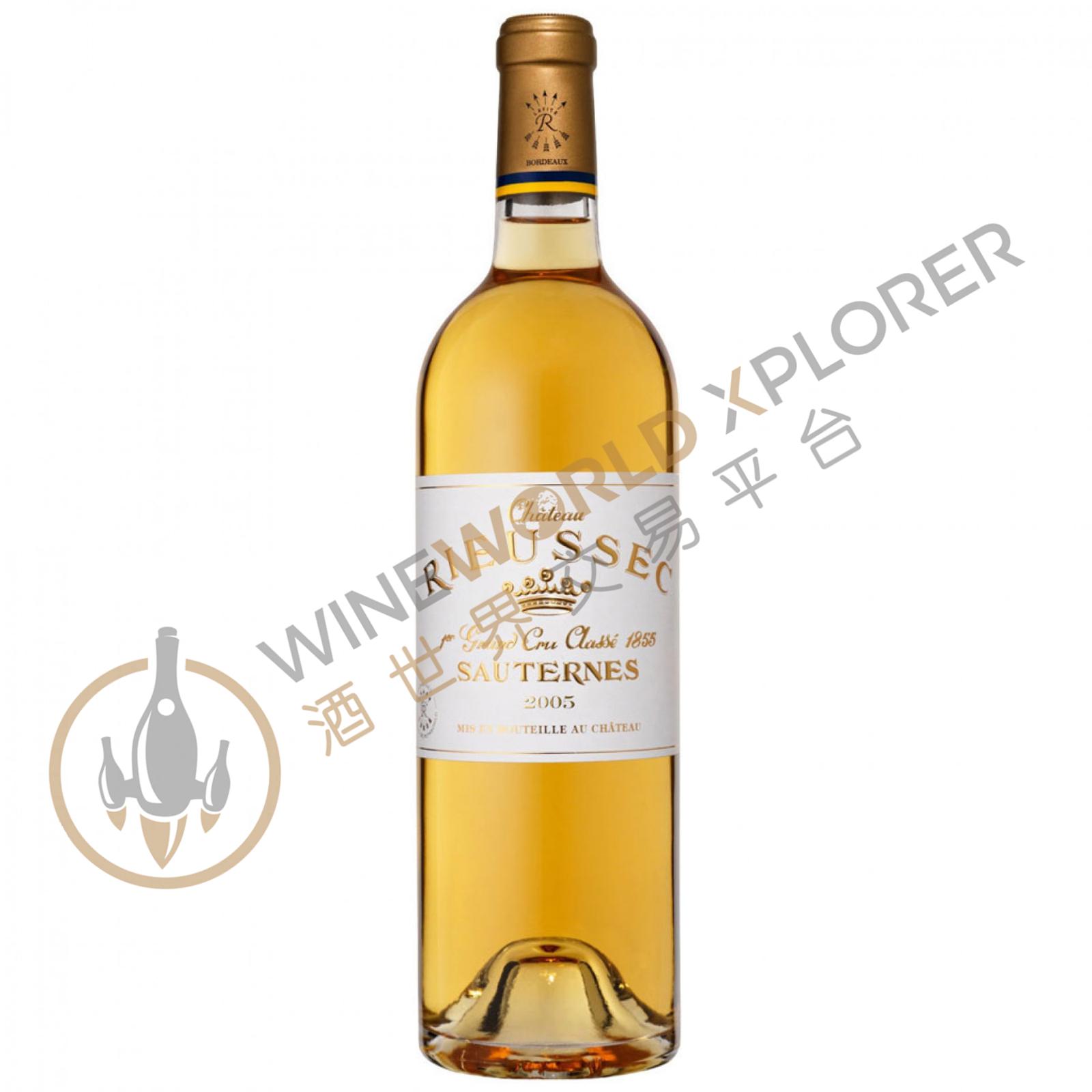
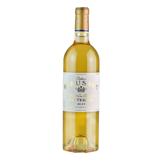
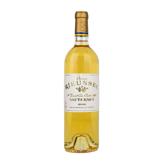
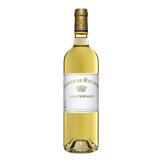
Rieussec 1997
 View analysis


Description
Tasting notes

Reviewed by: Robert M. Parker, Jr.
This wine contains an extremely high percentage of Semillon (usually about 90%), which was to its benefit in 1997. The wine is light medium gold-colored, with a blockbuster nose of Grand Marnier liqueur intertwined with flower blossoms, smoky new oak, and coconut. Well-integrated wood has resulted in a seamless, full-bodied, unctuously-textured wine with considerable sweetness. This is a stunningly proportioned, beautifully pure wine. Anticipated maturity: 2002-2025.
Reviewed by: Neal Martin
A slightly deeper hue than the 2001. This is a very distinctive nose, a little oxidative, burnt sugar, marmalade and a touch of caramel. The palate is full-bodied, slightly lower in acidity compared to the 1990. Fat, unctuous to the point of almost being cloying. At the mid-palate it loses its way a little, losing focus, a touch of warm alcohol. A little out of sorts so I would like to retaste this. Tasted November 2006.
Reviewed by: Neal Martin
A slightly deeper hew than the 2001. This is a very distinctive nose, a little oxidative, burnt sugar, marmalade and a touch of caramel. The palate is full-bodied, slightly lower in acidity compared to the 1990. Fat, unctuous to the point of almost being cloying. At the mid-palate it loses its way a little, losing focus, a touch of warm alcohol. A little out of sorts. Tasted November 2006.
Reviewed by: Robert M. Parker, Jr.
This wine contains an extremely high percentage of Semillon (usually about 90%), which was to its benefit in 1997. The wine is light medium gold-colored, with a blockbuster nose of Grand Marnier liqueur intertwined with flower blossoms, smoky new oak, and coconut. Well-integrated wood has resulted in a seamless, full-bodied, unctuously-textured wine with considerable sweetness. This is a stunningly proportioned, beautifully pure wine. Anticipated maturity: 2002-2025. (No tasting note was provided in Issue 128. We have instead included the text of the tasting note from Issue 122)
About the Producer
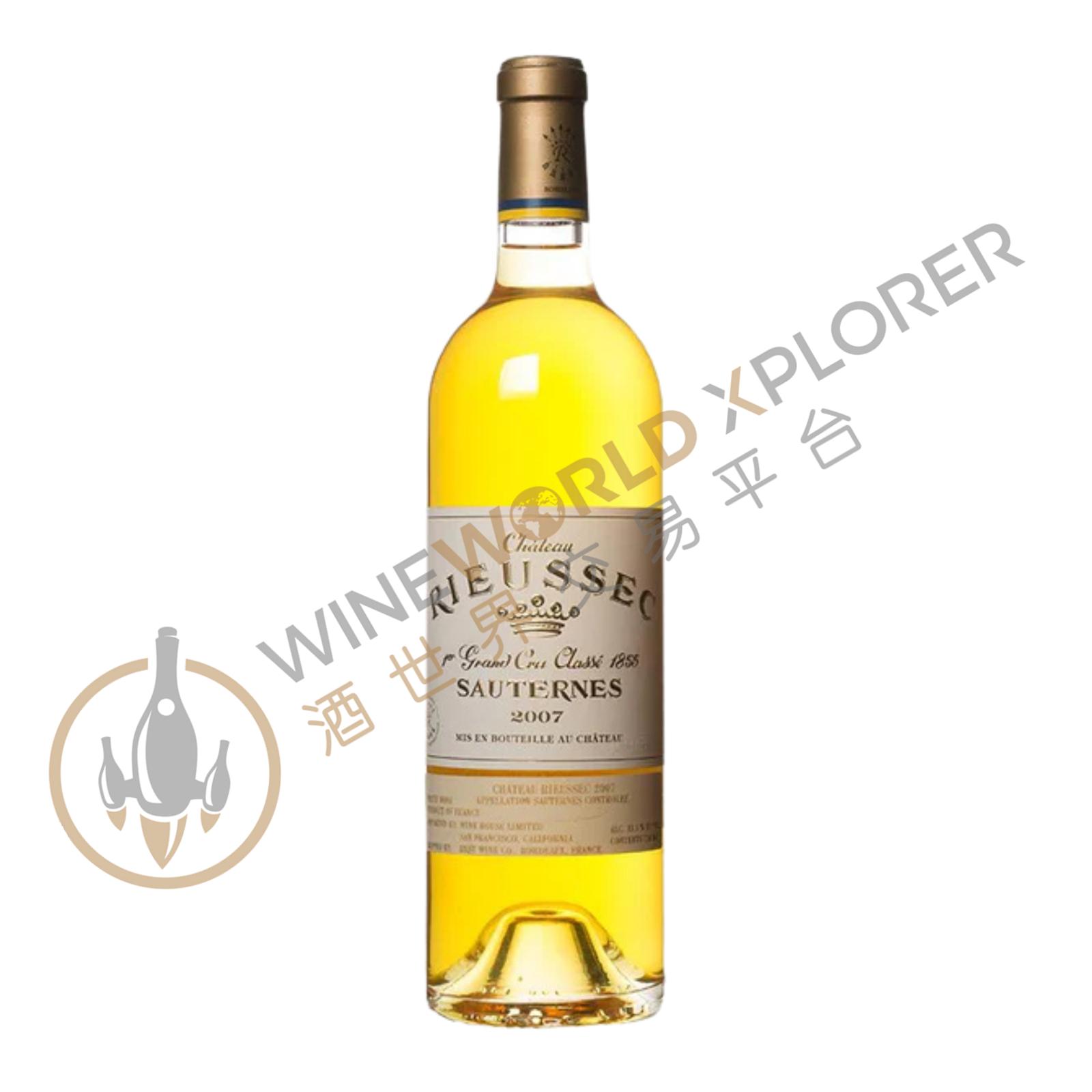
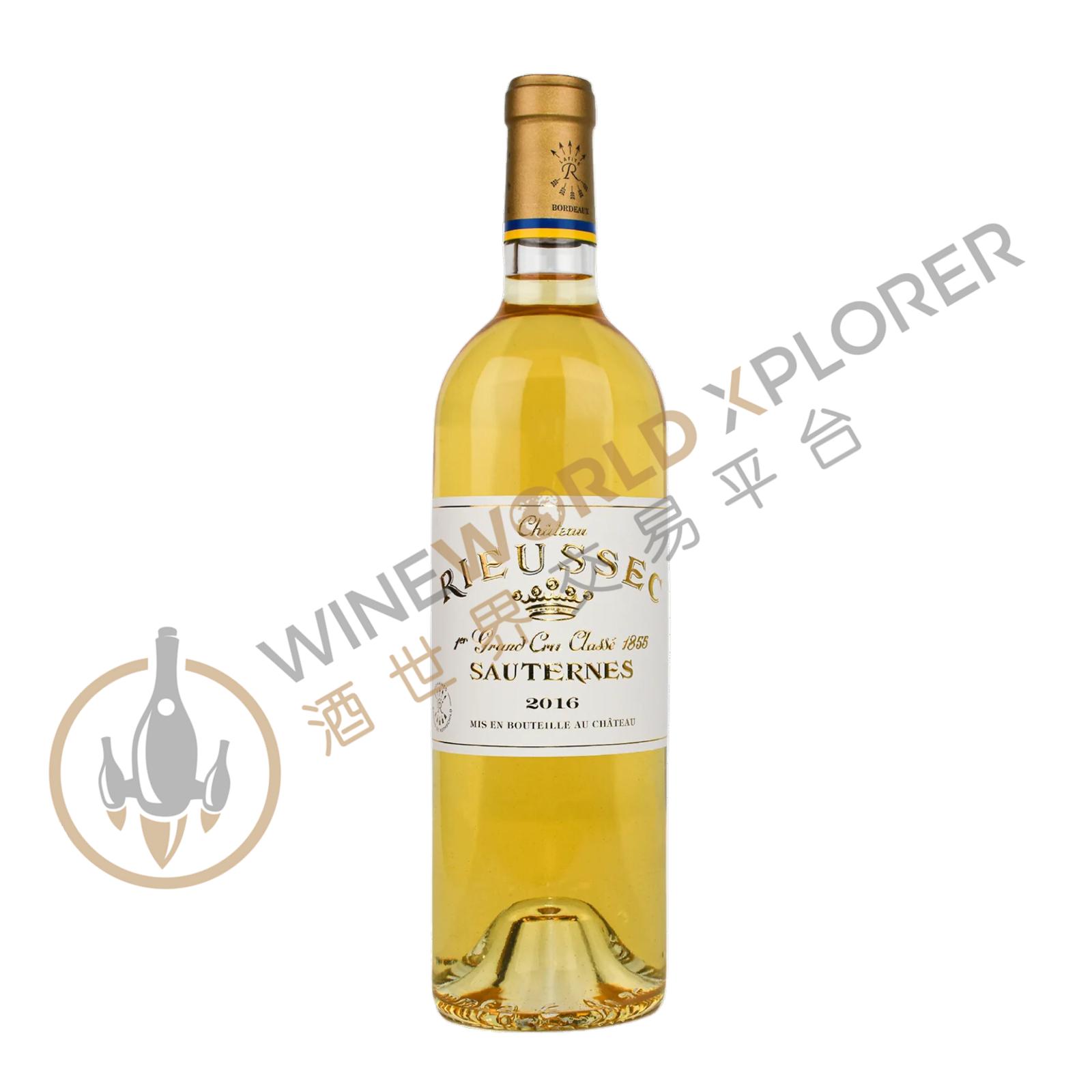
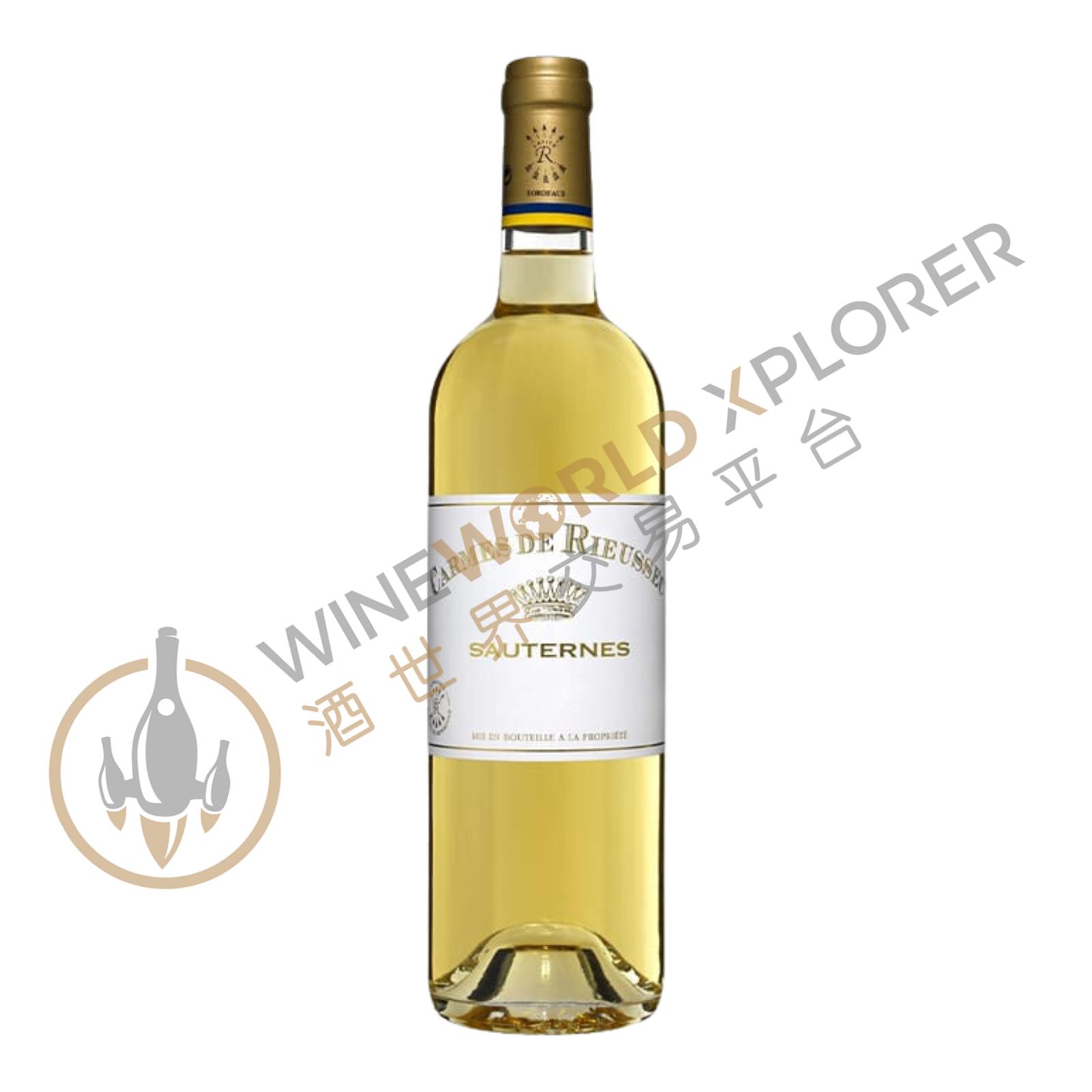
Located in the Sauternes region of Bordeaux, France, Chateau Rieussec is renowned for its rich, sweet, noble-rotted white wines. In the 1855 Sauternes and Barsac classification, Château Rieussec was ranked at the top of the Sauternes classification pyramid, along with 10 other prestigious Sauternes chateaux as Premier Grand Cru Classe. In the 18th century, Chateau Rieussec was the property of the Carmelite monks of Langon. At the time of the Revolution, the Château was sold as "national property" to Mr Marheilhac, and in 1855, when the appellation's wines were classified, Château Les Cayes was owned by Mr Mayne. In this year, Château Les Gouttes was classified as a Grand Cru of Sauternes and Barsac for its excellent terroir. Over the next hundred years, the Château changed hands several times, under the management of Charles Crepin, Paul Defolie, the Gasqueton family and Albert Vuillier, who had a passion for Sauternes sweet wines. In 1984, Chateau Rieussec became part of the Domaines Barons de Rothschild Lafite estate and thus ushered in a period of significant growth. In order to exploit the full potential of this terroir, the Lafite group took a number of measures, such as the construction of a new cellar and winery, and the modernisation of the grape selection and pressing rooms. In addition, in order to guarantee the quality of the wines, the winery set higher standards for the raw materials used in the production of the wines, and as a result, the production of the main wines was significantly reduced from the 1990s onwards, and in 1993 production was stopped because the quality standards were not met. These measures have led to a major step forward in the quality of the wines and to the production of excellent wines. The vineyards of Chateau Rieussec are located in the hills of Sauternes and Fargues, adjacent to Chateau d'Yquem to the east. One of the largest wineries in Sauternes, Château Les Gouttes has 93 hectares of vineyards alone. The vineyards are planted with the typical Sauternes grape varieties, mainly Semillon, but also 7% Sauvignon Blanc and 3% Muscadelle. In terms of vineyard management, Château Lafite Les Grands Crus follows the Sauternes tradition of picking the grapes in batches according to their ripeness and the growth of the noble rot grapes. The manual rotational harvesting operation usually lasts from September to November, over a period of 6 to 8 weeks. The selection process is rigorous in order to produce the finest Sauternes noble rot white wines and the grapes are fermented in different batches of oak barrels depending on the plot. After fermentation, the winemaking team tastes the wines in barrels several times to determine which wines have the potential to become full-fledged wines. The wines are then matured in oak barrels for between 16 and 26 months, with frequent decanting and topping up. Finally, the bottling process takes place in the château. It is worth noting that the oak barrels are sourced from Lafite's own cooperage and that half of the old barrels are renewed each year. Chateau Rieussec (Sauternes, France) is the estate's signature wine. It is considered to be one of the best Sauternes sweet white noble rot wines, with a clever combination of Semillon, Sauvignon Blanc and Miscadelle. The annual production of this wine varies considerably depending on the vintage - in years with unfavourable weather conditions, such as 1977, 1993 and 2012, the estate abandoned this wine; in years when the weather was favourable, the wine was quite good, for example, the more recent vintages 2014 to 2017 were awarded a high score of 95+ by the Robert Parker Team. Robert Parker Team scores of 95+. The Carmes de Rieussec (Sauternes, France) is a secondary wine of the estate, made to the same standards as the main wine. This sweet white Jumbo is full-bodied and rich in aromas, with a rich citrus aroma on the palate and a complex and fresh style. Chateau Rieussec also offers a dry white wine, R de Rieussec, Bordeaux, France, 20% of which is fermented in oak barrels, with a fruity and refreshing bouquet and a small production.
1947(1)1949(1)1955(1)1967(1)1970(3)1975(1)1983(2)1988(3)1989(3)1990(4)1996(2)
Package Size
12 x 75cl