
 Wine Advisor



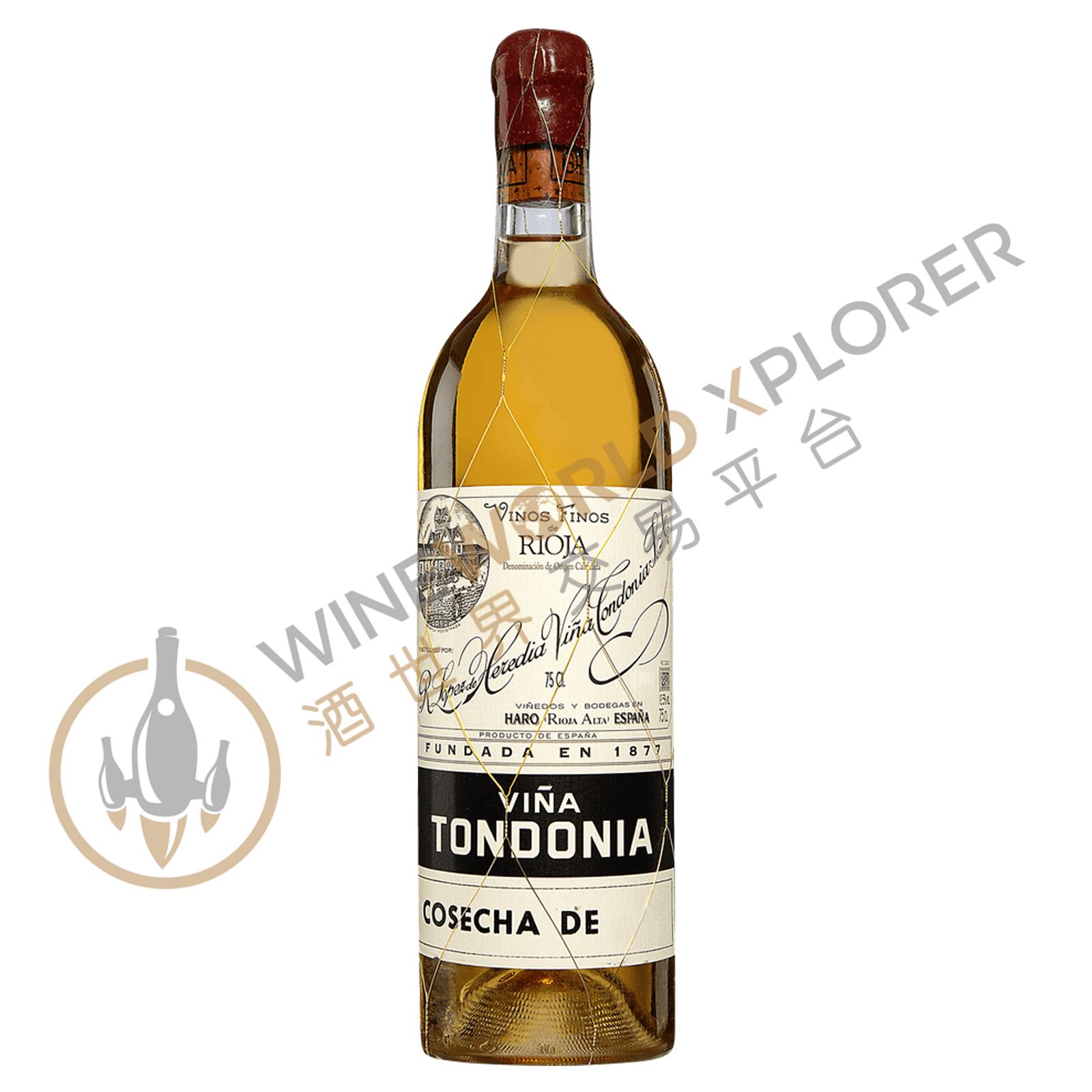
R. Lopez de Heredia, Vina Tondonia Gran Reserva Blanco 1991
 View analysis


Description
Tasting notes

Reviewed by: Neal Martin
The 1991 Vina Tondonia Blanco Gran Reserva offers shaved almond, lemon rind, honeysuckle and dandelion on the well-defined nose that demands coaxing. The palate is crisp on the entry with dried honey, dried mango and citrus peel on the entry, fanning out towards a complex, resinous finish with a hint of rosewater on the aftertaste. Drink now-2020+ I have adored, indeed occasionally worshiped, the wines of Lopez de Heredia for many years, so I am not ashamed to admit that visiting both their vineyard and their winery was a pilgrimage. Founded by Rafael Lopez de Heredia y Landeta in 1877, it has withstood the tide of corporatization and homogeneity, and epitomizes timeless, artisan winemaking in their own individual, almost solipsistic manner. Technology is noticeable by its absence here. For example, to quote her sister Maria-Jose at a tasting that I subsequently attended in London: “Indigenous yeasts have adapted to high temperatures. To control the temperature during fermentation, we open doors and windows” and “malolactic is the invention of modern winemakers.” I had to check whether this was 2012 or 1912. If you were to award points for charisma, then this producer would be in a league of its own. That would count for nothing if their wines were not distinguished, individual, long-lived and above all, delicious. It is commonly known that if you are seeking bags of fruit and lashings of oak, this is not the place to come. My views and these scores might be irrational to someone with a penchant for lush, voluptuous Rioja. Lopez de Heredia is the apotheosis of traditional, classic wines: taut, fresh, bucolic, utterly charming and amazingly long-lived. I spent two or three hours with winemaker Mercedes Lopez de Heredia, who was celebrating her birthday with, appropriately enough, a bottle of Tondonia Gran Reserva from her year of birth. I urge readers to access the video I took of Mercedes explaining the vineyard in her own breathless style. In the meantime, I will crack on with the wines “Wines should talk by themselves,” Maria-Jose enthused to her enraptured audience at a tasting in London. “My father was a vine maker, not a winemaker. Each wine is a reflection of a different land that my great-grandfather bought. Our wines respond to the history of Rioja.” I would add to her comments that since these are mainly aged wines, a bottle of Lopez de Heredia is an individual and each time you meet, you may see a different side to its personality. So treat these reviews as they are: snapshots at a given moment. We commence with their white wines and indeed, I know of several connoisseurs who rate these even better than their reds and I can sympathize with that view. “The white wines were made as a copy of Graves and were made to be aged,” Marie-Jose continued. “So they are made like reds and are harvested at the same time. They undergo skin contact for one, two or three days to absorb the preservative from the skins and pips. Viura gives complexity as it ages.” Importers: Think Global, Santa Barbara, CA, www.thinkglobalwines.com. and Berry Brothers & Rudd (UK)
Reviewed by: Josh Raynolds
(aged for nine-and-a-half years in American oak barrels and then held in bottle for at least nine years before release) Limpid, brass-tinged yellow-gold. Highly pungent, heady aromas of orange pith, dried peach, iodine, jasmine, honey and toasted brioche pick up a smoky mineral nuance as the wine opens up. Deeply concentrated and expansive in the mouth, offering palate-coating marmalade, pit fruit and sweet butter flavors that show a refreshingly bitter edge and an echo of minerality. Sappy and surprisingly vibrant for its heft, delivering powerful mineral thrust and persistent floral and smoky mineral notes that cling to the strikingly long finish.
About the Producer
The vineyards of the Lopez Redia winery are the basis for the development of the winery. Consistently producing high-quality wines requires having your own vineyard, which overcomes the reliance on sourcing grapes from small vineyards and avoids erratic quality. The Vina Tondonia vineyard is one of the most spectacular in the Hari region. It is located in a sunken basin, surrounded by the Ebro River as a peninsula, and the soil is composed of siltstone, limestone. The area of the vineyard is 100 hectares. The Vina Bosconia vineyard is located next to the Ebro River at an altitude of 465 meters, one kilometer from the winery. The vines are planted on the south-facing slopes of the mountains, where ample sunshine provides them with perfect ripening conditions. The Vina Cubillas vineyard is 465 meters above sea level, and the average age of the vines in the garden is 40 years. The soil structure here is a mixture of clay and limestone. The vineyard is planted with 24 hectares of Tempranillo, Grenache, Mazuelo and Graciano grape varieties. The Vina Gravonia vineyard is located 200 meters from the winery and was purchased by the founder of the winery. It is 340 meters above sea level and the average age of the vines in the park is 45 years. The poor and rocky slope soil allows the roots of the vines to be more easily planted deep in the soil, giving the 24 hectares of grapes a more balanced biological organization and a more mature aroma. The winery picks the grapes every October. Since its establishment, Lopez Redia Winery has been committed to producing high-quality wines that can fully demonstrate the characteristics of the terroir and grape varieties of the producing area. The winery has released wines such as Vina Tondonia Reserva Red, Vina Cubillo Crianza, Vina Tondonia Gran Reserva and Vina Gravonia Crianza Blanco are popular among consumers.
