
 Wine Advisor



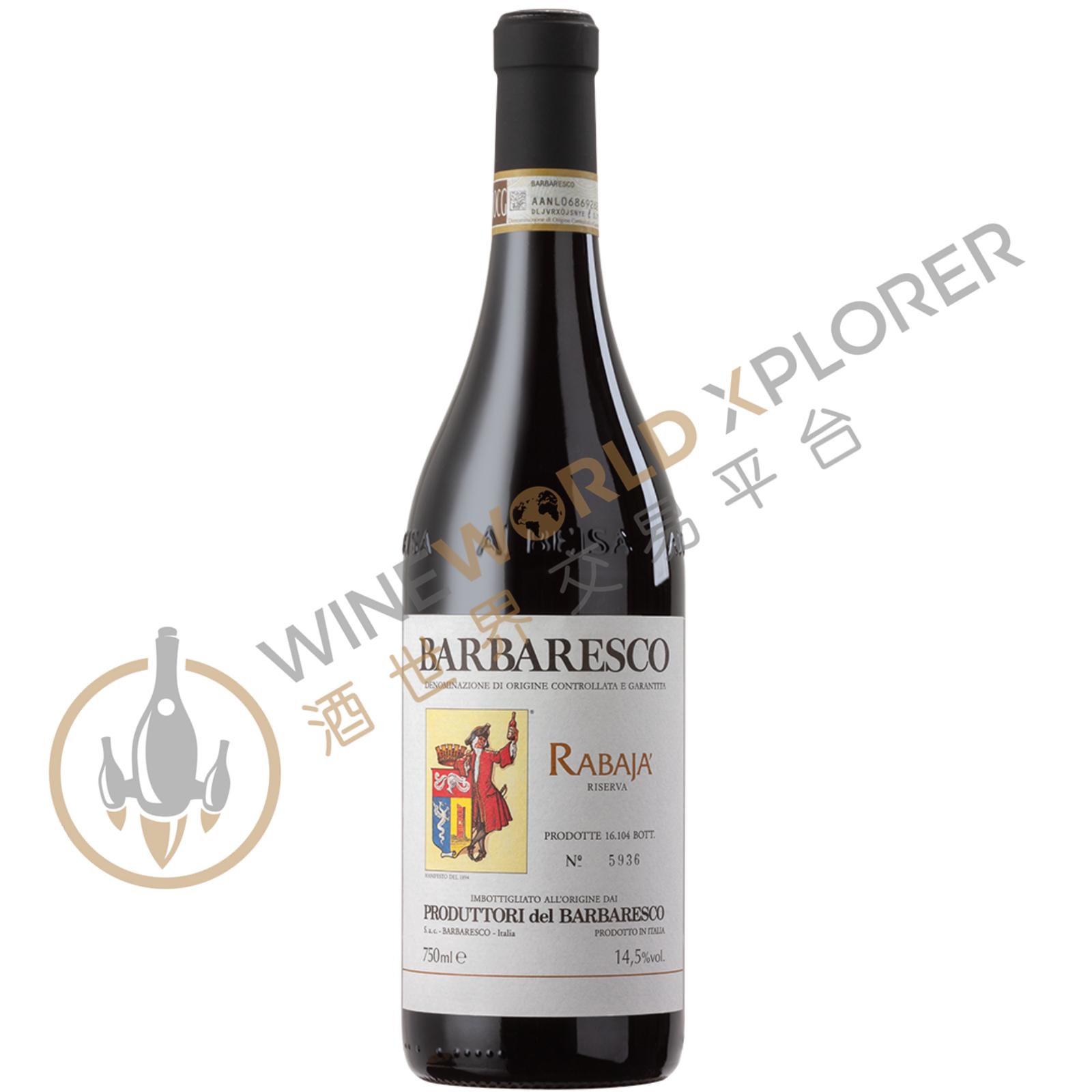
Produttori del Barbaresco, Barbaresco Riserva Rabaja 2013
 View analysis


Description
Tasting notes

Reviewed by: Monica Larner
The 2013 Barbaresco Riserva Rabajà is a gorgeous wine with a dark and penetrating quality of fruit that wraps sensuously over the palate. Our tasting order sees this wine as the sixth sample in a lineup of nine Riservas that were tasted in order of increasing structure and power. Well-exposed and sun-drenched fruit from the Rabajà cru offers dark color saturation and thickness. The high limestone content of the soils means this is a hotter growing site that performs best in cooler vintages like 2013. Those soil types help to concentrate the fruit, and you taste that here in terms of the wine's broad concentration and vertical delivery of black fruit aromas. This is a complete and seamlessly integrated wine with drying mineral sensations on the powerful finish.
Reviewed by: Antonio Galloni
The 2013 Barbaresco Riserva Rabajà is shockingly seamless in this tasting. Deep layers of fruit virtually bury the tannins, something that is so unusual for a young Rabajà. A host of dark blue-tone fruits, lavender, mint, violet and spice race across the palate in an utterly vivid, compelling Barbaresco of the highest level. Perhaps I caught the Rabajà on an unusually open day, but it is terrific and also quite refined for such a young wine.
About the Producer
Produttori del Barbaresco, located in the Barbaresco region of Piedmont, Italy, is one of the most well-known wine producers in the region, and is also considered a world One of the finest wine cooperatives on the planet. At first, Nebbiolo grapes grown in Barbaresco were often sold to producers of Barolo red wine, or simply labeled "Nebbiolo di Barbaresco" on the wine label. Barbaresco remained largely unknown at the time. In 1894, Domizio Cavazza, Rector of the Royal Enological School in Alba, created the first winemaking cooperative "Cantine Sociali" and brought together nine Barbaresco vineyard owners Come to the co-op for brewing. However, due to the influence of fascist forces, the brewing cooperative was forced to close in 1930. Until 1958, the local priest realized that the only way to survive for small vineyards was to work together, so he gathered 19 grape growers together to create the Barbaresco Production Alliance, dedicated to improving Barbaresco and its production. the reputation of the wine. The Barbaresco region has a continental climate, with hot summers, cold and snowy winters, and a large temperature difference between day and night, which is conducive to the accumulation of more flavor substances in the grapes. The Barbaresco Production Alliance has more than 100 hectares of high-quality Nebbiolo vineyards, growing on steep hillsides between 200 and 400 meters above sea level, with plenty of sunshine, and the soil is mainly composed of limestone and clay, which is conducive to the production of complex taste and tannin. Powerful and characterful wines. Nine of the vineyards are single-gardens, of which the northernmost single-gardens of Montesefano, Ovello and Montefico have higher calcium content in the soil and produce wines Full-bodied and full-bodied, it is known for its firm structure and complexity. The single estates of Paje and Muncagota, located in the middle of Barbaresco, produce wines that are fruity, floral and mint in a fresh and elegant style. Further south are Asili, Rabaja, Pora and Rio Sordo, all facing southwest, as the calcium content of the soil decreases , the wines produced are softer than the northern single vineyards. The Barbaresco Production Consortium now consists of 51 members and produces approximately 550,000 bottles (45,000 cases) per year. The Alliance produces Barbaresco DOCG and Langhe Nebbiolo DOC every year. The former was first released in 1958 as the flagship wine of the Barbaresco Production Alliance, and its annual production accounts for half of the alliance's total production. A blend of Nebbiolo grown in different vineyards, this wine is known for its elegant style and dependable quality. The fruit from the young vines in the estate is used to produce the Langnebbiolo red wine, the first vintage of which was 1975. This wine is often drinkable at a young age and is a good value for money, making it an excellent choice to discover the beauty of the terroirs of Nebbiolo and Barbaresco. In addition to this, the Barbaresco Production Alliance produces single-vineyard wines of the Riserva range, which are produced only in years with favorable weather conditions and are vinified and aged according to traditional methods to highlight the terroir of each single-vineyard uniqueness. The annual production of these single vineyard wines accounts for 30% of the total production of the alliance, and the annual production amount, the name of the single vineyard and the name of the single vineyard owner will be marked on the wine label. Among them, the 2016 Barbaresco red wines from Montesfino Garden, Labaga Garden, Asli Garden and Montefico Garden all performed well, winning 98, 98, High score of 97 and 97.
