
 Wine Advisor



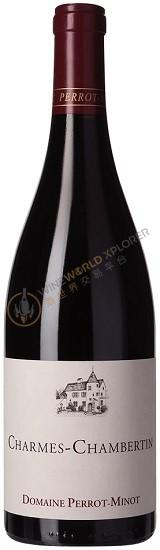
Perrot Minot, Charmes Chambertin Grand Cru 2019
 View analysis


Description
Tasting notes

Reviewed by: William Kelley
Another rather backward cuvée during my visit was the 2019 Charmes-Chambertin Grand Cru, a medium to full-bodied, elegantly muscular wine evocative of cherries, wild berries and potpourri. As with the Griotte, I'm hesitant to even offer a score, and look forward to revisiting the wine in bottle.
Reviewed by: Neal Martin
The 2019 Charmes-Chambertin Vieilles Vignes Grand Cru, which comes from Perrot-Minot’s own vineyard, is a bit sullen on the nose compared to the Griottes. It never quite obtains the same amplitude, feels a little timid, a Charmes that doesn’t charm at the moment probably due to a bit of reduction. The palate is medium-bodied with very supple, rounded tannins. The concentration is loaded on the back end of this Charmes though I feel that the Griottes has more delineation and nerve.
About the Producer
Perrot Minot's attitude toward Perrot Minot Biodiversity encouraged For several years, Christophe Perrot-Minot has favored the use of products approved for organic farming and reduced the doses of conventional products prescribed, thanks to the observation of the weather, wind, humidity and heat. It also strives to recreate a microbial life in its soils and to improve its structure by practicing systematic plowing and winter ridging of the feet. Limited returns Guyot pruning is relatively short to limit the release of grapes and allow good ripening of the berries. The practice of leaf stripping and green harvesting can be useful depending on the vintage to guarantee optimum ripeness of the fruit. Very supervised harvests The harvest is exclusively manual and sorted a first time in the vineyard, then transported in small crates for a second passage on a sorting table. All the grapes are cut in half to check their sanitary condition and to eliminate any that are not perfectly ripe. Depending on the vintage, a proportion of the whole harvest is put into vats. It is transported in small bins, which allows the logs to be kept intact and the most natural and accurate expression of the terroir possible. The logs are calibrated in order to keep only the source millerandage of the oldest and most authentic vines. The estate is looking for a production of around 25 to 30 hl/ha for the whole production.
