
 Wine Advisor



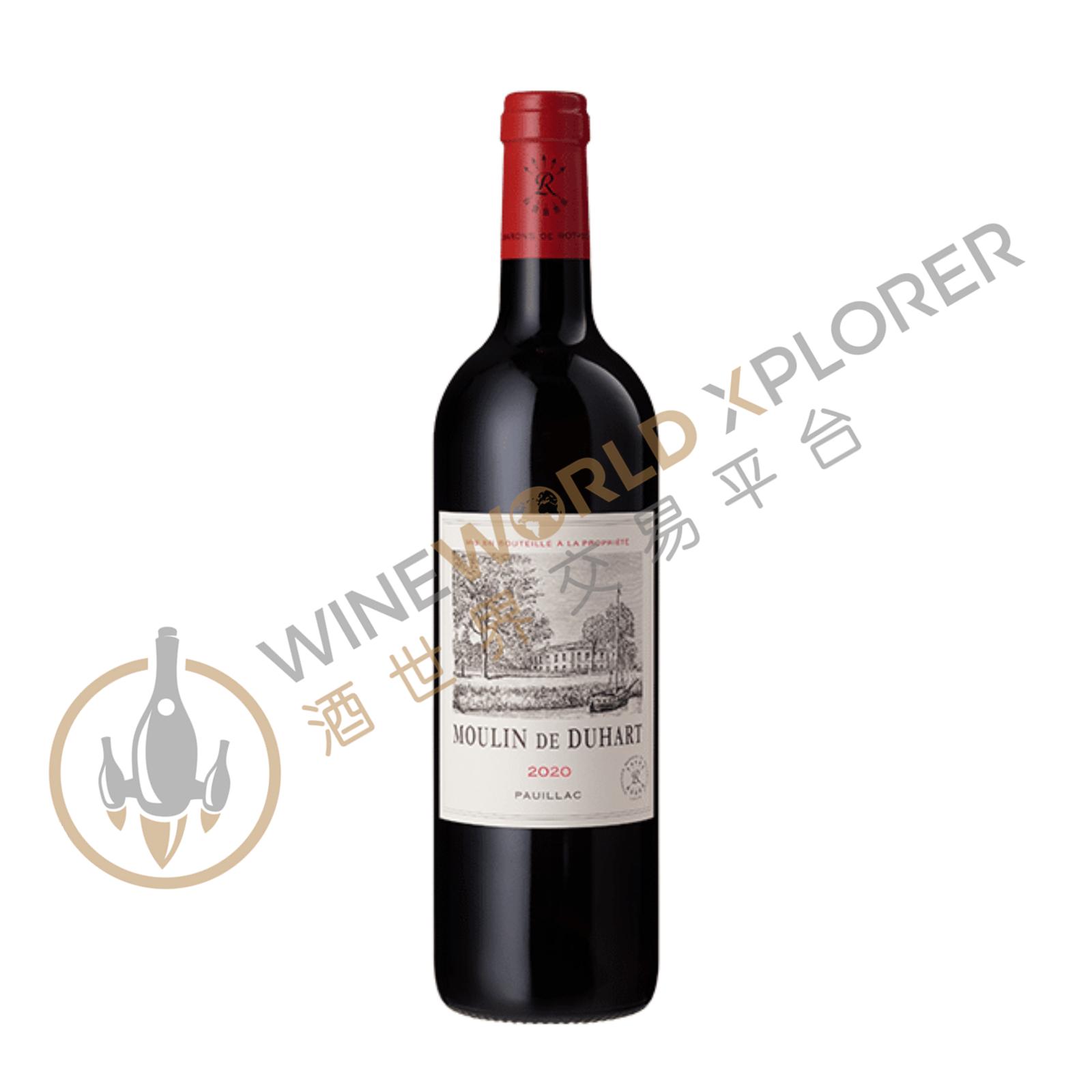
Moulin de Duhart 1990
 View analysis


Description
About the Producer
Château Duhart-Milon’s second wine is selected on the same basis as the “Grand Vin”. The origin of the name comes from the former presence of a windmill on the Carruades plateau, next to the Duhart-Milon vineyard. History The history of Château Duhart Milon dates back to the early 18th century, when Pauillac was covered with vines, under the direction of the Seigneurie de Lafite. The wines of Milon serve as an income to the Lord of Lafite and enter the “second wines” of Château Lafite, which already testifies to the recognized quality of the terroir. Moulin de Duhart, Château Duhart-Milon’s second wine, is selected from vats of the “Grand Vin”. In general, the grapes are from the youngest part of the vineyard. Moulin de Duhart has several characteristics similar to the fine wine, but with a lesser potential for ageing as its ageing in barrels is much shorter. The vineyard covers 187 acres and is planted with Cabernet Sauvignon (67%) and Merlot (33%). Terroir Château Duhart Milon’s vineyard consists of a single block of vines adjacent to Château Lafite Rothschild, on the hillside to the west of the Carruades plateau. The soil consists of fine gravel mixed with aeolian sand on a tertiary limestone subsoil. The terroir of Château Duhart-Milon extends over 76 hectares of vines which are divided between 67% Cabernet Sauvignon and 33% Merlot. Winemaking Moulin de Duhart is vinified using the traditional methods for the great Médoc wines, with destemming and crushing of the grapes before fermentation in concrete and stainless-steel vats. Fermentation takes place at a controlled temperature of 30°C, followed by maceration for about ten days. After malolactic fermentation, the wines are transferred to two-year-old French oak barrels and aged for 12 months.
