
 Wine Advisor



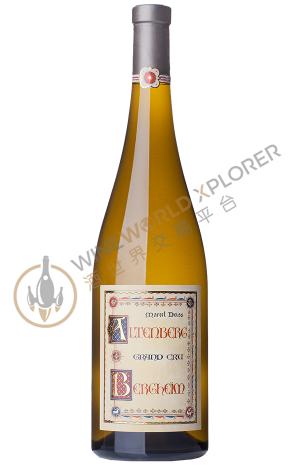
Marcel Deiss, Altenberg de Bergheim Grand Cru 2020
 View analysis


Description
About the Producer
Located in Bergheim next to Ribeauvillé, in the heart of the Grand Cru area, the Marcel Deiss estate was founded in 1947. The Deiss family is a long line of winegrowers, blacksmiths and bell founders who settled in Alsace after the Thirty Years War and the attachment of the Province to France. Currently managed by Mathieu Deiss with the help of his father Jean-Michel, the estate has fought for a more qualitative production, based on the terroir rather than on cloned grape varieties, the inclination to Biodynamics, very low yields, agroforestry and Biodynamics. The vineyard of the champ de faille de ribeauville (38 HECTARES) Located on the various slopes of the communes of Rorschwihr, Bergheim, Ribeauvillé, Zellenberg, Riquewihr and Sigolsheim, it is the largest and most diversified vineyard of the Domaine. A vineyard, fascinating by its complexity and therefore its wine-making possibilities, which cannot be reduced to a single type of wine. On the contrary, it offers the most beautiful collection of Grands Crus of Alsace (5 famous Grands Crus) and a whole series of Premiers Crus with a very strong personality. Here each of these terroirs has an essential characteristic: deeply faulty, it allows a deep prospecting of the vine (30 to 40 meters deep are common) and allows it to learn the depth, a cultivation by the bottom. This network of differences, even contradictions, illustrates magnificently the singularity of Alsace: our region is rich above all in its differences! Topography This original topography creates, by its effects of valleys, by its wind corridors, by the presence of the Vosges torrents, a multitude of very particular microclimates. Thus, there is a difference in earliness of more than 30 days between the Altenberg of Bergheim and the Mambourg, which are only 12 km apart. The climat The climate of the Alsatian vineyard is very specific and characterized by a very strong continental influence. Thus, the seasons are marked. The main Alsatian grape varieties are well adapted to this type of climate: good resistance to frost in winter (Riesling), modest water requirements in summer, important thermal needs at the end of the cycle during ripening, the need for a thermal differential between day and night, a slow and late ripening adapted to the Noble Rot.
