Wine Advisor



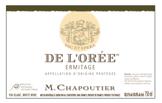
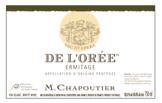
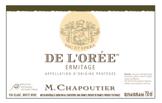
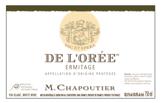
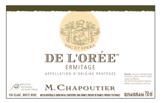
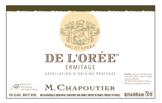
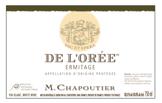
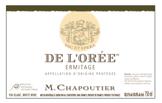
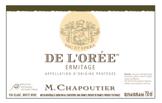
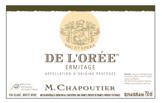
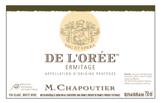
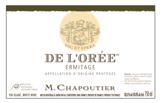
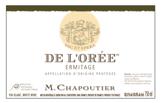
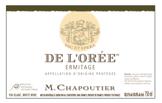
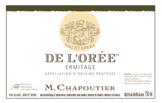
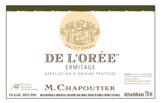
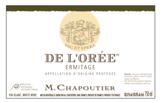
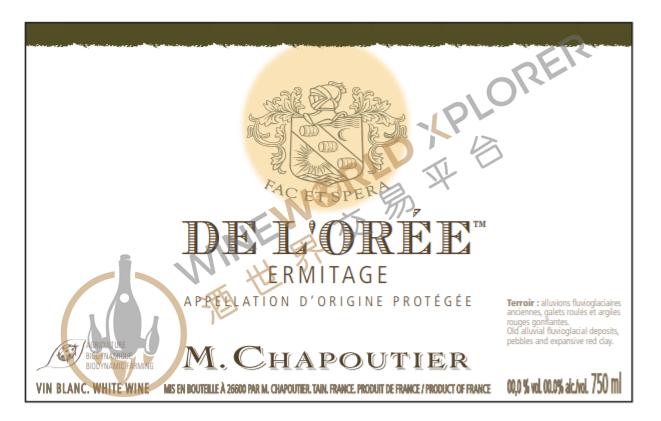
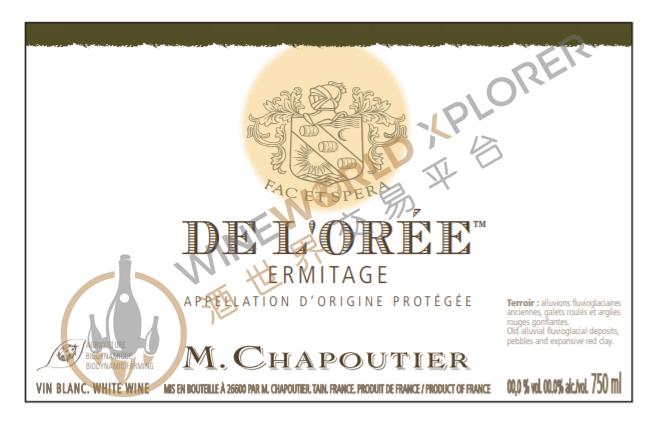
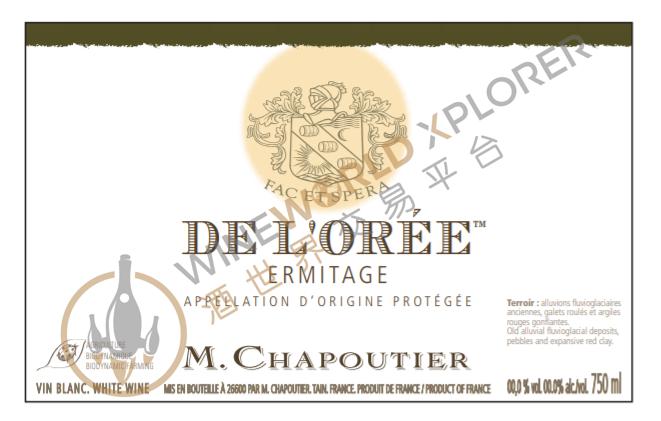
M. Chapoutier, Ermitage de L'Oree Blanc 2009
 View analysis


Description
Tasting notes

Reviewed by: Robert M. Parker, Jr.
There are 477 cases of the light gold-colored 2009 Ermitage Cuvee de l’Oree, which I would be happy to insert in a blind tasting against the world’s greatest dry white wines, including Montrachet. The famous gout de petrol is there along with hints of citrus oil, wet steel, crushed rocks, quince, white currants, anise and honeysuckle. Very full, with off-the-charts intensity, this wine was fashioned from yields of 13 hectoliters per hectare (which is financial suicide) from 90 to 100-year old Marsanne vines. The result is an amazingly concentrated white wine that should drink well for 50+ years. As I have written many times, all of these wines are produced from rigidly cultivated, bio-dynamically managed vineyards. That has been the rule since Michel Chapoutier first took over this firm in the late 1980s. Now, with over 20 years of biodynamic viticulture under his belt, Chapoutier remains committed to this rather radical style of organic farming. He believes the effect is to reduce rot in damp, rainy vintages. Moreover, he has observed that after 10 to 15 years of biodynamic farming, the natural acids tend to be more vivid and the overall pH of the soils (as well as the wines) has dropped. Controversial, outspoken and brutally candid, Chapoutier, who suffers no fools, continues to admirably produce wines that are among the finest in the world and potentially the longest lived. Refusing to acidify, chaptalize, or touch the wines in any way, he clearly wants every wine to capture the very essence of its terroir and vintage personality. In this, he succeeds remarkably. No one has made more effort in resurrecting the once-forgotten backwater appellation of St.-Peray than Michel Chapoutier. Working in conjunction with the famed Michelin three-star restaurant family, the Pics, Chapoutier has produced a sensational 2010 Gamme Pic and Chapoutier St.-Peray, and the first single-vineyard St.-Peray, the 2010 Lieu-Dit Peyrolles St.-Peray, which is one of the greatest St.-Perays I have ever tasted. This appellation is all steep hillside vineyards planted in pure, decomposed granite soils, not dissimilar from Hermitage, but they are located on the other side of the Rhone, facing the city of Valence. The single-vineyard wines, or selections parcellaires, 2010 whites are absolutely amazing, with production levels ranging from 300 to 700 or 800 cases of each cuvee. These wines are for true connoisseurs, as they are expensive and meant for long, long evolutions, but they capture the essence of a vintage and terroir as well as any wines in the world. As for the selections parcellaires of 2010 reds, Chapoutier likes this vintage almost as much as 2009, but feels it is very different, emphasizing more acidity and minerality, whereas 2009 is a combination of pure power, concentration and great potential longevity. Michel Chapoutier considers the 2009s, which are all in bottle, to be among the greatest wines he has ever produced, equaling his finest wines of 2006, 2003, 1999, 1990 and 1989 (his debut year). Importer: Terlato Wines International, Lake Bluff, IL; tel. (847) 604-8900
Reviewed by: Robert M. Parker, Jr.
The 2009 Ermitage Cuvee de l’Oree reveals honeyed brioche, gun flint, white peach and pineapple characteristics along with an unctuous texture, a stunning liqueur of rocks and just about everything wonderful a wine can provide - great acidity, mind-boggling concentration and extract and a massive finish. This prodigious effort may last 75-100 years. (Not yet released) Other extraordinary efforts readers should be watching for include the 2009 Bila Haut Lesquerde, a Syrah dominated wine that I scored in the upper-90s. Equally as profound, but made from a completely different blend is the Bila Haut Cotes du Roussillon Villages La Tour de France, which is a blend of 90% Grenache and 10% Syrah. Both of these offerings are as remarkable as wine can be. From Australia, some wines to take note of include the Domaine Tournon 2009 Shiraz (or Syrah), an outstanding red sold at a fair price, and his single vineyard offerings the 2009 Shiraz Shays’ Flat and the 2009 Shiraz Landsborough, both extraordinary, mid-90 point Syrahs from Victoria. Also, readers should not forget his 2009 La Pleiade M45, a Syrah from the Cambrian soils of Heathcote. An Australian wine that flirts with perfection, which I had never tasted before, is the 2009 Shiraz One Shot from Beechworth, which is like a liqueur of blueberries and raspberries intermixed with graphite, tar and minerality. Other stunning offerings from Domaine Terlato and Chapoutier include the 2009 Shiraz Malakoff (rated 92-94) and the 2009 Shiraz L Block (rated 93-95+). Last, but not least, Michel Chapoutier has entered the Portuguese wine arena, producing two extraordinary wines from a 5-hectare parcel in the Douro. The 2009 Touriga Nacional (rated 94-96) comes from pure schist soils. It reveals incredible floral notes intermixed with sweet blueberry, black raspberry and cassis. As amazing as it is, it may be surpassed by the 2009 Touriga Nacional Pinteivera from Pinhao. It is undeniably the single greatest red Portuguese wine I have ever tasted. It, too, is from schist soils. Both of these wines are remarkable efforts from what may be the world’s leading, irreverent genius in winemaking and winemaking philosophy. And one more thing about the remarkable Michel Chapoutier, he now has property in Alsace, Domaine Schieferkopf. I tasted a 2009 Riesling (rated 89), 2009 Riesling Buehl (rated 93), and 2009 Riesling Fels (rated 94). All are very dry, crisp, medium to full-bodied Rieslings from the Andlau sector of northern Alsace. These remarkable whites come from schist soils and Chapoutier has again demonstrated his Midas touch with a completely different varietal. Michel Chapoutier is firmly convinced that 2009 is the greatest vintage in his lifetime, which means 2009 surpasses 2003 (he made some great wines in that unusual vintage), 1999, 1990 and 1989 (his debut vintage after taking over the firm). These wines are all produced by bio-dynamically farmed vineyards. Moreover, there is no chaptalization or acidification, and as Michel Chapoutier says, he wants to capture each vintage in photographic detail. It is also important to recognize Chapoutier’s life philosophy, which, rather than being obsessed with correcting one’s faults, is dedicated to capitalizing on one’s strengths. For all of his charm and bravado, Chapoutier is the quintessential man of the soil, a true terroiriste dedicated to producing the most vivid, natural and unadulterated expressions of the many different vineyards with which he works. While 2009 was a perfect year of extraordinary concentration as well as freshness, the 2008 vintage experienced huge rainstorms on September 5, 6 and 8. However, Chapoutier argues that while his bio-dynamically farmed vineyards suffered from some dilution, they had no sanitary problems like many other estates endured. Certainly his 2008s appear to be among the strongest efforts in a disappointing vintage in the Northern Rhone. One expects Chapoutier to excel with his four Hermitage vineyards (Le Pavillon, l’Ermite, Le Meal and Les Greffieux). Tasting through the 2009s reinforces the belief that this is one of the all-time great vintages for the entire Northern Rhone Valley. It couldn’t happen at a better time. While certain 2003s are great, there really hasn’t been an overall consistently profound vintage in the Northern Rhone since 1990. Connoisseurs should be stocking up on the single vineyard offerings, both white and red, which are spectacular. Michel Chapoutier makes a bevy of other wines that merit a few notes because they are so good. Even though they are not from my areas of responsibilities, I thought I would mention a few that stood out when I tasted with him. Like an itinerant genius, Chapoutier has projects in Australia, Portugal and southern France. I and my colleague David Schildknecht have written about his exquisite offerings from the Cotes du Roussillon under the label Domaine de Bila Haut, and his partnership with the Laughton family for his Agly Brothers Cotes du Roussillon rouge. These wines all merit attention from consumers. Importer: Terlato Wines International, Lake Bluff, IL; tel. (847) 604-8900
About the Producer
Founded in 1808, M. Chapoutier owns 175 hectares of vines in five appellations in the Rhone Valley and is now run by the energetic and brilliant Michel Chapoutier. Since Michel started running the estate, the quality of the winemaking has improved very quickly and the philosophy of winemaking has changed considerably. Michel Chapoutier's achievements caused an instant sensation in the winemaking world and he completely changed the way Chapoutier wines were made and the winemaking process, eventually making wines to rival those made by Marcel Guigal, one of the best winemakers in the Rhone Valley. The vineyards of Château Sapoutier range from the Rhone Valley to Châteauneuf-du-Pape, with a number of quality vineyards planted with Syrah, Grenache, Marsanne, Roussanne and other major grape varieties. The winery is "mono-varietal" (i.e. making wines from a single variety), for example, all Syrah for the Châteauneuf-du-Rotie wines, all Marsanne for the Hermitage whites and all Chateauneuf-du-Pape wines. The wines of Chateauneuf-du-Pape are all Grenache. Château Sapoutier has worked tirelessly to improve the quality of its wines, even though each single vineyard produces far more than the 500 cases of fine wine. Since 1989, Château Sapoutier has been using biodynamic farming and winemaking methods with the aim of producing wines that are the purest and closest to the natural terroir. Every decision, every step of the viticultural and winemaking process is designed to add to the terroir, varietal character and vintage identity of the wines. Only wild yeasts are used for fermentation and the wines are made in small oak barrels. The best red and white wines are not clarified or filtered before bottling.