
 Wine Advisor



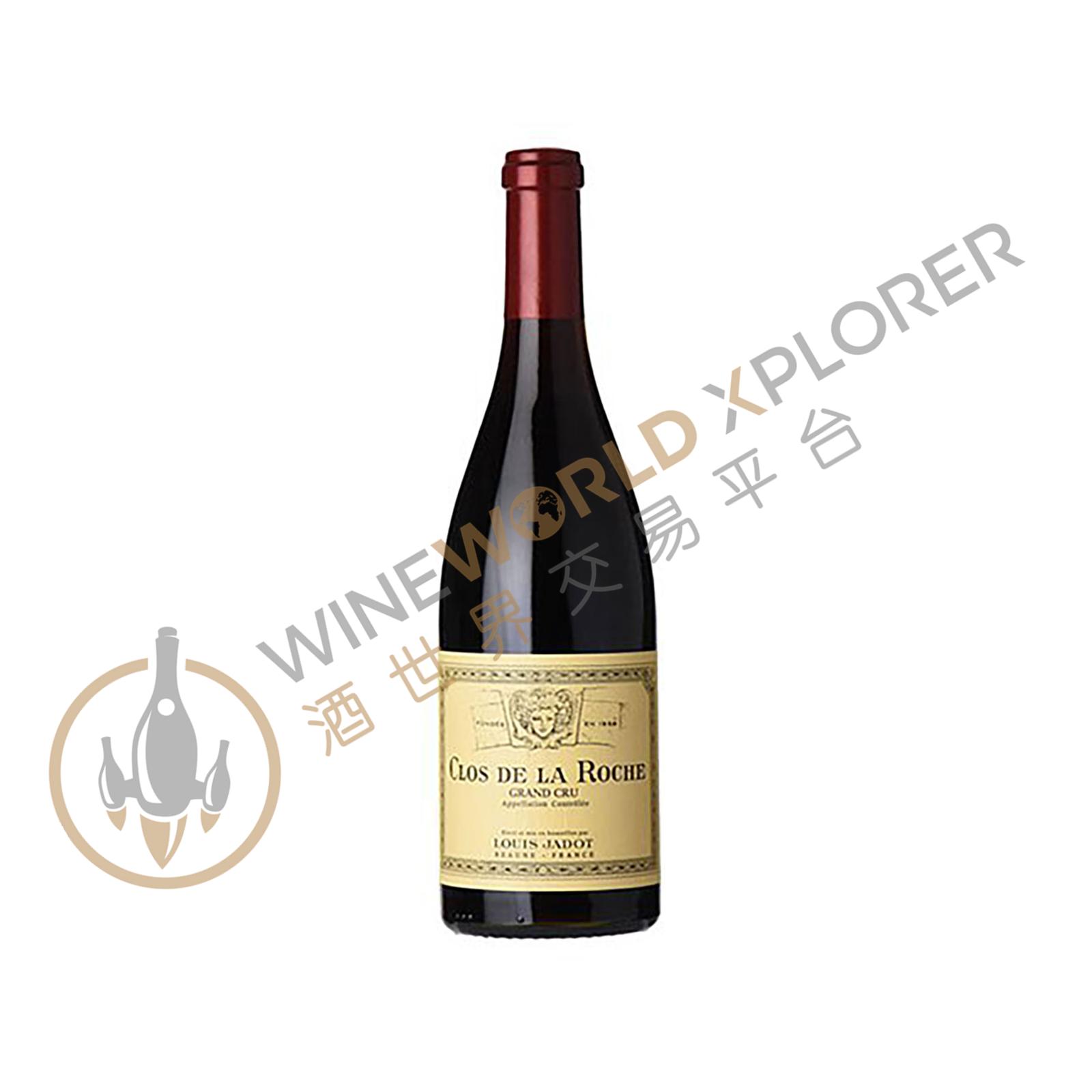
Louis Jadot, Clos de la Roche Grand Cru 2012
 View analysis


Description
Tasting notes

Reviewed by: Antonio Galloni
The 2012 Clos de La Roche is explosive from the very first taste. Dark fruit, smoke, tobacco, licorice and incense all take shape in the glass. At times wild and exotic, the 2012 is rich and deep, with huge tannins and imposing structure. Over time, though, the wine becomes more delicate and perfumed. Dried rose petals, mint and raspberries linger on the sweet, expressive finish. The 2012 was fermented with 100% whole clusters. As beautiful as the 2012 is, today, it doesn't look like a wine that will age for many decades, as is the norm here. Time will tell, though, and the 2012 is at the beginning of what promises to be many years of exceptional drinking before longevity is even an issue.
Reviewed by: Stephen Tanzer
Moderately saturated medium red. Highly aromatic nose combines raspberry, strawberry, clove oil, dried flowers, smoked meat and pungent minerality. Silky, dense and fine-grained, with a high percentage of whole-cluster fermentation energizing the middle palate and giving this very complex Clos de la Roche lovely perfume and early sex appeal. But this is built for a graceful evolution in bottle.
Reviewed by: Stephen Tanzer
(Jadot buys wine from two growers, but the wines were made in Jadot's barrels, mostly with whole clusters): Good bright medium red. Black cherry, chocolate and roasted herbs on the nose, lifted by pepper and menthol. Then creamy-sweet and expressive in the mouth, with red fruit flavors leavened by herbs, pepper and spices. Densely packed, sweet and very long.
Reviewed by: Neal Martin
The 2012 Clos de la Roche Grand Cru has a primal bouquet that opens up with encouragement, but only slightly, with mulberry and raspberry fruit, touches of briary and damp moss. The palate is underpinned by very fine tannins. This is a feminine, harmonious and sensual Clos de la Roche prioritising elegance over power. There is a long tail on the finish that is velvety smooth and caressing. This is very seductive and classy. One statement nonchalantly uttered by head winemaker Frederic Barnier not only summed up the 2012 vintage, but the plight of Burgundy in recent years. “We have lost around one and a half crops out of the last four.” Imagine losing your equivalent income? For a significant negociant such as Louis Jadot, one that under outgoing(ish) winemaker Jacques Lardiere and his successor, have constantly striven for quality, that dearth of fruit has a major impact. The dramatic decrease in crop means that more people are “fighting” for top quality contracted fruit. The rise in land prices has exacerbated the problem as few can afford to buy vineyards and therefore resort to building small negociant businesses and join the queue. Now, small operations that just require one flagship barrel of grand cru might just be able to afford to pay over the odds. However, a merchant such as Jadot simply cannot afford to do that when they need dozens of barrels to satisfy worldwide demand. So how do they do it? “Relationships,” answers Frederic, “It all comes down to relationships with our contracted growers.” For evidence of that, just flick down to my review of their Bienvenue-Batard-Montrachet that came a whisker away from never being made. So with all the sturm und drang, how are Louis Jadot faring? Suffice to say that Frederic seems to have slipped into Jacques Lardiere’s impossible-to-fill shoes by simply slipping into his own. There was a confidence about him when I conducted two morning sessions with him, though he never crosses the line into braggadocio. The first tasting focused on a complete horizontal of the white. “The (white) 2012s were very rich,” he remarked. “Some of the village crus were overwhelmed and they were too fat and heavy. So in order to maintain freshness we blocked the malo-lactic through sulfur addition.” Frederic goes into more detail of the vintage in the accompanying video, but the main point is that the skins were thick and the berries yielded very little juice. This meant that he had to exact a very prudent vinification in order to eke out the free-run juice without leeching hard, bitter, perhaps astringent elements. He appears to have done exactly that. While I would not say that it was an unmitigated success, after all when you annually produce 100 crus there are bound to be some that don’t quite make the grade, Louis Jadot’s 2012s continue a fine run of form that disprove the theory that large-scale merchants cannot produce wine equal if not better than bijou growers. And that comes from a lot of sweat and tears. Frederic rued that he had not seen his wife or children over the previous four weeks during the harvest! But these prenatal wines appear to have made that temporary estrangement worthwhile. These samples were all taken from barrel and prepared by Frederic Barnier on the same morning of my arrival, with as much effort to reflect the final blend as possible. Note that for the village crus, samples did not include deselected premier crus barrels that will obviously ameliorate those wines. Importer: Kobrand Corp., Purchase, NY; tel. (914) 253-7756 and through Hatch Mansfield in UK.
About the Producer
Situated in the heart of Burgundy, Maison Louis Jadot is one of the most prestigious estates representing the spirit of Burgundian wine. It was founded by the Jadot family in 1859 when they bought the Clos des Ursules, a prestigious first growth in the Beaune region. In 1954, the then owner Louis Auguste Jadot asked Andre Gagey to become the winemaker of Château Louis Jadot. In 1984, Madam Jadot transferred the ownership of Château Louis Jadot to the Kopf Family, an American family dedicated to acquiring the finest vineyards, but there was no change in the management of the estate. Pierre-Henry Gagey has been in charge of the estate since 1992. The estate covers 154 hectares of vineyards throughout Burgundy, more than half of which are in the Grand Cru and Grand Cru categories. It is surprising that there are only two winemakers in this large vineyard. The main grape varieties planted in the vineyard are Chardonnay, Pinot Noir and Gamay. The average age of the vines is between 20 and 80 years. In terms of winemaking, Louisiadour uses grapes from its own vineyards or buys them under contract from the winegrowers, a practice that is rare in other wineries. The barrels are all homemade and a skilled craftsman can make five barrels a day. While oak is usually left for around two years before barrel making, Château Louisiade prefers to wait patiently for an extra year. In their opinion, the barrels made from oak that has been exposed to the elements will not overshadow the aromas of the wine, thus ensuring the high quality of the wine. For Château Louis Jadot, the true essence of winemaking is the ability to interpret the terroir of the region in the wine, not just the careful cultivation of a specific grape variety to produce a wine of great flavour. It is this philosophy that has made Louisiadour synonymous with excellence. Its label, depicting Bacchus, is a symbol of the quality of the wines it produces, whether appellation or grand cru.
