
 Wine Advisor



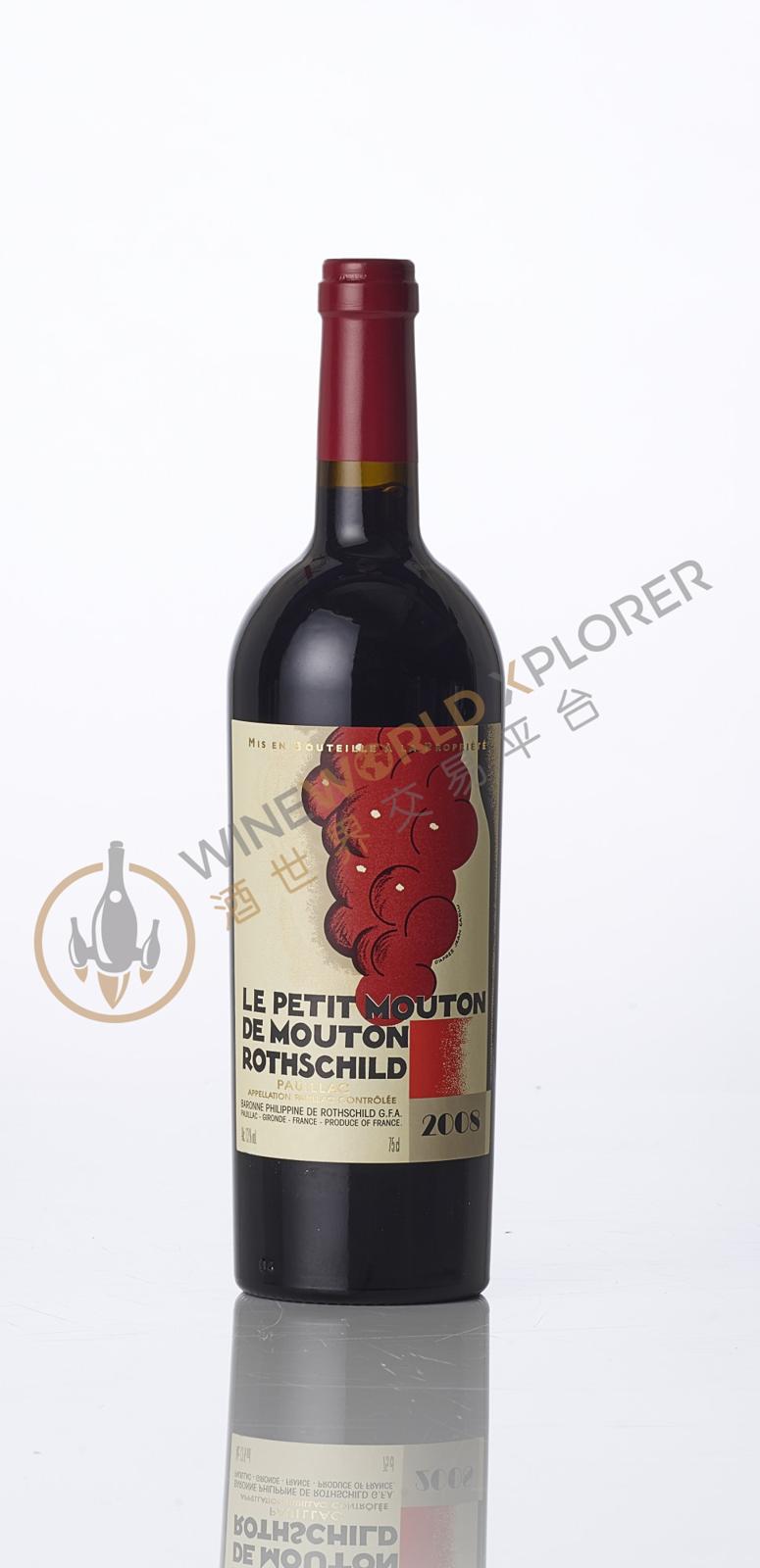
Le Petit Mouton 2016
 View analysis


Description
Tasting notes

Reviewed by: Lisa Perrotti-Brown
The 2016 Le Petit Mouton is a blend of 62% Cabernet Sauvignon, 35% Merlot and 3% Cabernet Franc. It has a deep garnet-purple color and gives up an intensely plummy nose with cigar box and fallen leaves scents leading to aroma layers of kirsch, red and black currants and tilled soil. Medium-bodied with a racy line of freshness cutting through the muscular fruit and a good, firm frame of grainy tannins to support, it finishes on a lingering menthol note.
Reviewed by: Neal Martin
The 2016 Le Petit Mouton is a blend of 62% Cabernet Sauvignon, 35% Merlot and 3% Cabernet Franc; it will be matured in 45% new oak, a little lower than in previous year (it used to be 60%). It has around 13.3% alcohol. It has a clean and precise bouquet with black berry, pencil shavings, crushed violet and a touch of oyster shell. The palate is medium-bodied with supple and ripe tannin, very harmonious and blessed with a satin-like texture. It is a more understated Le Petit Mouton, but you almost miss the precision and detail, the mineralité on the linear finish. This has great potential thanks to the sheer quality of the tannins here.
Reviewed by: Antonio Galloni
The 2016 Le Petit-Mouton is a wine of total precision and class. Bright floral notes lift the red berry fruit beautifully. Medium in body, with incredible persistence and exceptional poise, the 2016 Petit Mouton is sublime. Blood orange, mint and chalky notes add further nuances of freshness throughout. The 2016 is all class.
Reviewed by: Antonio Galloni
The 2016 Le Petit-Mouton is exceptional. In another era in Bordeaux's history, it could undoubtedly have been a Grand Vin -- it is every bit that outstanding. The volume, depth and density here are truly remarkable. Sweet spice and floral notes develop on the finish, but it is the wine's sense of balance and poise that is most remarkable. Le Petit-Mouton is also without question one of the two or three best second wines of the vintage. Don't miss it.
Reviewed by: Neal Martin
The 2016 Le Petit Mouton has a very expressive, outgoing bouquet of copious red and black fruit, cedar and mint; scents of pressed violet petals emerge with time. The palate is medium-bodied with very supple tannins, very lithe and pliant. The caressing, silky-smooth finish of tobacco-tinged red fruit reveals a dab of spiciness on the aftertaste. Two bottles tasted, one just missing some backbone, although the second is better. Tasted blind at the Southwold tasting.
Reviewed by: Neal Martin
The 2016 Le Petit-Mouton has a classic blackberry, graphite and smoke bouquet that perhaps feels a little stricter than it did out of barrel. The palate is medium-bodied with fine tannin, very pure black fruit and a precise, quite minerally finish that is pure class. This might be the best Le Petit Mouton since it debuted in 1993.
About the Producer
The history of Château Mouton Rothschild dates back to the mid-19th century when Baron Nathaniel de Rothschild purchased the estate in Pauillac, a commune in the Médoc region of Bordeaux, France. The estate's vineyards were already well-established at the time, but Rothschild invested heavily in modernizing and expanding the winery, including building new cellars and importing new grape varieties. Le Petit Mouton, which translates to "The Little Sheep" in English, is a second wine produced by Château Mouton Rothschild. Second wines are made from grapes that come from younger vines or from less prestigious vineyard parcels than the grand vin, the top wine produced by the winery. Le Petit Mouton was first introduced in 1993 as a way to showcase the quality of the estate's younger vines and to create a more accessible wine that could be enjoyed earlier than the grand vin, which typically requires several years of aging. Since its introduction, Le Petit Mouton has become a highly regarded wine in its own right, known for its rich flavors, elegant structure, and approachability. The wine is made from a blend of Cabernet Sauvignon, Merlot, Cabernet Franc, and Petit Verdot grapes, and is aged in French oak barrels for around 16 months before bottling. The label features a whimsical illustration of a little sheep, a nod to the wine's name and to the estate's long history of using animal motifs on its labels.
1994(1)1996(2)2003(1)2005(4)2006(2)2007(9)2008(3)2009(6)2010(9)2011(5)2012(7)2013(8)2014(12)2015(12)
Package Size
1 x 1.5L
