
 Wine Advisor



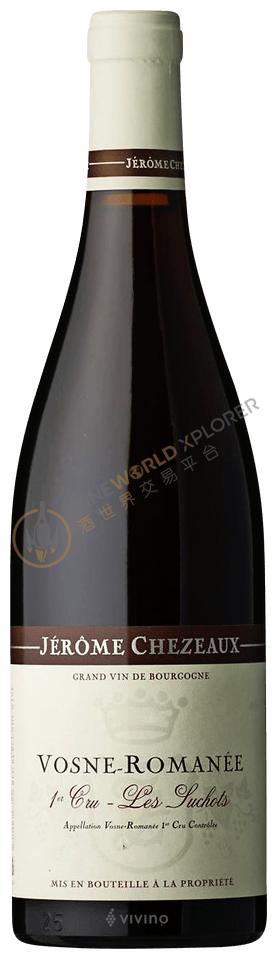
Jerome Chezeaux, Vosne Romanee 1er Cru Les Suchots 2010
 View analysis


Description
Tasting notes

Reviewed by: Antonio Galloni
The 2010 Vosne-Romanee Les Suchots comes across as understated. Sweet dark berries, spices, flowers and mint are some of the notes that are woven into a finessed fabric of notable elegance. The Suchots is one of the most refined wines in the Chezeaux lineup. Despite its considerable sensuality, the wine needs time to fully come together. Silky tannins frame the persistent finish. The Suchots was the first wine to finish its malo. There is the potential for the Suchots to turn out even better than this note suggests. It will be fun to find out. Anticipated maturity: 2020-2030. Jerome Chezeaux took over his family’s estate in 1994. The winery was originally founded in 1938, but only began bottling in the late 1960s. The 2010 harvest started on September 25 and lasted six days. The wines saw about 21 days of cuvaison (including 4-5 days cold soak) and were then aged in oak, with a fairly low amount of new wood, as is typical here. Yields were down 40% on average. The 2010s are on average excellent. The entry-level wines are terrific, both on absolute and relative terms. A number of the top 1er Crus and the Clos de Vougeot struck me as a bit closed, which is not surprising given the personality of the year. I will not be surprised if some of the top 2010s are even more impressive from bottle. Importer: Rosenthal Wine Merchant, Pine Plains, NY; tel. (800) 910-1990
About the Producer
Château Geoffroy Chézeaux was founded by Julien Missery in the 1930s. In 1971, Bernard Chézeaux, the father of the current owner, took over the management and, in the context of the times, chose to sell the entire harvest to a wine merchant as his main business. Jérôme, who was born in the 1970s, therefore recalls that his life has been inextricably linked to the vineyard since he was a teenager. When Bernard died in 1993, it was only natural that the winery was passed on to Jérôme, who had just graduated from the oenological school in Bern at the age of 17. He took over the responsibility of the winery and, thanks to his upbringing in the vineyards and winemaking, as well as the up-to-date knowledge and contacts imparted by the school, he was able to take over the reins and, in keeping with the trend of the time, courageously set up an independent winery, reducing the portion sold to the wine merchants year by year and now producing and selling 100% of the wine himself. The winery is located in the village of Prémeaux Prissey, immediately south of the village of Saint George de Nuit, and has been considered part of the village of Saint George de Nuit since time immemorial. In addition to the vineyards inherited from his father, and the plots inherited from his wife Pierrette, Château Geronceau has now grown to nearly 12 hectares. These 12 hectares include a number of valuable First Growths and Grand Crus, which have helped the estate to make a name for itself and become a familiar name to many Bourgogne enthusiasts. The Grand Cru, Les Suchots and Les Chaumes in the highly sought-after Vonn Romanée, the Aux Boudots in the village of St Georges de la Nuit next to the Malconsorts, Les Pruliers, Les Vaucrains, and other famous 1er Cru, make up the estate's attractive 14-vineyard range. Jérôme's traditional Bourgogne terroir and winemaking ethos, nurtured since childhood, combined with modern changes in winemaking techniques, have resulted in an eclectic and appealing style. The wine is harvested by hand, 100% destemmed and cold macerated for 3 to 4 days. The wine is fermented slowly and patiently for up to 4 weeks using only native yeasts to retain the finesse and elegance that is the hallmark of the estate. Small oak barrels are used, with around 30% new barrels, after which the wine is also given a long enough period of ageing, up to 24 months, before being bottled unfiltered. The style of Château Geoffroy Corso has a clear terroir transmission, clearly showing the differences between the location of the plots and the soils. Sweet fruit flavours dominate, still retaining a core of ageing strength. Elegant structure and fine acidity make for a sweet but not sweet tasting, revealing the most seductive and sensual side of Pinot Noir.
