
 Wine Advisor



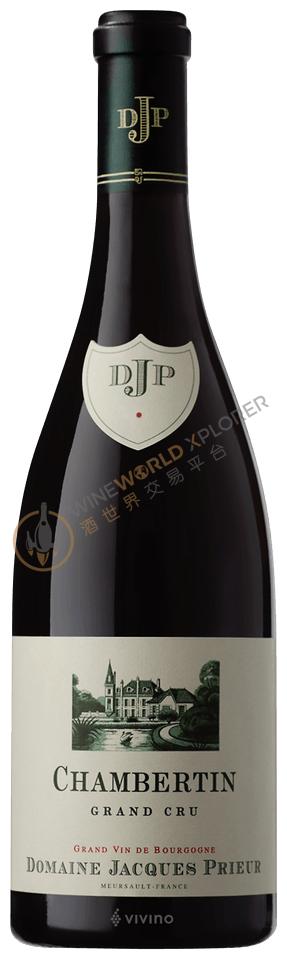
Jacques Prieur, Chambertin Grand Cru 2016
 View analysis


Description
Tasting notes

Reviewed by: Stephen Tanzer
(13.5% alcohol without chaptalization; the estate did only one vinification, as the younger vines that normally go into a Gevrey-Chambertin Premier Cru were much more affected by the frost; just 12.5 hectoliters per hectare produced, yielding just five barrels of wine, three of them new): Dark red-ruby. Black cherry, complex soil tones and licorice on the nose, lifted by a penetrating violet quality. Not a powerhouse but juicy, brisk and light on its feet. In fact, this is a bit edgy on the back end in the early going, showing as much acidity as tannins for structure. This very backward, youthfully medicinal Chambertin boasts terrific purity but will need long aging to fill out. Nadine Gublin told me that the fruit had six grams per liter of tartaric acidity at harvest, with four remaining after the décuvage.
Reviewed by: Neal Martin
The 2016 Chambertin Grand Cru includes the Clos de Bèze this year due to such small quantities, the younger vines completely killed (so there will be no Gevrey-Chambertin). It has a tightly wound bouquet, quite backward but unfurling in the glass, blackberry and raspberry fruit, a touch of sous bois. The palate is medium-bodied with chewy tannin, quite masculine and grippy with a bold, broad-shouldered finish. Fine, but I have a preference for the 2015.
About the Producer
HISTORY Domaine Jacques Prieur's mythical story started on February 24th, 1868, with the wedding, in Bligny-les-Beaune, of Claude Duvergey (22 years old) and Marie Taboureau (19 years old). Marie was born in Bligny in 1848 and Claude in Meursault in 1845. Their parents were winegrowers. Claude founded the Duvergey-Taboureau House and thrived in the wine and spirit trade, without investing directly, at first, in viticulture. In 1879, he acquired the property of "Les Herbeux" in Meursault, current heart of Domaine Jacques Prieur... and started buying vineyards. He then made a risky bet with the arrival of the terrible phylloxera in Côte d'Or. However, his choices would finally make him a visionary thanks to the use of American plants as cure. In 1889 he acquired the famous Clos de Mazeray Monopole (Meursault), a parcel of Volnay Santenots, 4.5 ha (11 ac) of Clos Vougeot and 2 lots in Chambolle-Musigny. In 1890 he became the sole owner of the prestigious Clos des Santenots in Volnay, 1.5 ha (3.7 ac) of Puligny-Montrachet Les Combettes and 0.45 ha (1.1 ac) of the mythical Montrachet (notably supplemented by the "Dent de Chien" parcels in 1891 and 1892). He then ran his trade business in the Château de Bligny bought in 1890 for his wife. Without any direct heir, both spouses would turn to the Taboureau family side. Thus they married in 1891 Hélène Taboureau (Marie's niece) and a well-born young man from Beaune, Henri Prieur (itinerant salesman). They benefited from a very advantageous marriage contract including some goods but especially the promise of a profit-sharing in the Duvergey-Taboureau's trade. Jacques Prieur was born on January 31st, 1893, from the union of Hélène and Henri. The estate kept growing in 1895 with a new acquisition in Musigny and a swap between a plot of Clos Vougeot and parcels of Chambertin and Chambertin Clos-de-Bèze. In 1899, Claude Duvergey added Volnay Champans to its collection and in 1907, Chevalier-Montrachet. He died on March 9th, 1920, and bequeathed all of his property to Jacques Prieur (his wife remaining stakeholder). Soon after, the latter married Madeleine Darnat, daughter of sheets merchants from Lyon. In 1924, Jacques Prieur and comte Jules Lafon instituted the famous "Paulée de Meursault" in order to celebrate the end of harvests with all winegrowers from the village. Marie Duvergey-Taboureau died in 1935 and definitely left the estate to Jacques Prieur. Co-founder of the legendary Chevaliers du Tastevin, he gave his name to the estate in 1956. He died in 1965 and his wife in 1974, leaving the winery to their 6 children. In 1988, in order to avoid selling the winery to foreign shareholders, 5 important French families united, among them Labruyère Family, winegrowers and entrepreneurs from South Burgundy. In the 1990s the Grands Crus of Corton-Bressandes and Corton-Charlemagne would enrich the mosaic of terroirs of the estate. Today leading this jewel of Burgundy, Labruyère Family, supported by Prieur Family's heirs, promotes and defends, every single day, the great terroirs of Burgundy, worldwide
