
 Wine Advisor



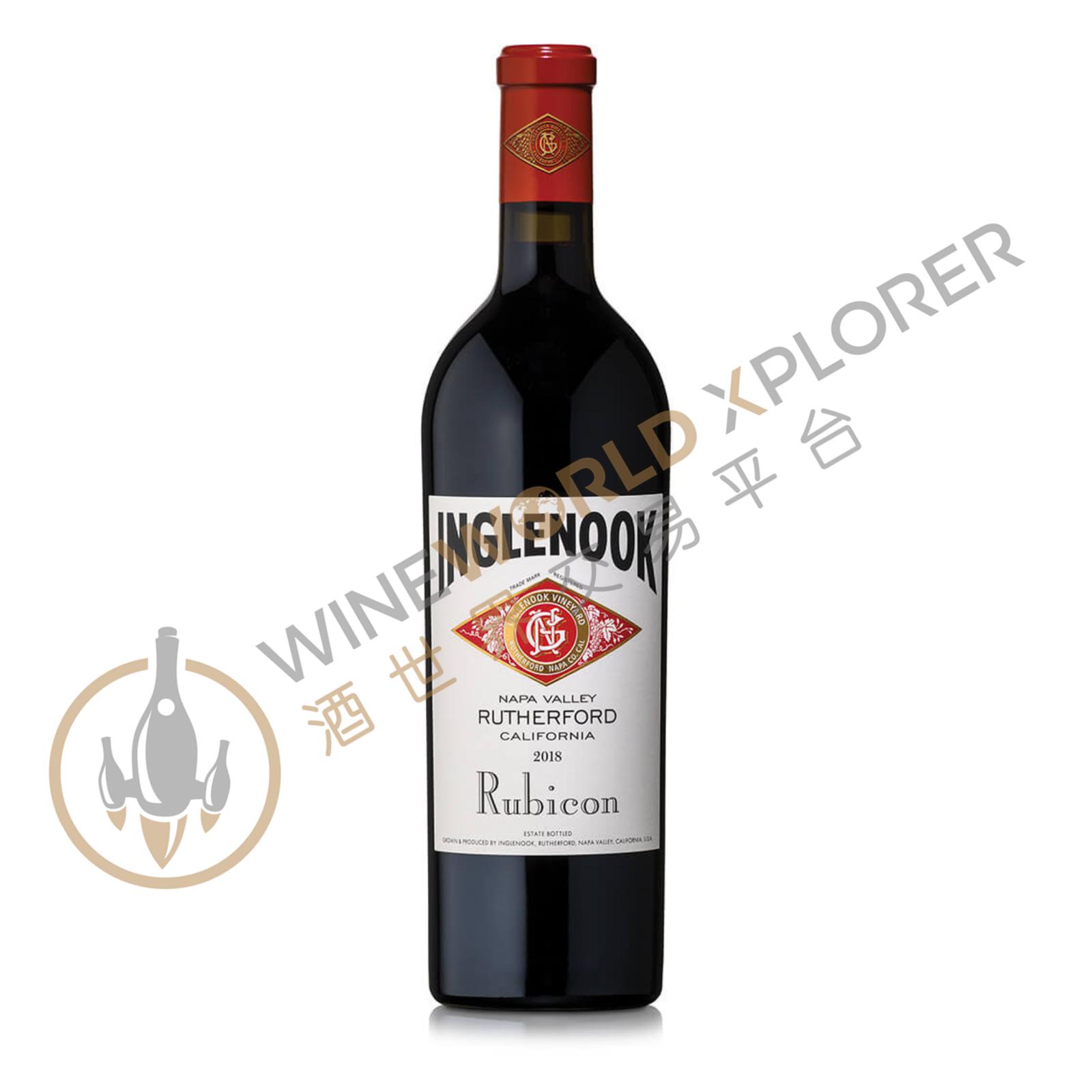
Inglenook, Rubicon 2016
 View analysis


Description
Since its inaugural vintage in 1978, Rubicon has been the Estate's premier red wine, reflecting the soul of the property and expressing Francis Coppola's wish to create a Bordeaux-styled grand wine, that is, "a wine that can please contemporary taste, but with a historical aspect [that defines] our vineyards at their zenith." Rubicon was named after the small river crossed by Julius Caesar in 49 B.C., declaring his intention to gain control of Rome, thereby launching a civil war among opposing factions. Over time the phrase "crossing the Rubicon" has come to signify any irreversible action with revolutionary intent or the outcome of which holds great risk. True to its uncommon depth, Inglenook's Rubicon continues to be a testament to the finely tuned rendering of a risk well-taken.
Tasting notes

Reviewed by: Antonio Galloni
The 2016 Cabernet Sauvignon Rubicon is powerful, dark and unctuous, while retaining a super-classic sense of structure. Black cherry, plum, chocolate, leather, spice and menthol infuse the 2016 with striking textural depth and sweetness.
Reviewed by: Antonio Galloni
The 2016 Cabernet Sauvignon Rubicon is a wine of total precision and class. Translucent and energetic, with distinctly mid-weight structure, the 2016 is a wine of reserve, tension and breeding. Shy at first, the 2016 has a lot to offer, but it needs a number of years in bottle to be at its most expressive. Cedar, tobacco, licorice and wild cherry add the closing nuances.
Reviewed by: Antonio Galloni
The highlight in this tasting of 2016s, the Cabernet Sauvignon Rubicon is also the most harmonious and complete of the three 2016s I tasted at Inglenook. Silky, seamless and super-polished, the 2016 is impeccable from start to finish. Naturally, the 2016 is still very, very young, but it starts its life from a very privileged position. All the elements are in the right place.
About the Producer
Inglenook's Chateau winery is completed. Conceived to be a state-of-the-art facility, the Chateau's design is based on gravity-flow, one of the first of its type in Napa Valley, and includes an early form of rebar—using cable from cable-cars in San Francisco—to stave off earthquake tremors and to help the building shift safely during the crush process. True to his fastidious nature in each step of the winemaking process, Niebaum devises California's first grape-sorting table and also installs the state's first bottling line to ensure the wines' provenance from growth to bottle, the latter always bearing the California Pure Wine Stamp and secured with an intricate wire maze to guarantee the wine's integrity.
