
 Wine Advisor



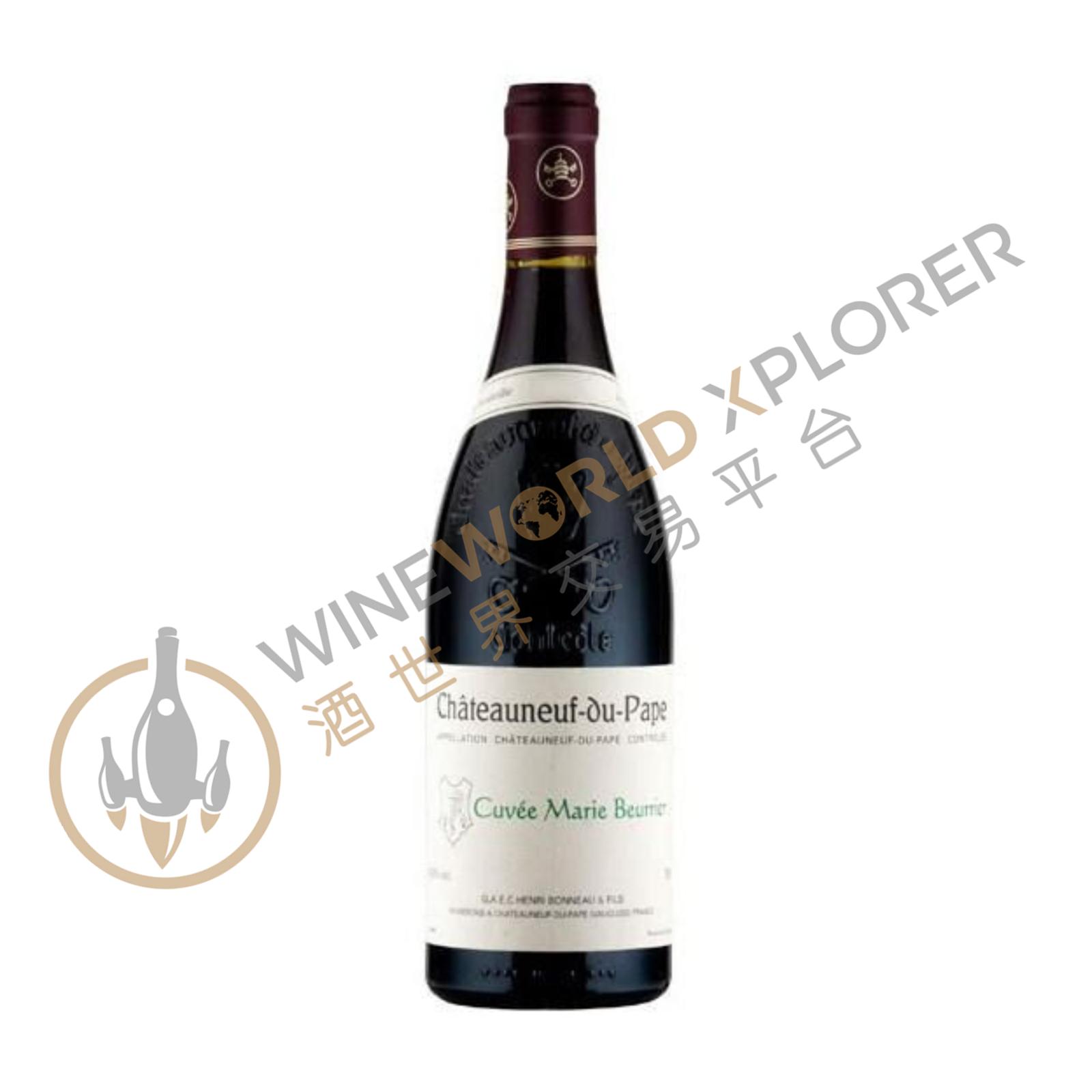
Henri Bonneau, Chateauneuf du Pape Cuvee Marie Beurrier 2003
 View analysis


Description
Tasting notes

Reviewed by: Robert M. Parker, Jr.
Only one wine was made in 2003, the Chateauneuf du Pape Marie Beurrier. I never cared for this offering from cask, but the bottled wine has filled out nicely. Revealing a dense ruby/plum color, plenty of soy, fig, underbrush, sassafras, new saddle leather, black currant, and cherry notes, the magic of Bonneau is evident, as this was largely undrinkable when I first tasted it in 2004, was better in 2005, 2006, and 2007, began looking pretty good in 2008, and in 2009, from bottle – the best yet. This is what an extraordinary vigneron can do ... God bless him! As always, it was fascinating to go through these cellars and taste Henri Bonneau’s cuvees. Any cuvee with the capital letter G is destined to be a Marie Beurrier, and the cuvee P’s will end up being Reserve des Celestins. I doubt there will be a Reserve des Celestins in 2008, but I did taste two different cuvees, both just short of being outstanding. Importer: Alain Junguenet, Wines of France, Mountainside, NJ; tel. (908) 654-6173
Reviewed by: Robert M. Parker, Jr.
The 2003 Chateauneuf du Pape Cuvee Marie Beurrier, from a troublesome and challenging vintage for Henri Bonneau, is a lightweight, medium-bodied effort displaying attractive fig, underbrush and loamy soil notes and a moderate finish. It’s a competent but hardly inspiring wine from the inimitable Monsieur Bonneau. Henri Bonneau, who is now 70 years of age, continues to make Chateauneuf du Pape the way it was made 50-100 years ago ... long cask aging in old barrels and bottling it, as he says jokingly, “when I need money.” A visit to these cellars is always one of my most rewarding of the year. The barrels and foudres that will probably be used in the Cuvee Marie Beurrier all have the letter “G” on them and everything with Reserve des Celestins potential has the letter “P” on it. Bonneau went through a litany of the issues that confronted the 2009 vintage, particularly the drought that affected much of the Grenache planted in many of Chateauneuf du Pape’s terroirs, and he reminded me that he had predicted it would be a problem when I saw him last year. Bonneau continues to claim the 2007s are too showy and flamboyant to ever develop into a great, long-lived vintage. Importer: Alain Junguenet, Wines of France, Mountainside, NJ; tel. (908) 654-6173
About the Producer
Domaine Henri Bonneau's reputation is as legendary as its owner, Henri Bonneau. Its rustic home in the Châteauneuf-du-Pape appellation in the Rhone Valley is situated at the end of a village, its cellars overflowing with large and small aged oak barrels and its stone walls covered in potholes. Dirty cellars, old mouldy barrels, all these conditions are a winemaker's nightmare. But it was here that the Chateauneuf-du-Pape Reserve des Celestins was made, which has been praised by wine drinkers all over the world; it was here that Bonneau brewed his philosophy of a happy nature into the aromas of his wine; it was here that Bonneau brewed the treasures from the La Crau plateau. It is here that Bonneau has turned the treasures of La Crau into an exceptional wine. Henri Bonneau himself determines each speciality, which is graded according to its quality: Henri Bonneau, Marie Beurrier, Reserve des Celestins and Cuvee Speciale, which may be just one of the four or all four. But no matter how they are blended, the winemaking is the same. What also makes Château Henri Bonnot unique is the ageing of the barrels, which come from the Burgundy region and date back to the 17th century. A visit to Henri's cellars is therefore like walking into a museum. The wines produced here are usually aged for more than six years before being bottled unfiltered after Bonnot himself has tasted them. The result is a wine with a powerful bouquet, balanced flavours and a long finish, particularly in the case of the Châteauneuf-du-Pape Célestins Reserve red wine, of which around 1,500 cases are produced each year. The best vintages of Château Henri Bonnot have the distinctive taste of concentrated bovine blood, powerfully combined with a thick and viscous texture. The best recent vintages are the 2003, 2001, 2000, 1999, 1998, 1995, 1990, 1989, 1988, 1986, 1985 and 1981.
