
 Wine Advisor



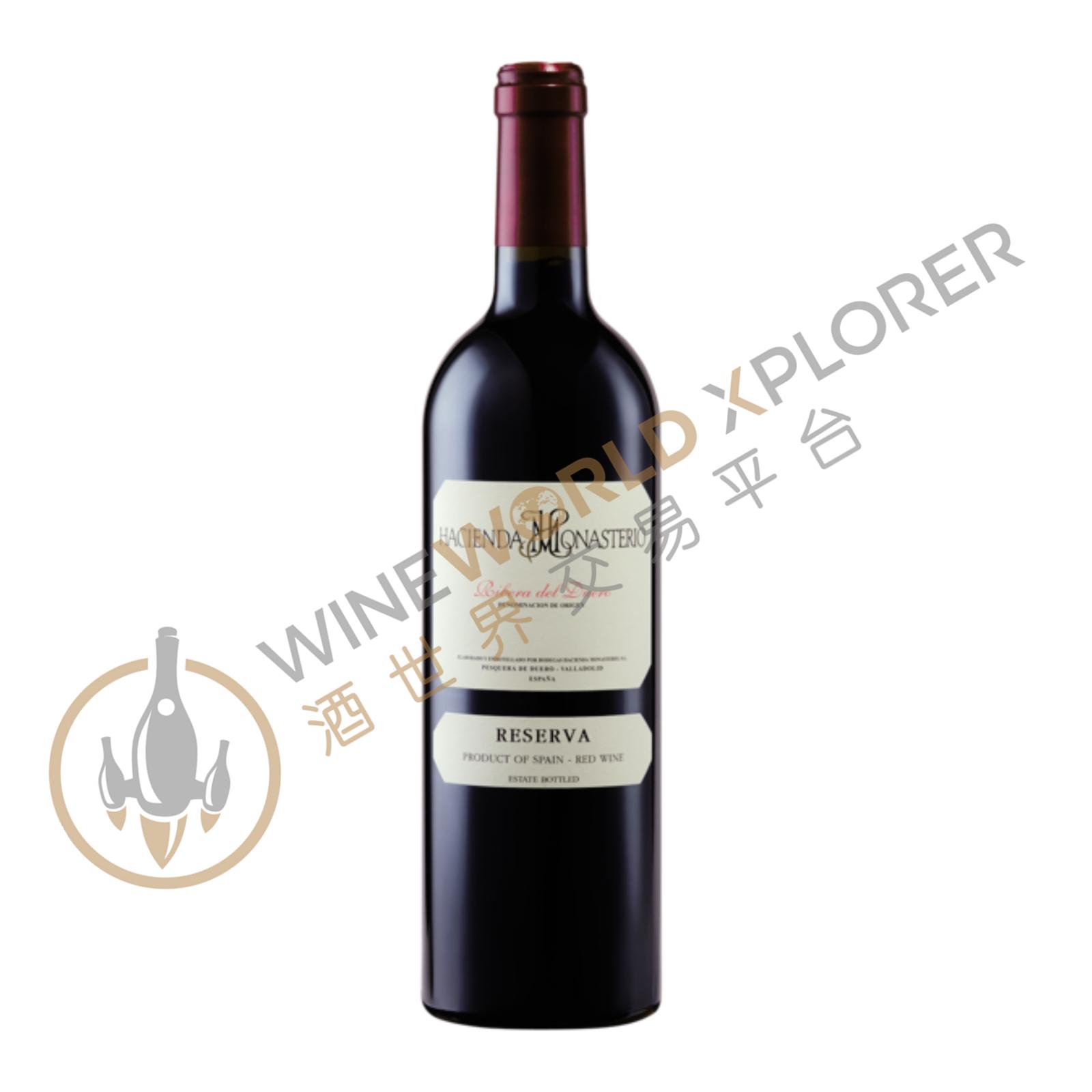
Hacienda Monasterio, Reserva 2016
 View analysis


Description
Tasting notes

Reviewed by: Luis Gutiérrez
The difference between the 2016 Reserva and the regular Hacienda Monasterio (the wine labeled as Crianza in the past), is that they select the grapes from the parts of the vineyard where there is more limestone in the soil. It's mostly Tinta del País (a.k.a. Tempranillo) with 20% Cabernet Sauvignon, and it fermented in stainless steel with indigenous yeasts, then matured for 20 months in French barriques, 40% new. The oak is perfectly integrated, and the wine has an impressive nose with more red than black fruit, denoting freshness. It's quite polished and has very elegant tannins. This is a superb vintage for this bottling—the Cabernet Sauvignon is very integrated with the Tempranillo and complements it. It's powerful but has terrific balance and great finesse. This is my favorite vintage of the Reserva. It's a modern version of the 1996, a wine that I'm very fond of. It's the idea that I have of a wine from Ribera del Duero. Bravo! 30,000 bottles were filled in August 2018.
About the Producer
The idea of Hacienda Monasterio arises in 1990, when Peter Sisseck arrives in Ribera del Duero to manage the winery and plant the vineyards. Hacienda Monasterio is set in an estate of 160 hectares, of which 78 are planted with vineyards. It is located between Pesquera and Valbuena de Duero, two Duero Valley towns famous for the quality of their wines. At the end of the XIX century, the estate was owned by the Lecanda family who pioneered a new form of wine production in this area. The current wine cellar was built between 1991 and 1992 and as designed by the french architect Philippe Maziéres, who had previously worked for prestigious wine cellars such as Château Margaux, Château d'Yquem Prieure-Léchiné. State Located on a southern hillside, the estate covers 167 hectares, 108 of wich are planted with vines. The heterogenous composition of the soils allows us to sub-divide the estate in plots, all of them with the same common denominator : a high concentration of limestone which gives our wines subtlety and elegance. The main grape variety they cultivate is the Tinto Fino ( a copy of the Tempranillo variety, characterized by large clusters and high performance). The Tinto Fino planted in the vineyards are grapes taken from selected old vines from the region. They also cultivate grape varieties of Cabernet-Sauvignon, Merlot and Malbec, in lesser quantity. In order to guarantee the harverst quality, Hacienda Monasterio has set up a dense plantation of 4.000 plants per hectare, much higher then the average 2.200 plants per hectare in the area. The low production we get, 3.500kg/Ha, allows us to extract the maximun essence from each plant, as the vine is not forced to produce big quantities of grapes. Winery The winery consists of three buildings equipped with temperature and humidity control, each one independent from the other. The cellar is fitted with stainless steel deposits, designed by Peter Sisseck, with a temperature control system, wich allows the alcoholic fermentation to take place, with cold and long maceration. The cellar where the wines are left to age is equipped with a cooling system, only used during the summer period. The floor is of natural gravel which ensures that the level of humidity is always correct. Winemakers Peter Sisseck In 1990 he arrived at Hacienda Monasterio to plant the vineyards he still keeps. His professional career is very extensive, starting in Spain with Hacienda Monasterio and in 1995 creating the prestigious Dominio de Pingus, during all these years he has advised several wineries in different regions of Spain. In Bordeaux he is a partner of Chateau Rocheyron in Saint Emilion. Between 1983 and 1985, together with his uncle Peter Vinding-Diers, he began what has become known as 'The New Wave' of Bordeaux white wines. Carlos De La Fuente He joined his career to Peter Sisseck in 1992 as the winemaker of the project. He has a Master's Degree in Viticulture and Enology from the Miguel de Cervantes University of Valladolid. He has taken Viticulture and Oenology courses at Montpellier Inra, beside several courses and tastings focused on viticulture and red and white wines.
