
 Wine Advisor



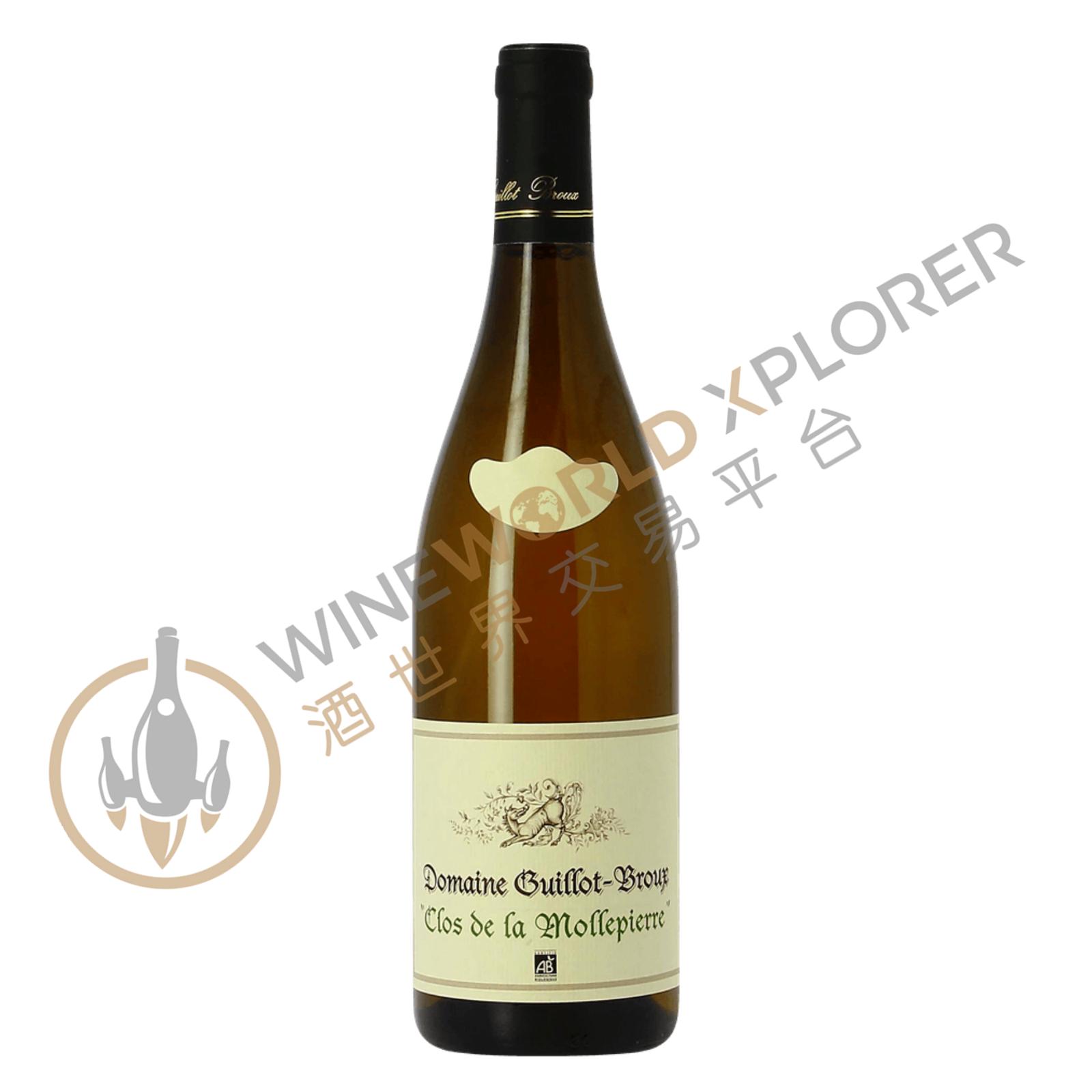
Guillot Broux, Macon Cruzille Clos de la Mollepierre 2020
 View analysis


Description
Tasting notes

Reviewed by: William Kelley
The 2020 Mâcon-Cruzille Clos de la Mollepierre is also especially elegant this year, offering up notes of citrus zest, golden orchard fruit, white flowers, nutmeg and buttery pastry, followed by a medium to full-bodied, satiny and seamless palate that concludes with a saline finish.
About the Producer
After some years working on his family’s vineyard, Jean-Gérard Guillot left to deepen his wine-making knowledge. He first worked for several years at the Domaine de la Chanal in Brouilly in the Beaujolais, then at the Domaine Bernard Michelot in Meursault. In 1978, Jean-Gérard Guillot returned to Cruzille, where he established the Domaine Guillot-Broux with her wife, Jacqueline (Broux is her maiden name). On May 27 2008, Jean-Gérard Guillot, the founder of the Domaine Guillot-Broux, passed away at the age of 63. Emmanuel Guillot and Patrice Guillot are son of Jean-Gérard Guillot. They have 17 hectares of vines situated in the three villages of Cruzille, Grévilly and Chardonnay, and have two appellations: Mâcon Cruzille and Mâcon Chardonnay. Most of the vineyards are on east-facing slopes on clayey limestone soil. The various geological formations give rise to different terroirs, resulting in strikingly different wines. The nature of the soil in Cruzille particularly brings out mineral flavours, and produces wines that need a relatively long time to mature. The vineyards in Grévilly and Chardonnay tend to have deeper soil, and produce wines that, when drunk young, are often fruitier and more flattering than Cruzille wines; however, they become more complex after several years’ ageing. The wines from each vineyard are vinified separately, but only the best vineyards are selected for single vineyard cuvees. The domaine has been organic from the beginning and has been certified organic since 1991. They plough, and use natural methods of fighting parasites, green manure, organic fertilisers (to feed the soil and not the vines), and mineral sprays with stable active molecules that leave no residues in the wines. Traditional winemaking During the harvest, the grapes are handpicked, and then sorted in the vines before going to the winery. This allows they to pick only the healthiest grapes, with the right maturity. By controlling the yields, producing between 30 and 55 hectolitres a hectare. Each terroir is vinified separately, using the methods best adapted to the grape variety, the soil, the vintage and the age of the vines. The best single vineyards are then bottled separately, and only when the vines are at least 10 years old. If the vintage is not exceptional, they blend the single vineyards into the entry-level wines. They do not add yeasts to wines, and the use of sulphites and chaptalisation are kept to an absolute minimum. The white wines, made from Chardonnay grapes, are pressed immediately, in order to avoid any changes in the nature of the wine. The juice goes down to oak barrels in the cellar where both the first (alcoholic) and second (malolactic) fermentations take place. Each barrel contains 228 litres (300 bottles). After the second fermentation, the wines are racked and either put back into barrels, in the case of the single vineyard wines, or into vats for the Mâcon Villages. The red wines, made either from Pinot Noir or Gamay grapes, may or may not be de-stemmed, depending on the vintage, before being put into vats for the alcoholic fermentation. The fermenting grapes are punched down twice a day until fermentation is finished, which usually takes around three weeks. Then the wine goes down to oak barrels in the cellar where the malolactic fermentation takes place. Most of the wines are matured for eleven months in barrels.
