
 Wine Advisor



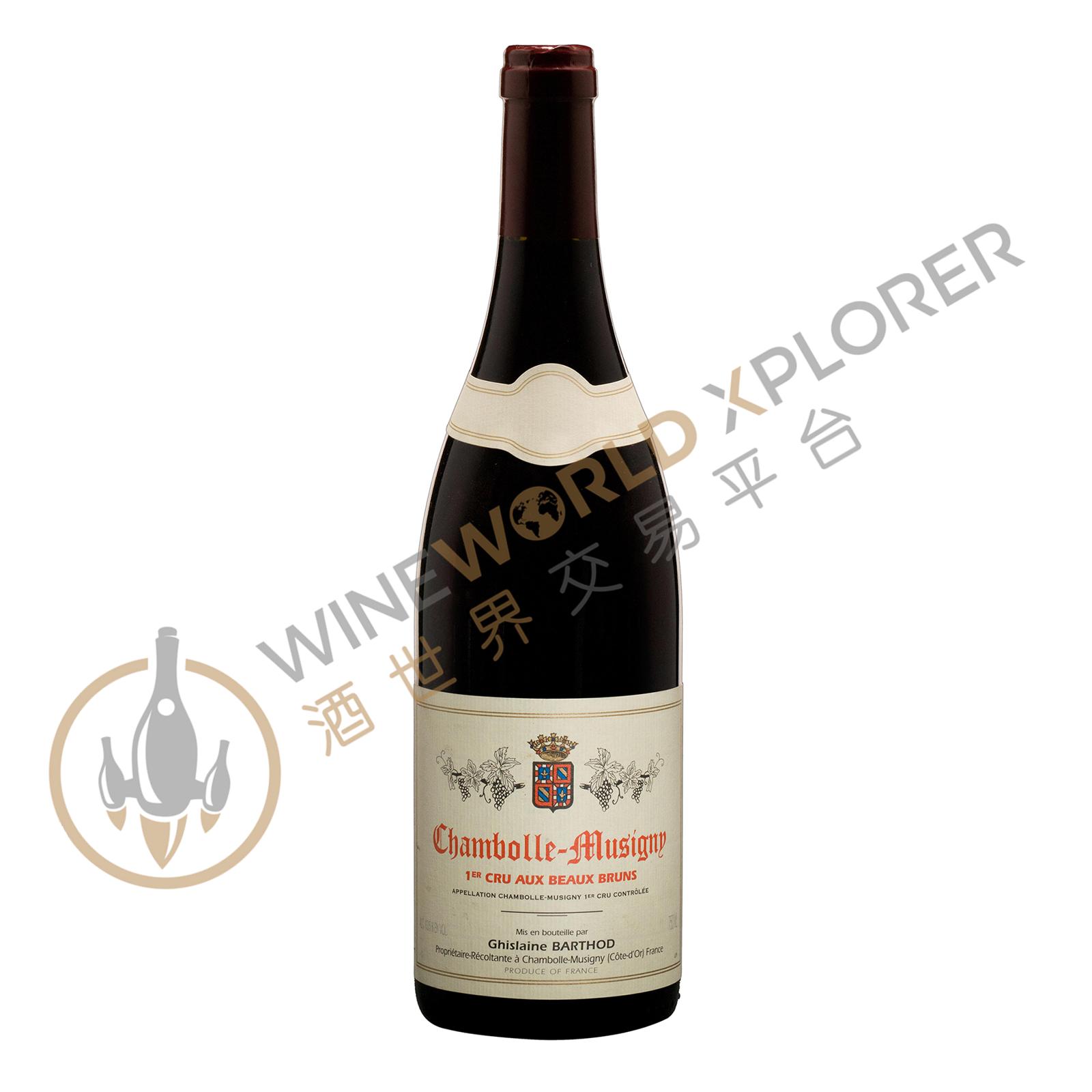
Ghislaine Barthod, Chambolle Musigny 1er Cru Aux Beaux Bruns 2021
 View analysis


Description
Tasting notes

Reviewed by: Neal Martin
The 2021 Chambolle-Musigny Aux Beaux Bruns 1er Cru has an attractive nose, a mélange of red and black fruit, sous-bois, crushed stone and rose petals. It displays more vigour than the Chambolle-Charmes. The palate is medium-bodied with crunchy red cherry and strawberry fruit, desiccated orange peel and white pepper. Not complex yet it demonstrates more length than some of the other cuvées.
About the Producer
The Domaine Barthod-Noellat was founded in the late 1920s and obviously is a fusion of the work of two families: Noellat & Barthod. Gaston Barthod, whose family originated in the Jura, married into the Noellat family and took over the direction of the domaine after his military service concluded in the 1950s. We commenced our love affair with this domaine in 1981 when we first began to import its wines into the United States. In many ways, Gaston Barthod served as our mentor in the early stages of our work in Burgundy and we remain deeply grateful for, and respectful of, his sage advice. At the outset of our relationship, Gaston declared only his Chambolle Musigny “Les Charmes” as a 1er Cru and all the rest of the wine bore the same “Chambolle Musigny” label. For our initial shipments of “Les Cras” and “Les Fuées”, two lovely 1er Crus, we had Gaston mark the boxes in crayon with a “C” or an “F” so that we could keep them separate and treat them differently when they arrived stateside! Ghislaine Barthod’s holdings cover 5.86 hectares in the commune of Chambolle and in neighboring Gilly-les-Citeaux. The soil of Chambolle is more spare than that of neighboring Morey and Gevrey. Limestone gravel covers the surface and the layer of topsoil is very thin. As a result, the wines of Chambolle are noted for their finesse and delicacy. The average age of the vines on the Barthod estate is over 30 years old. Yields are always modest; a vigorous pruning and occasional “green harvest” are practiced. Ghislaine follows traditional methods of vinification and carefully ages her wines. The grapes are partially destemmed before going into the fermentation vats. Only natural yeasts are used. The more sluggish start encountered when working with wild yeast gives the must a natural period of maceration before fermentation begins. The length varies from 2 to 5 days and is dependent upon temperatures. After fermentation, the wines are racked into small barrels (about 20% to 25% of which are new) and aged for about 20 months. These wines are particularly ageworthy and offer the rare privilege of deeply exploring the terroir of this singular village.
