
 Wine Advisor



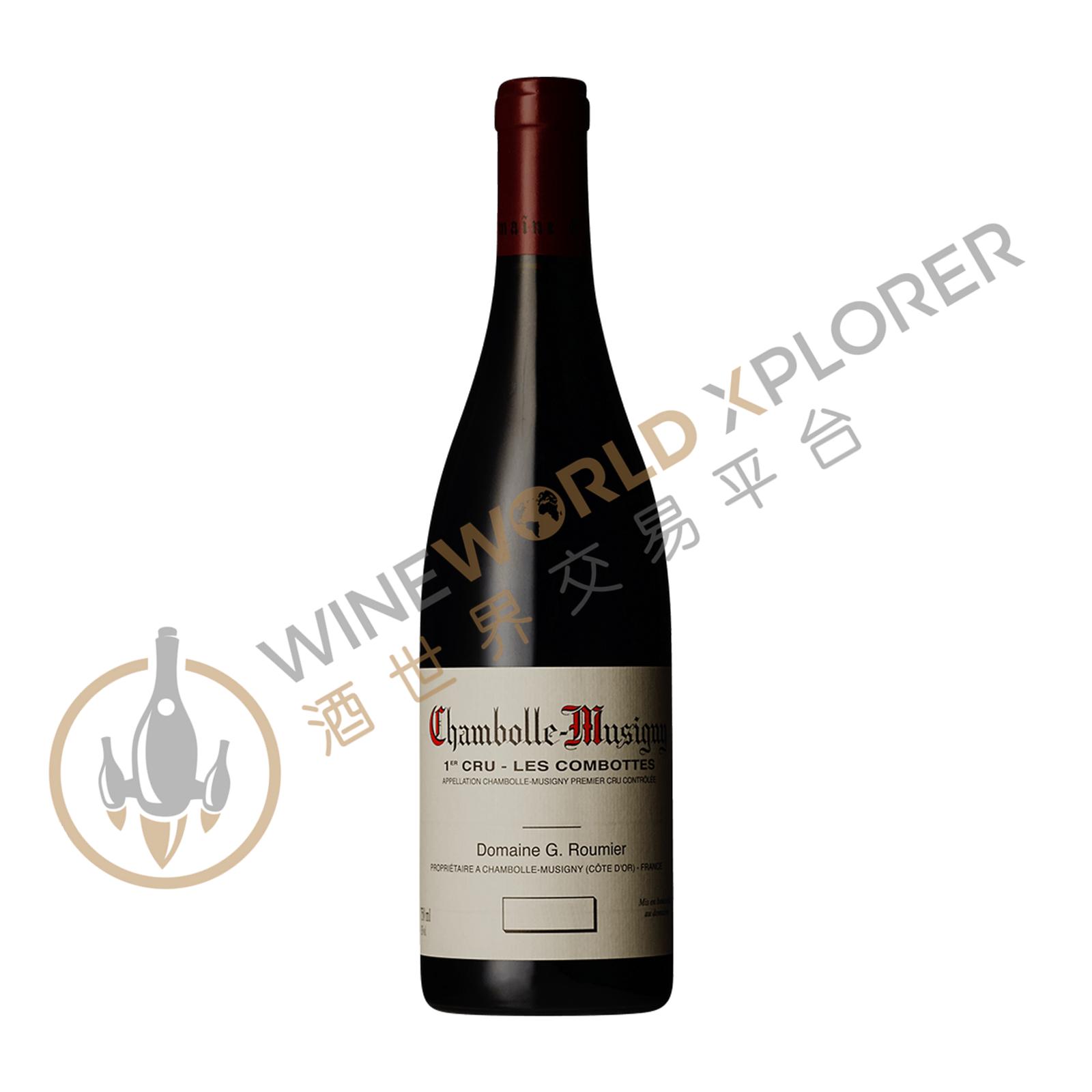
Georges Roumier, Chambolle Musigny 1er Cru Les Combottes 2012
 View analysis


Description
Tasting notes

Reviewed by: Antonio Galloni
Roumier's 2012 Chambolle-Musigny Combottes Les Combottes is pure silk on the palate. Rose petals, sweet red berries and cinnamon all flesh out in a supple, drop-dead gorgeous Chambolle. Here the flavors are all woven together in a fabric of exceptional elegance and pure polish. What a gorgeous, aromatically lifted Burgundy this is.
Reviewed by: Stephen Tanzer
Dark red. Aromas of dark raspberry, black cherry, menthol and crushed stone. Thick, dense and deep for this cuvée, with dark berry and soil flavors offering a suggestion of sweetness. I find this more earth- than mineral-driven, and at the same time more luscious than the 2013 version; I might have picked it blind as coming from Morey-Saint-Denis. Finishes ripely tannic, subtle and long.
Reviewed by: Stephen Tanzer
Bright full red. Aromas of black raspberry, cherry, licorice, menthol and bitter chocolate complicated by underbrush and truffle. Juicy, tight and firmly built, even a bit youthfully imploded, with dark berry flavors enlivened by a hint of pepper. Velvety rather than silky in texture. Finishes very ripe, with notes of mocha and woodsmoke and serious tannins. This wine from an early-ripening site doesn't have quite the grip or lift of the best 2011s at this address. According to Christophe Roumier, potential alcohol levels were about a degree lower across the board in 2011 than in 2012. It was a very early growing season and harvest but the wines taste like they're from a cold year, he added. And some of the lower vineyards did not ripen well.
Reviewed by: Stephen Tanzer
(this and all subsequent wines were vinified with between 25% and 30% whole clusters): Bright red-ruby. Black cherry, violet, menthol and bitter chocolate on the very ripe nose. Dense and fat with fruit, offering superb richness and good framing acidity to the flavors of crushed black cherry, violet and minerals. Finishes very suave and long, with fully ripe tannins.
Reviewed by: Neal Martin
The 2012 Chambolle-Musigny 1er Cru Combottes has a fragrant, slightly more “correct” bouquet than the Clos de la Bussieres, unfurling in the glass to reveal vibrant red berry fruit and a touch of orange zest. The palate is medium-bodied, bold in the mouth, quite assertive with good weight, muscular towards the finish. This has great breeding. Christophe Roumier was multitasking when I arrived at his domaine in Chambolle-Musigny: his mobile constantly trilling and tasting parties arriving in haphazard fashion, running here and running there. And as we know, men are not cut out for multitasking. No wonder he complained about his headache, though hopefully the aspirin, washed down with a glug of Musigny, relieved his mal de tete. But generally Christophe Roumier was in top form – just like his wines. He commenced the harvest on 22 September after the usual travails of the growing season that reduced his crops. He rued the fact that he is undergoing an expansion of his cellars, but after 2012 and a meagre 2013, has little to put in them. He suggested a comparison between 2010 and 2012, though the latter is less tannic and more “weightless” – a great word to describe many of this vintage’s wines. This year there is all but one and a half barrels of his elusive Musigny. It is an utterly transcendental wine, perhaps equal to the 2005 when I encountered that out of barrel, but if that proves just a wee bit difficult to find, then the Clos de la Bussieres is a quite brilliant Morey Saint Denis that will offer immense pleasure over the next 20 years. Importer: Diageo Chateau & Estate Wines, Napa CA; tel. (707) 299-2600
About the Producer
The domaine was founded in 1924 by Georges Roumier, who began domaine bottling in 1945. He was succeeded in 1957 by his son Jean-Marie and now grandson Christophe, who joined his father in 1982 and took over completely in 1992. Most of the wines are rented (en fermage) from family members although Ruchottes Chambertin is held on a share cropping deal with an external proprietor, Michel Bonnefond. The wines are seductively fruity in their youth yet with excellent ageing potential. The grapes are sorted in the vineyard, with a table de tri at the winery since 2003. They are mostly destemmed, albeit depending on vineyard and vintage, with a few more stems being used recently – then placed in wooden fermenters. The juice is given a cool soak at 15° then allowed to start naturally. The juice is punched down twice a day and temperature controlled so as not to exceed 32°C. There is no great reliance on new wood in the maturation cellar, with 15-25% being used for village wines, 25-40% for premiers crus and no more than 50% for Bonnes Mares. In recent years Christophe has been searching for, and achieving, a greater sense of precision in his wines.
