
 Wine Advisor



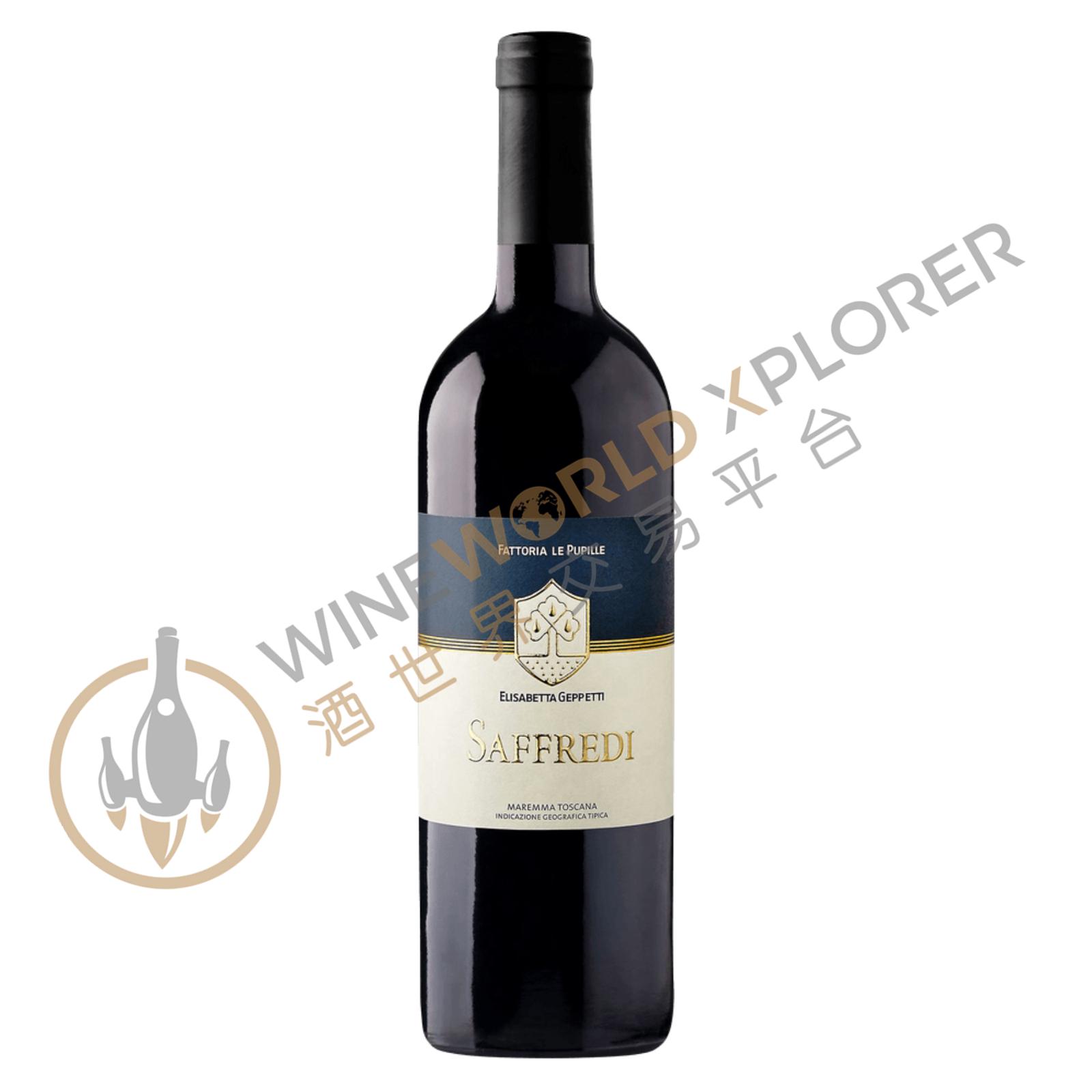
Fattoria Le Pupille, Saffredi 2020
 View analysis


Description
Tasting notes

Reviewed by: Monica Larner
This blend of 70% Cabernet Sauvignon, 26% Merlot and 4% Petit Verdot is exuberant and explosive. The 2020 Saffredi reveals a very ripe and rich interpretation of this iconic wine made by Elisabetta Geppetti and her family. The blend of fruit is the same, but 2020 actually sees less oak intervention to allow that dark fruit to shine through. There is blackberry, perfumed rose, dried apricot, spice and sweet cinnamon. In all, the wine offers immediate fruit and a vertical delivery of flavors. Finding that combination of wine versus oak is not easy, Elisabetta tells me.
Reviewed by: Monica Larner
This was the newest vintage tasted as part of this retrospective at the estate. The Fattoria le Pupille 2020 Saffredi shows signs of the hot vintage, especially when tasted in context with the gorgeous 2019, the more candied 2018, the toasted 2017 and the classic 2016 vintages. The 2020 definitely shows a riper and fuller character with bold, big-picture terms and fewer tiny details as a result. Elisabetta Geppetti refers to this edition as a "return to the Taschis school," referring to the celebrated Tuscan consultant Giacomo Taschis, whose signature style embraced balanced ripeness. This wine offers end notes of savory tobacco and spice.
Reviewed by: Antonio Galloni
The 2020 Saffredi is compelling. Deep yet quite structured, 2020 is unlike any Saffredi I can recall tasting because of its balance of intense dark fruit and vertical structure. Plum, blackberry, pencil shavings, lavender and spice saturate the palate. Readers will have to be patient, as the 2020 is not as showy as most vintages at the same stage.
Reviewed by: James Suckling
Impressive aromas of fresh herbs from the Tuscan coast, such as sage, mint, rosemary and thyme. Blackcurrants, too. Full-bodied with fine, chewy tannins that show beautiful length and consistency. Racy and beautiful, with lots of subtle and refined character. Slightly more cabernet sauvignon this year, which adds class to the wine. 80% cabernet sauvignon, 10% merlot and 10% petit verdot. Give this about three or four years of bottle age. Try after 2027.
About the Producer
Fattoria Le Pupille is a leading wine estate in the Maremma region of coastal Tuscany. It is best known for Saffredi, a Toscana IGT blend of Cabernet Sauvignon, Merlot and Petit Verdot that has been described as the Lafite of Tuscany. Owner Elisabetta Geppetti is known as the Lady of Morellino and the Ambassador of Maremma. In 1992 she became head of the Consorzio for Morellino di Scansano - the region's association of grape growers and wine producers. She was the first woman to gain that position in any Italian wine region. The estate has 75 hectares (185 acres) of vineyards in total, the core of which are located around the village of Peretta. These vineyard holdings include the 25ha (62 acres) of the original Pupille vineyard and the 5-ha (12-acre) plot responsible for Saffredi. There is also a 20-ha (50-acre) plot near Magliano, and the winery itself is located near Grosseto. This is a modern facility located within the traditionally-styled building that features on the label. As well as Saffredi, Le Pupille makes three Sangiovese-based Morellino di Scansano cuvées. These are a "normale", a Riserva, and the Poggio Valente Riserva, which is aged for 15 months in a mix of small and large barrels. There is also a IGT Maremma Toscana Rosso, named Pelofino, which is a blend of Sangiovese and Syrah with a small amount of Cabernets Sauvignon and Franc. 2015 saw the first release of Le Pupille, a 100 percent Syrah aged for 12 months in 300-liter French oak barrels. This is priced above the flagship Saffredi. The estate also makes a Rosamatti rosato and a Poggio Argentato white based on Sauvignon Blanc with Petit Manseng, Traminer and Semillon. Piemme is a recently introduced single variety deluxe white wine from Petit Manseng . The lineup is completed by SolAlto, a botrytized white wine made from Traminer, Sauvignon Blanc and Semillon. In total around 500,000 bottles are produced each year.
