
 Wine Advisor



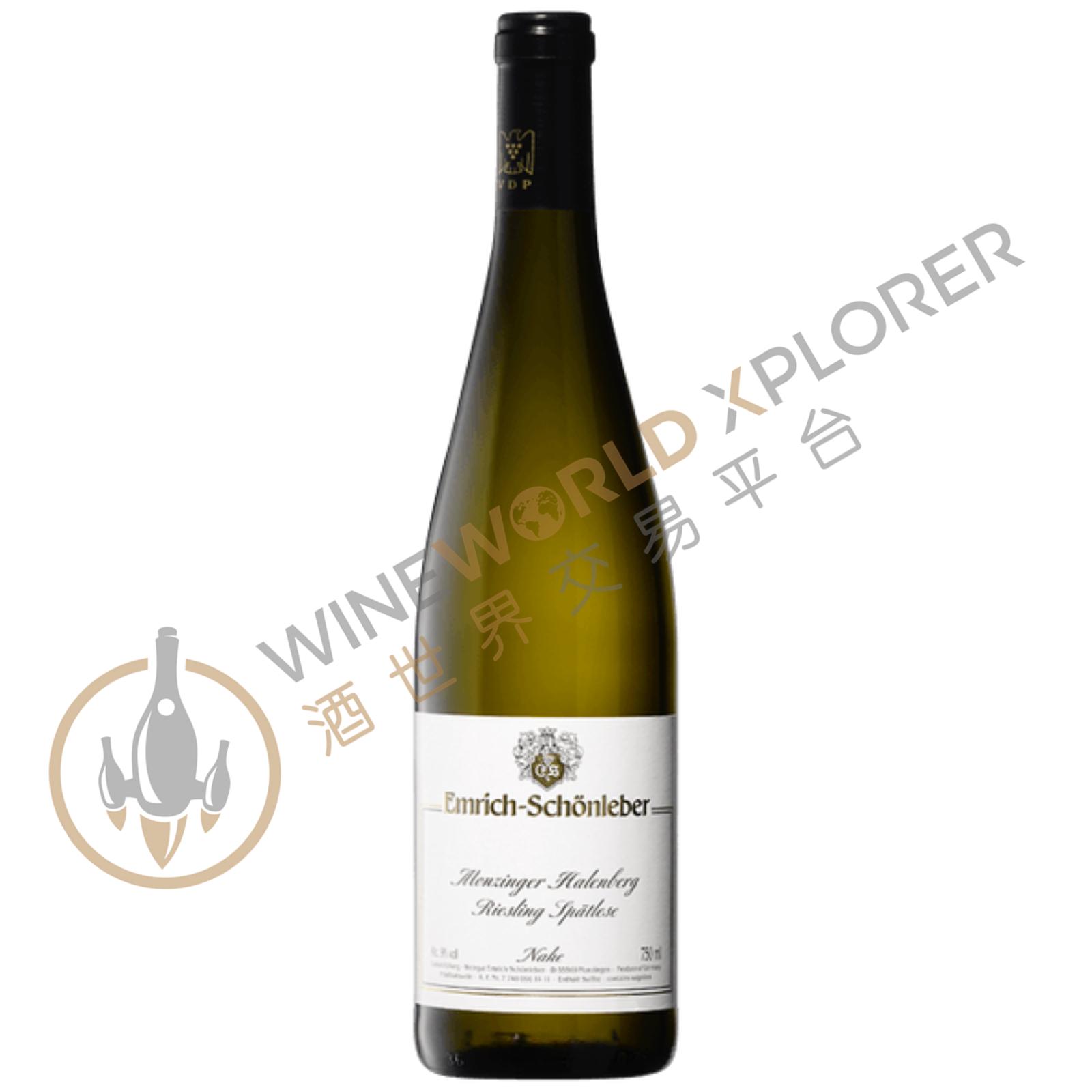
Emrich Schonleber, Monzinger Halenberg Riesling Spatlese 2018
 View analysis


Description
Emrich Schonleber, Riesling, Monzinger Halenberg Spatlese, Nahe, White, 2012
Tasting notes

Reviewed by: David Schildknecht
Lightly poached pear and white peach gain a welcome bit of brightness from fresh lime, so that an effusively ripe and soothingly creamy Riesling still delivers animation and refreshment. At the same time, there is a sense of lift and delicacy here that goes beyond what was exhibited by this year’s Kabinett, and which perfectly fits the floral perfume that wafts through this wine’s entire performance. A bittersweet hint of cassis and subtle piquancy of fruit pit add counterpoint to the complexly layered, bell-clear finish. The grapes for this came in during the first days of October. Picking under the right conditions for Spätlese was just as challenging this year as picking for Kabinett, opined Schönleber, who admitted to having simply “missed the window” for doing so in the Frühlingsplätzchen. “More and more,” he said, noting the irony, “Spätlese is going to signify anything but ‘late-harvest.’”
About the Producer
1815"This time people were boasting of one of their local wines, called 'Monzinger'," noted Johann Wolfgang von Goethe in 1815. "They say it runs down the throat with such ease and pleasure, that you only realise its bewildering effect too late. 1960sUntil the 1960s, our estate was a mixed operation comprising agriculture, livestock and winegrowing. This form of diversification was common practice at a time when the risk of bad grape harvests (due to spring frosts, poor flowering, fungal diseases, etc.) was still very high. Only the most affluent families (often from industrialist backgrounds) could afford to grow wine and nothing else. 1965-1985From 1965 to 1985, Wilhelm Schönleber (a native Swabian from southern Germany), followed by son Werner Schönleber, turned the property into a purely winegrowing estate, expanding the vineyard area from approximately 2 to 10 hectares. With an increasing share of vineyard space devoted to Riesling and a continually improving portfolio of vineyard sites, the estate first made it onto the list of "Germany's top 100 wineries. Today the farm 20 hectares of vineyard. Riesling currently accounts for 85% of our vines, supplemented by Grauburgunder (Pinot Gris) and Weissburgunder (Pinot Blanc)
